
This column is written by the UC Master Gardeners of Yolo County each month. It provides answers to selected questions recently asked by Yolo County gardeners.
Question: How do I save water in my vegetable garden this year?
Answer: Growing a vegetable garden with less water is possible by combining efficient watering practices, soil improvement and protection, and careful selection of the crops you grow.
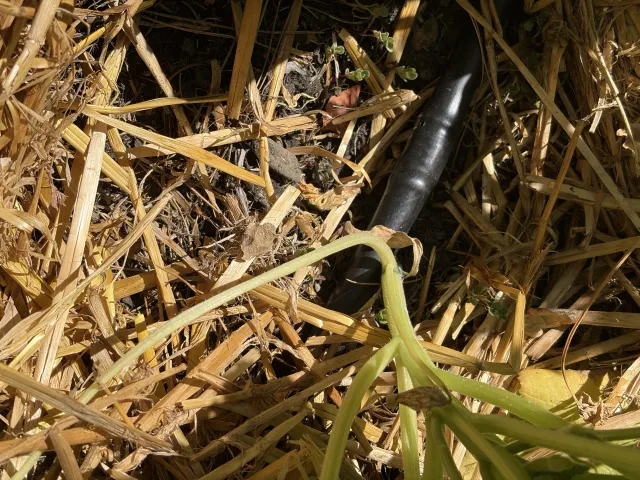
One of the most important strategies is improving the soil. Adding compost increases the soil's ability to retain moisture, allowing plants to access water for longer periods between irrigations. A three-to-four-inch layer of organic mulch, such as straw or shredded leaves, helps reduce evaporation, suppress water-thieving weeds, and moderate soil temperature.
Efficient irrigation is also important. Drip irrigation or soaker hoses deliver water directly to the root zone, minimizing waste from evaporation and wind drift. Watering deeply but less frequently encourages roots to grow deeper into the soil, making plants more drought-tolerant. Watering early in the morning further reduces evaporation losses.
Choosing vegetables that naturally require less water can greatly improve success. Many Mediterranean and warm-climate crops have adaptations that help them produce with less moisture.
Tomatoes are relatively drought-tolerant once established. Smaller-fruited varieties often perform better under low-water conditions than large beefsteak types. Good choices include “cherry” tomatoes, 'Roma', 'San Marzano', and 'Celebrity', which can produce reliable harvests with moderate irrigation. Water can also be reduced in tomatoes after mid-September.
Eggplant, with its “fuzzy” leaves and deeper roots, is another warm-season crop that performs well with limited water. The long Asian varieties such as 'Millionaire' tend to be more drought-tolerant than the larger varieties.
Bush beans often need less water than many leafy vegetables. Varieties such as 'Provider' and 'Contender' are known to be resilient. If you grow dry beans, tepary is among the most drought-tolerant of all food crops. You will need to order seeds online. Black-eyed peas, a bean, is also known to do well with limited water.
Okra is among the most drought-tolerant vegetables available. Varieties such as 'Clemson Spineless' thrive in hot climates and continue producing during periods of low rainfall.
Swiss chard is more drought-tolerant than lettuce and many other leafy greens. Cultivars such as 'Bright Lights' and 'Fordhook Giant' can provide repeated harvests with relatively modest water requirements.
Winter squash varieties are more drought-tolerant than most summer squashes, with a Japanese variety, 'Red Kuri', being the champion. Among the summer squash, 'Dark Star', a zucchini type, was bred to have deeper roots and is the most drought-tolerant. Watermelon originated in dry areas of South Africa. The smaller varieties are surprisingly drought-tolerant.
Certain vegetables are less suitable for water-efficient gardens. Lettuce, celery, and shallow-rooted leafy greens generally require frequent watering to maintain quality and yield. If water is scarce, these crops should occupy only a small portion of the garden.
Garden layout can further conserve water. Grouping crops with similar water needs together prevents overwatering of drought-tolerant plants. Plant spacing should be close enough to shade the soil but not so dense that plants compete excessively for moisture.
For more information on water-wise gardening, see Oregon State University's Grow drought-tolerant vegetables to save water in the garden.
This article previously appeared in the Winters Express and Davis Enterprise.
Have a gardening question? Send it to jmbaumbach@ucanr.edu, with “Ask MGs” in the subject line. Include as much detail as possible and pictures if you have them.