
Over my years of gardening, I have been on a journey. It started by focusing on the basics - soil preparation, seed planting, hoping I watered enough, and watching things grow, full of optimism. Then came the realization that I can do everything right, only to have some plants fail. Yet I still feel buoyed and encouraged by splendid successes that come with gardening. As confidence has built, I have found the rhythm of the seasons has unveiled a steady routine: an annual ritual of what to plant and when, along with the discovery that TLC turns ornamentals, vegetables, and fruits into my garden companions.
I find now that the inherent beauty of the minutiae of the science of plants and the interrelationships with components and garden residents that we don’t always recognize, such as our soil microbes, as well as insect and avian visitors, captivate me. The advances in our understanding of the detail and intricacy of nature have me uttering emotional expletives such as 'WOW!' and 'AMAZING!' To use an English expression, I am ‘gobsmacked‘ by it all.
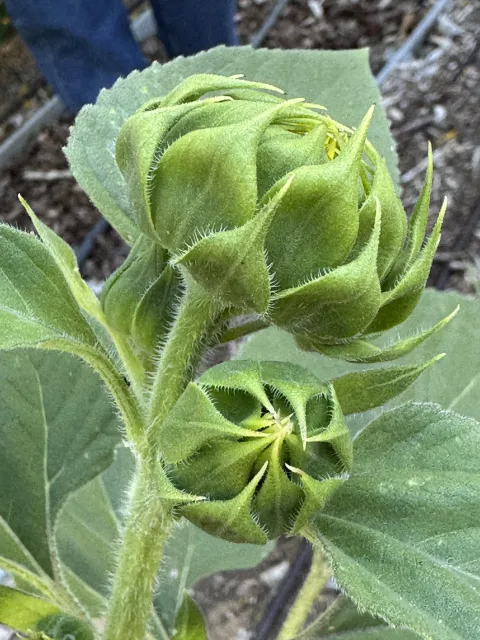
Recently, while working with volunteers at Central Park Gardens in Davis, in conversation about our tasks for the session, I interrupted myself with an exclamation, ‘Would you look at that!’ For years I have grown sunflowers at Central Park Gardens to attract and feed the birds who are wonderful at vacuuming up aphids and scale. My vision had become limited to getting the seeds in and watching the plants develop to their end purpose of producing the ‘crop’ of seed heads I wanted. A small, late-developing sunflower plant appeared next to one of our now at least twelve-foot-tall, multiple flower-producing beauties. This small example of a sunflower was valiantly producing a few flowers. My ‘would you look at that’ was because my eye and my attention had at last been caught and focused on the amazing structure and symmetry of the developing sunflower. A reminder that yes, gardeners do need to focus on the large flow of tasks needed, but also to take the time to appreciate the eons of development that have given us the intricacy, form, and function of the natural world.
After we had ‘oohed’ and ‘aahed’ together, one of the volunteers suggested that I should wear a T-shirt emblazoned both back and front with ‘Easily Distracted by Plants!!’
As cooler nights and days are coming, it is time to plan for the fall planting season. With our Yolo County climate, we can grow a very productive vegetable garden (link to the September Vegetable Planting Guide below). The fall is also a wonderful time to add perennials or biennials to the garden. The cooler winter months allow plants to develop good root systems before the warmth of spring encourages vegetative, blooming, or fruiting growth.
Happy Gardening!
Ornamentals and Annuals
Keep up the deadheading and deep watering; your garden will produce a floral display well into the fall. Don’t be too eager to ‘neaten’ the garden. Many of our beneficial and pollinator friends rely on the dried stems and leaf cover of the fall for protection. Do remove any diseased or injured growth. Start thinking about seed planting for a vibrant spring show. From the middle of the month, California poppy seeds can be scattered and gently raked into the top layer of soil. If growing your own seedlings, for each variety, plant seeds into pots at roughly two-week intervals through October. As seedlings mature, add them to the garden about every two weeks and the bloom season will be extended. Consider starting some of our wonderful California native annuals such as elegant tarweed Madia elegans, tidy tips Layia platyglossa, yellow lupin Lupinus arboreus and Baby blue eyes Nemophila menziesii.
Diseases, Pests, and Beneficials
September temperatures can be hot, so continue providing good water sources for birds and bees. Birds love moving water; if you set up a sprinkler on a hot day, you will be able to observe finches, hummingbirds and bushtits cooling off and bathing. Bees prefer shallow water; a simple bee watering station can be made by using a shallow dish with a layer of marbles or stones across the bottom. Fill with fresh water, but be sure to leave some surfaces of the marbles or stones exposed; this allows the bees to settle and drink. Clean and replenish bird and bee watering stations regularly.
Bulbs
September is the best time to consider the bulbs you wish to add to the garden. Bulbs can be pre-ordered through most companies and shipped at the appropriate time for planting in our area.
Fruits
Before the rains come, it’s a good time to prune apricot and cherry trees. Dormant pruning in the winter months is not recommended for cherry and apricot trees, as the moisture-borne fungal diseases that affect these trees will enter through injury or pruning sites. Eutypa, a fungal disease in apricots, causes leaf, branch, and limb dieback and cankers, which can eventually lead to tree death. Clean up any fallen fruit to prevent disease transmission.
Do some research into what varieties of fruit trees you may wish to add to the garden as standard or espaliered. Prepare the area for planting. When the bare-root fruit tree season arrives, it will be a simple task to plant any new trees. For more information, see UC ANR’s Fruit Trees: Planting and Care
Trees and General Pruning
Late summer pruning of trees and shrubs tends to discourage new growth. It is the ideal time to shape, improve air circulation, or reduce the canopy height and spread. If you are aiming to reduce the size of a tree, it is best to remove no more than a third of its height or spread per year until it is at the desired height. It may take a few years of careful reduction pruning, but be patient. The tree will be less shocked than if significant limb pruning is done all in one season.
Fall is an ideal time for new tree selection if you are looking for a particular leaf color. As the days grow shorter and temperatures cool, available nursery trees will show their fall color for your selection.
Soil Improvement
As summer vegetables or annual blooms are pulled, take the opportunity to add compost to each area as it is cleared. A good approach is to always add compost each time an area is cleared or a plant is removed.
If you have the room, a simple compost or worm bin arrangement can produce soil amendment year-round that will replenish nitrogen and minerals, and help loosen soil to encourage deeper root penetration. For more information, see UC Master Gardeners of Sacramento County’s webpage – About Composting...
Lawns
Fall is the best time to rejuvenate lawns. Late September is ideal. Rake and reseed, then cover with a layer of compost. The reseeded areas will develop strong root systems through the winter and spring to cope with the next summer’s heat.
If you are thinking of removing an area of lawn, fall is a good time to tackle this project. Grasses such as Bermuda go dormant over winter, but if you have it well covered and deeply mulched through the winter, you will have a head start when spring stimulates the growth of the Bermuda and any annual weeds. For more information, see UC ANR’s article – Lawn Removal: Do It Right
Click September Vegetable Planting Guide for a list of Yolo County and Sacramento area vegetables recommended for planting during the month of September, along with how and when to plant them.
Photo by Peg Smith.