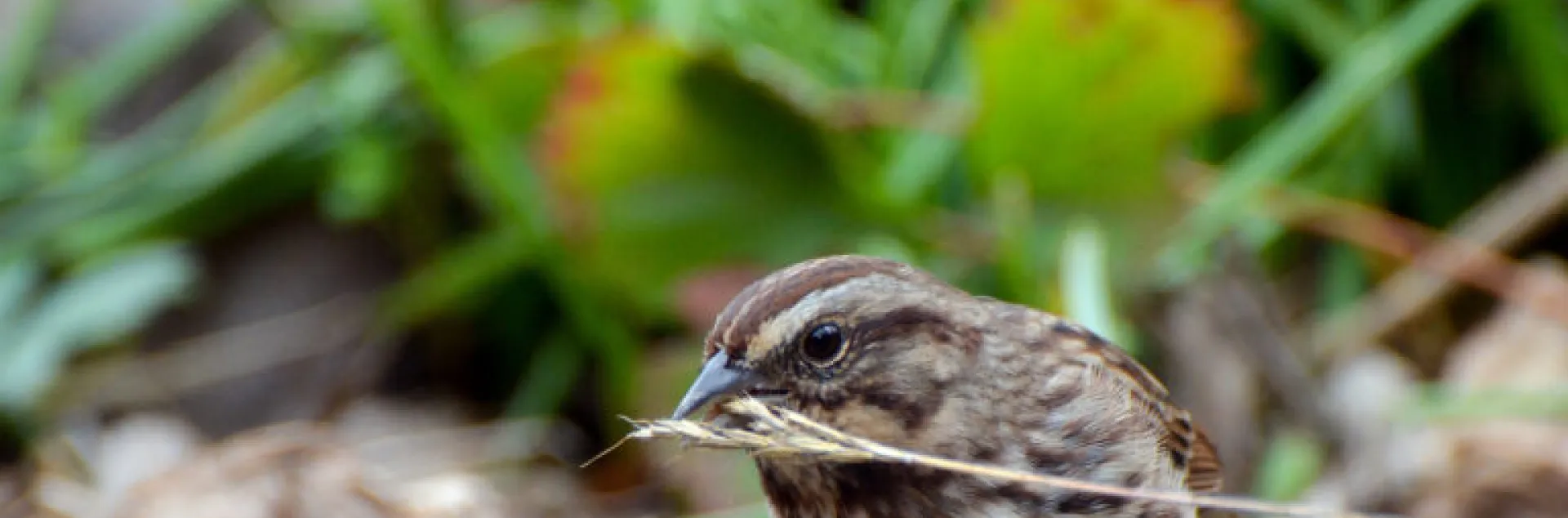
As late summer gardens begin to fade, it can be tempting to deadhead spent flowers so the garden appears tidier. But a “messy” garden can be a healthier one for nature, especially birds.
Seeing birds hanging onto seed heads and foraging for seeds on the ground is a joy to watch. Recently, I had the pleasure of watching lesser goldfinches (Spinus psaltria) spend a couple of weeks flitting in and out of an English lavender (Lavendula angustifolia) I had let go to seed in my yard.
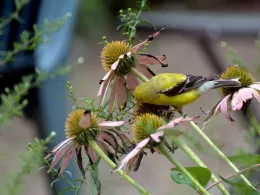
Benefits Songbirds and Your Garden
Seeds and seed pods provide nutrients for many small songbirds, particularly finches and sparrows, during the late fall and winter months when food resources become scarce. The dried stalks can also provide shelter for over-wintering insects, which in turn become a source of food for the birds.
Birds seldom eat all the seeds, so your plants will reseed themselves; this is especially true of annuals.
Seed Producing Plants
Flowering plants reproduce by going to seed which can be spread by wind, water, and animals, including birds. California native plants, in addition to being drought-tolerant and generally low maintenance for gardeners, also provide nutritious seeds from spent flowers for local birds and other wildlife during the fall and winter months. While perhaps not quite as nutritious as native plants, non-native plants also produce seeds that birds eat. Many native and non-native plants are self-seeders.
In addition to flowering plants, California native grasses are an excellent source of seeds for birds.
Listed below are some annuals and perennials that provide seeds for the birds. Many bloom throughout the spring and summer into the fall months and provide color to gardens while attracting pollinators such as bees and butterflies before producing seeds.
California Poppies – One of the ultimate “let it go to seed” annual flowers which yields thousands of tiny seeds when the pods burst open. The native California poppy (Eschscholzia California), our state flower, is a familiar flower to many. Other varieties come from Europe, Asia, and northern Africa in many colors.
Purple Coneflower/Echinacea – A native of central, eastern and midwestern regions of North America, this perenial plant's flowers come in shades of white, yellow, purple, or pink. The dried cones attract birds from late summer through winter. Leaving a patch of coneflowers through the cold season is a creative way to make an inexpensive “bird feeder.”
Sunflowers – An annual, sunflowers are a favorite of many bird species. There are numerous varieties ranging from 4 to 12 feet high with flowers in yellow, orange and red. A common native sunflower is Helianthus californicus.
Asters – Asters are members of the daisy family with several native species including the perennial California aster (Symphyotrichum chilense). The small colorful flowers produce petite, nutritious seeds actively eaten by local birds.
Cosmos – Native to Mexico, Central and South America, cosmos are also members of the daisy family. These annual plants are terrific self-seeders which come in many varieties and colors and will carpet your garden with volunteers the following year.
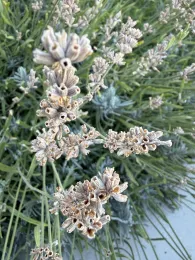
Lavender – This perennial plant can live for many years in your garden. Known for their distinctive lavender scent, the flowers of English, Spanish and French varieties come in purple, lavender, pink and white,
Sages/Salvias – Salvias are the source of highly nutritious seeds for birds. There are numerous sage varieties that are both native and non-native. This plant family has both annual and perennial flowers in many colors, with bush and flower stalk varieties. In addition to color, sages produce lovely scents. Native species include white sage (Salvia apiana), Cleveland sage (Salvia clevelandii) and hummingbird sage (Salvia spathacea).
Deer grass – Deer grass (Muhlenbergia rigens) is a native bunchgrass. Small birds eat the grain seeds produced on the tall stalks.
Purple needlegrass – California’s state grass, the purple needlegrass (Stipa pulchra) features long awns with small seeds that are a favorite of lesser goldfinches.
Growing Seed Producing Plants
If starting from seed, follow instructions on the seed packets regarding when and how to plant. If planting a transplant, the best time is during the fall months when it is cooler, although spring is also a good time. All the plants mentioned need at least 6-8 hours of sunlight each day and generally require little water when established.
If you have been removing spent flowers and awns from grasses during the spring and summer months, stop deadheading towards the end of summer and reduce the amount of watering to plants that you want to go to seed. This allows the flowers to mature and encourages the seeds to fully develop. To ensure birds have access to seeds throughout the winter, wait until late winter or early spring to prune spent flowers, stalks, and bushes.
The look of spent flowers and grasses with seed heads, awns, and seed pods creates a natural kind of beauty in fall and winter gardens. By letting the flowers and grasses go to seed in the fall, you will extend nature’s food buffet into the colder months for birds. The birds will reward you with their colorful plumage and songs.
References:
Source of native plants: https://calscape.org/search/
Lovely Lavender: https://ucanr.edu/blog/stanislaus-sprout/article/lovely-lavender
Denise Godbout-Avant has been a UC Master Gardener in Stanislaus County with UC Cooperative Extension since 2020.