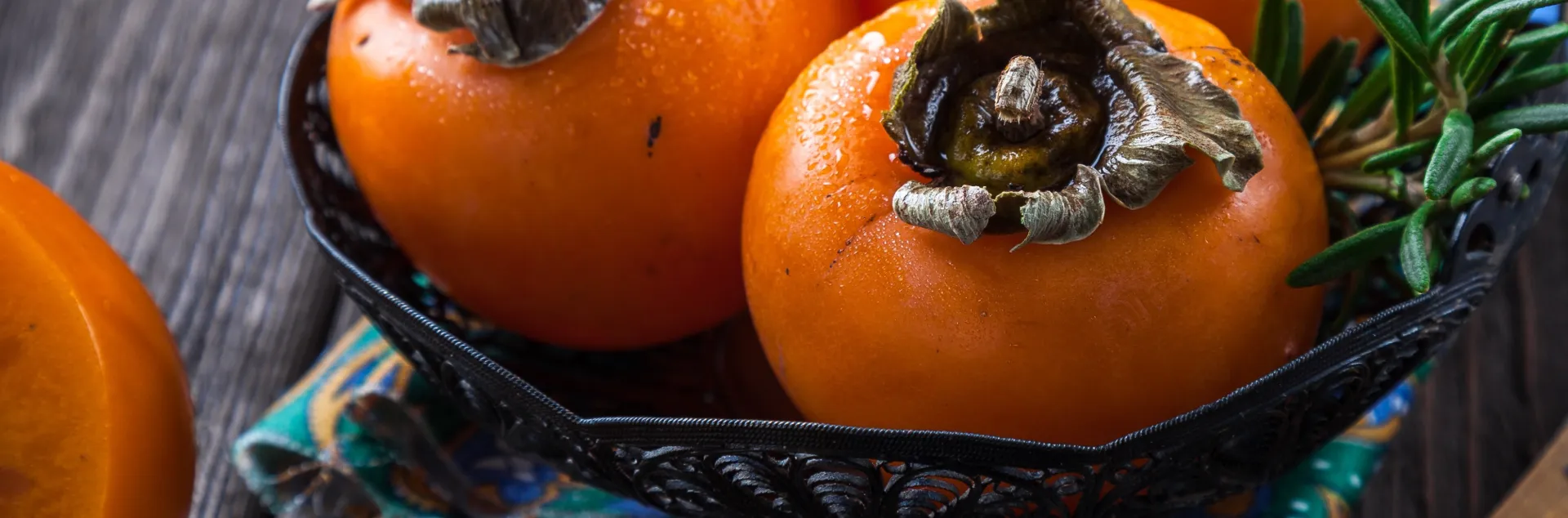
Persimmons, often called the “fruit of the gods,” are a striking addition to California gardens. With their glossy green leaves, brilliant fall foliage, and jewellike fruit, they offer both ornamental beauty and delicious harvests. California’s moderate winters and warm summers create ideal conditions for these deciduous fruit trees, making them a rewarding choice for home orchards and landscapes.
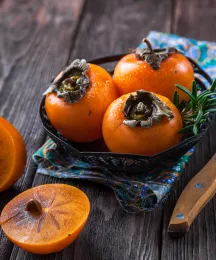
Varieties Grown in California
American Persimmon (Diospyros virginiana)
Native to the eastern United States.
Smaller fruit, often astringent until fully ripe.
Trees can be quite hardy and tolerate a range of soils.
Bark is checkered gray brown; leaves turn yellow, pink, or red in fall.
Japanese Persimmon (Diospyros kaki)
The most common type grown in California.
Oval and leathery leaves turn yellow, red, or orange in the fall. Orange or scarlet fruit forms after leaves drop.
Larger fruit, with many named cultivars.
Other notable cultivars in California include ‘Giant Fuyu,’ ‘Jiro’ and ‘Chocolate’ (a pollination variant type with unique flavor and color).
Two main categories:
Astringent varieties (e.g., ‘Hachiya’): Must be fully soft before eating to avoid mouth puckering tannins.
Non‑astringent varieties (e.g., ‘Fuyu’): Can be eaten while still firm, similar to an apple.
Site Selection
Persimmons thrive in full sun and well-drained soil. While they tolerate a range of soil types, from sandy loam to clay, good drainage is essential to prevent root problems. Choose a location with:
Full sun exposure for maximum fruit production and color.
Protection from strong winds, which can damage branches laden with heavy fruit.
Adequate space: Standard trees can reach 20–30 feet tall and wide, though some cultivars and rootstocks produce smaller trees.
Because persimmons are relatively pest‑free and adaptable, they are excellent candidates for low maintenance orchards or as specimen trees in a landscape.
When to Plant
The best time to plant bareroot persimmon trees is during the dormant season — typically late winter to early spring. Container grown trees can be planted almost any time of year, but planting in late winter or early spring allows roots to establish before the heat of summer.
When planting:
Dig a hole as deep as the root system and twice as wide.
Avoid adding fertilizer or excessive amendments at planting time; persimmons adapt well to native soil.
Water thoroughly after planting to settle the soil around the roots.
Irrigation
Persimmons are considered drought resistant once established, but consistent moisture improves fruit size and yield. Where winter rains are sparse, irrigating every few weeks from late spring through summer supports healthy growth and production.
Guidelines:
Young trees: Water regularly during the first few years to encourage root development.
Mature trees: Deep water every 2–4 weeks during dry periods.
Avoid overwatering, which can lead to root rot or excessive vegetative growth at the expense of fruiting.
Mulching around the base (keeping mulch a few inches away from the trunk) helps conserve soil moisture and regulate temperature.
Fertilizing
Persimmons generally require minimal fertilization. Excess nitrogen can cause excessive shoot growth and reduce fruit quality.
UC recommendations:
If growth is poor or leaves are pale, apply a balanced fertilizer (such as 10‑10‑10) in late winter or early spring before new growth begins.
Mature trees often need little to no fertilizer.
Avoid fertilizing late in the growing season, as this can stimulate tender growth susceptible to frost damage.
Harvesting
Persimmons ripen in early to late fall, depending on the variety.
'Fuyu' persimmons are ready for harvest when color turns from green to orange, usually in mid-October to mid-November. The fruit will be firm but sweet, much like an apple.
'Hachiya' persimmons are ready for harvest when color changes to orange between October and January and begins softening. This variety can be harvested and ripened off the tree.
Harvest by clipping the fruit with a short stem attached to avoid damaging the skin. Handle gently to prevent bruising, especially for soft-ripe astringent types.
Storage
'Fuyu': Eat soon after picking if ripe. Store in the refrigerator or in a cool location one week to one month depending on ripeness. 'Fuyu' persimmons will soften slightly once harvested and are easily bruised. For longer storage, freeze up to six months. 'Fuyu' persimmons will soften slightly once harvested and are easily bruised. For longer storage, freeze up to six months.
'Hachiya': Firm, astringent fruits that can be dried. Fully ripened fruit can be pureed for use in baking or smoothies. Puree can be frozen for up to one year.
Pruning
If you plant a new tree, consider making it a “fruit bush!” You will still have a tree, but it will stay less than 5-’6 tall if you cut it to knee height after planting. For information on what to do next, watch our YouTube video, “The Fruit Bush Method” at https://www.youtube.com/watch?v=ry4YAp6NzdI&t=2695s
Prune when young for strong framework, a modified leader system with lateral branches. In years one to two, pinch off vigorous shoot growth to force growth into the framework. Pruning of mature fruit trees should be light and focused on diseased, decayed, or damaged branches. Fruit sets on current year's growth. or damaged branches. Fruit sets on current year's growth.
Fun Fact
Persimmons are not only beautiful and delicious—they also have a unique seasonal charm. In autumn, as their leaves turn vivid shades of red, orange, and yellow and then fall away, the bare branches remain studded with bright orange fruit. This striking display has made persimmons a favorite ornamental tree in gardens and landscapes, even for those who never harvest the fruit.
Resources
Ralph, Ann, Grow a Little Fruit Tree, Storey Publishing, 2017.
UC Marin Master Gardeners Persimmons/retrieved 9/29/26
UC IPM Persimmons/retrieved 9/29/26
Barbara Kissinger Santos has been a UC Master Gardener in Stanislaus County with UC Cooperative Extension since 2024