
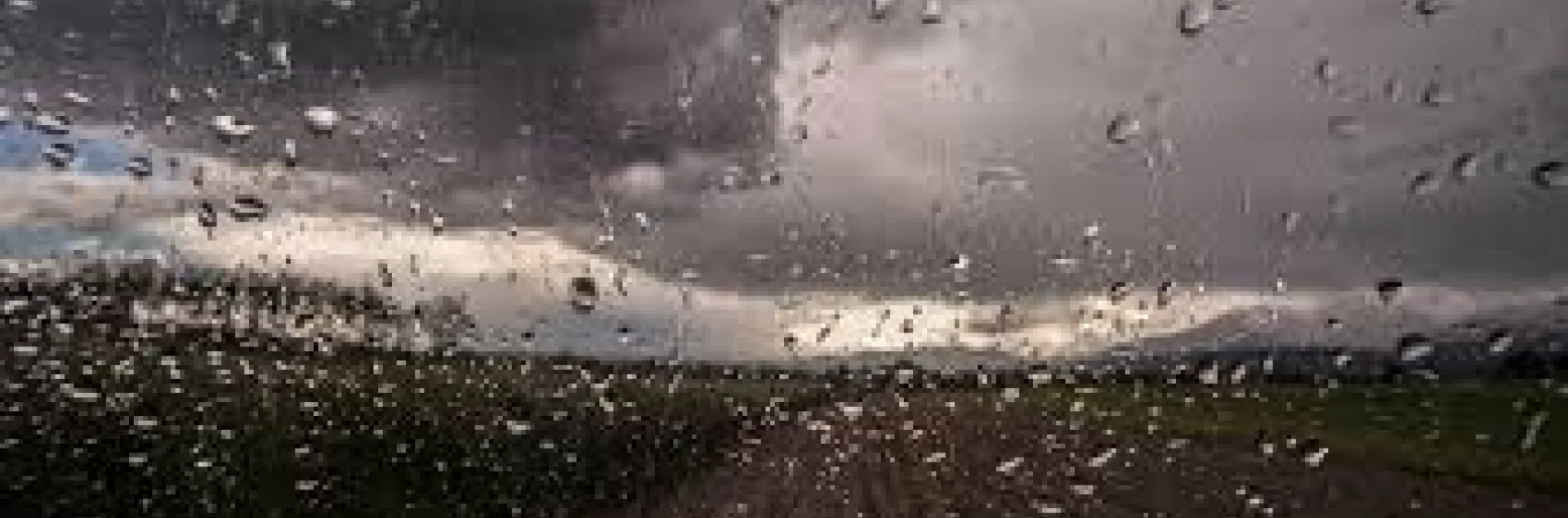
Big Rain is forecast for this winter. Rain is wonderful stuff. If it comes and washes the accumulated salts of the last several years out of the root zones of citrus and avocado, that's a good thing. But what happens if there is a little too much of the good stuff? In the winter of 2005, Venture got over 40” of rain, which is 100% of what is normal. The last time big rains occurred prior to that was in the winter of 1997-98. That year the rains were evenly spaced on almost a weekly basis through the winter and into the late spring and over 50" fell. That year we had major problems with both citrus and avocados collapsing from asphyxiation. The same occurred in 2005, but not so pronounced. This winter could be the biggest yet. We'll what has happened next spring after it happens!
Most rainfall years are not average, usually it is more or less than average. And sometimes the rains come and come and come and flooding happens throughout California. The winter of 1861/62 saw such flooding that the harbor at Goleta was filled in.
In 2023, we had a lot more rain than we normally see and in Carpinteria it rained 4 inches in July!!!!!! And with the rain we saw mudslides and buried orchards, and with wet soil and winds we saw avocado trees being blown over.
And then came the winter of 2023/24, and there was more rain and more of the same devastation. But in general, trees look good. The consequences of low rainfall and the resulting greater application of salty irrigation water is leaf burn and often Botryosphaerias. After two wet rainy winters, we see much less of this kind of damage.
But there’s been a more subtle damage going on, especially in avocados. It’s been particularly hard on young trees with poorly developed root systems and orchards on flat ground. Asphyxiation has happened with the soils being too wet. Excluding air allows ethylene to accumulate. This is a ripening/aging plant growth regulator and leads to leaf and fruit drop; It can bring on iron chlorosis, especially in soils with higher pH. Even large tree canopy collapse can occur
The way to avoid this problem is to plant on berms, but that is not an option with trees in the ground. The best thing to do is to pull back mulch to expose the soil so that soil moisture can evaporate faster. If there is extensive leaf drop, it might be necessary to whitewash the branches to prevent sunburn. Without leaves, there is no water movement through the tree and the sun can heat up the exposed branches causing irreparable damage. Without leaves to transpire, the irrigation regimen will need to be adjusted. With asphyxiation, think frost damage and treat the tree accordingly. It might even be prudent to treat trees for incipient root rot, since they are now vulnerable.
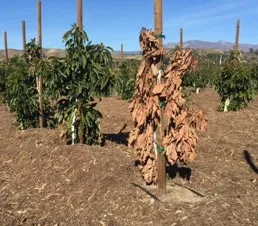
Mulched trees on flat ground are especially prone to asphyxiation.
In avocado, there has been more anthracnose (Colletotrichum gloeosporioides) in the canopies and presumably in the fruit. The fruit infection often doesn’t show up until the consumer cuts into it and finds rot.
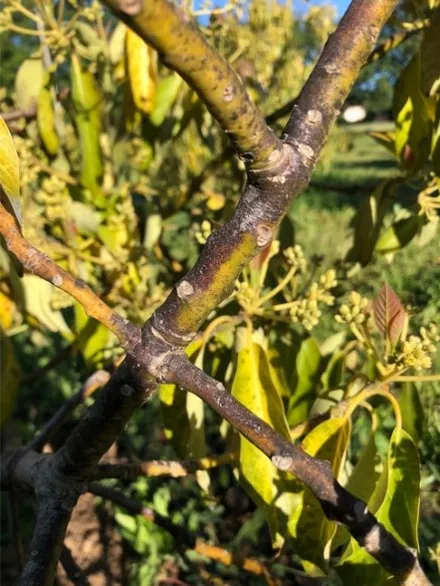
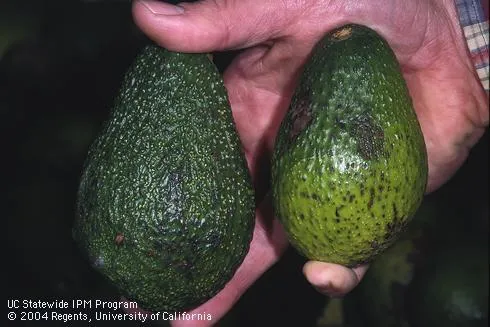
Anthracnose can occur on stems, leaves and fruit.
In citrus, if growers let their copper guard down, there have been problems with brown rot (Phytophthora Sophia.), Septoria, and Alternaria on fruit, and gummosis (Phytophthora sp.) on trunks. The “standard” practice in the past has been a whole or skirt canopy spray to control the disease. But somehow growers got out of the habit and when the rains came, these disease start popping up again. A mistaken management decision that many growers regret after all the rain.
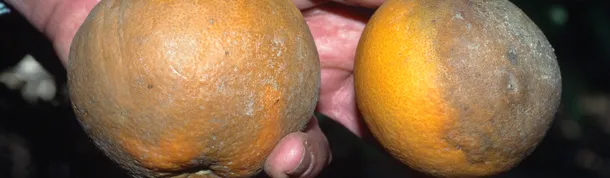
Brown Rot
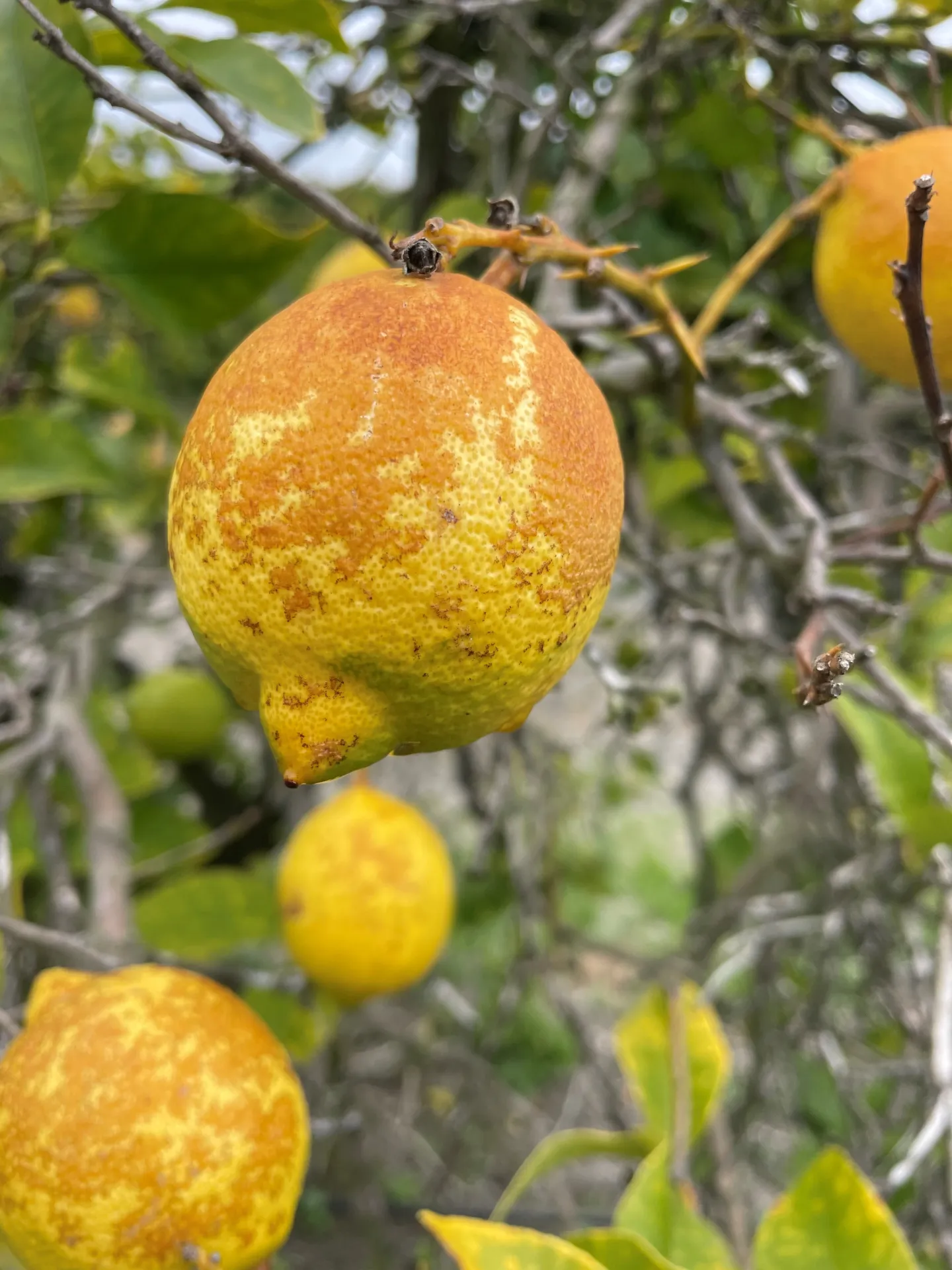
Septoria
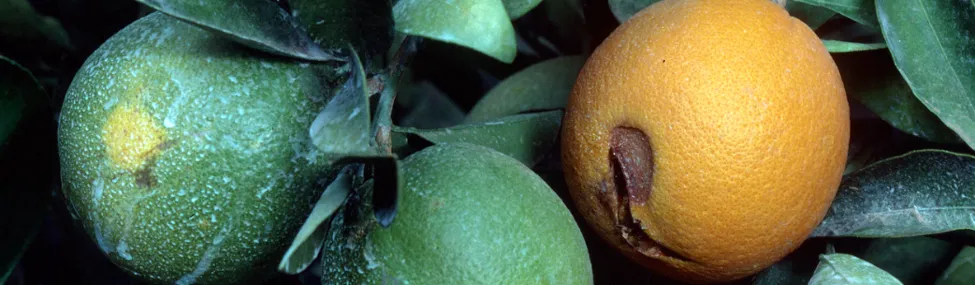
Alternaria Rot
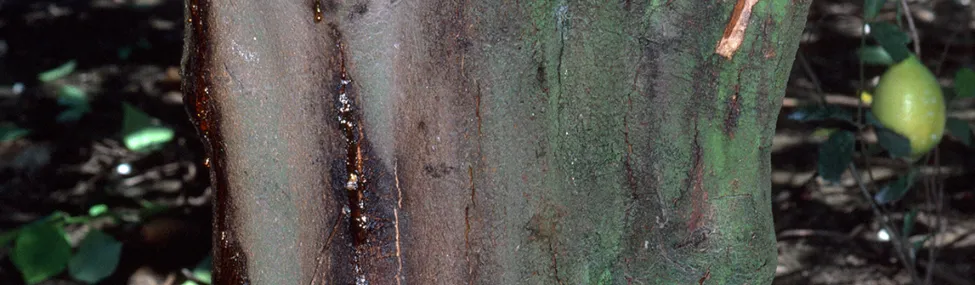
Gummosis
Also in citrus, especially noticeable in lemons along the coast has been “Cell burst” or mesophyll collapse. – Edema.
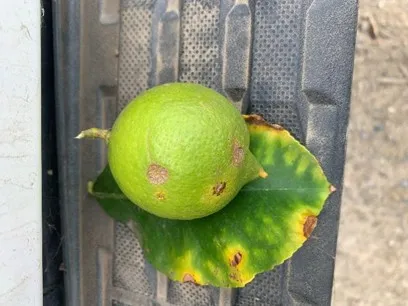
Edema spotting on leaves and fruit
This physiological condition can be brought on by a lot of situations - wind-blown sand wounds, high light intensity, chemical damage, but the most common is the presence of abundant, warm soil water and a cool, moist atmosphere. Under these conditions the roots absorb water at a rate faster than is lost through transpiration. Excess water accumulates in the leaf and fruit. If this condition persists, cells enlarge and can rupture, leading to spotting on the leaves and fruit.
So, what‘s a grower to do? Avoid irrigating to exacerbate the situation. And it seems reducing nitrogen fertilization can reduce the occurrence.
And when it rains, it snails. Snails, this has been a major period of snail activity and they have been throughout the canopies of both avocado and citrus, especially if no snail treatments have been applied.
.
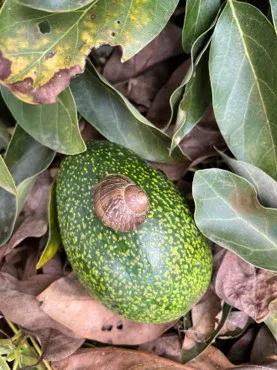
Harvesting avocados and snails
Long range weather forecasts are not always accurate, but it’s important to be ready for rain with copper on the citrus, snail bait in the orchard and a ready rake to pull mulch back if the rains are persistent.