
The Issue
Many students are familiar with STEM subjects in the classroom but have limited exposure to how engineering is applied to solve real-world challenges, such as in agriculture, one of California’s most important industries. Agricultural and Biological Engineering remains relatively unknown compared to more visible engineering disciplines, leaving many students unaware of career opportunities in areas such as precision agriculture, automation, sensors, robotics, environmental stewardship and agricultural machinery systems. College and career fairs serve as important venues for connecting students with professionals, broadening awareness of career possibilities, and helping students understand the diverse educational and workforce pathways available beyond high school.
How UC Delivers
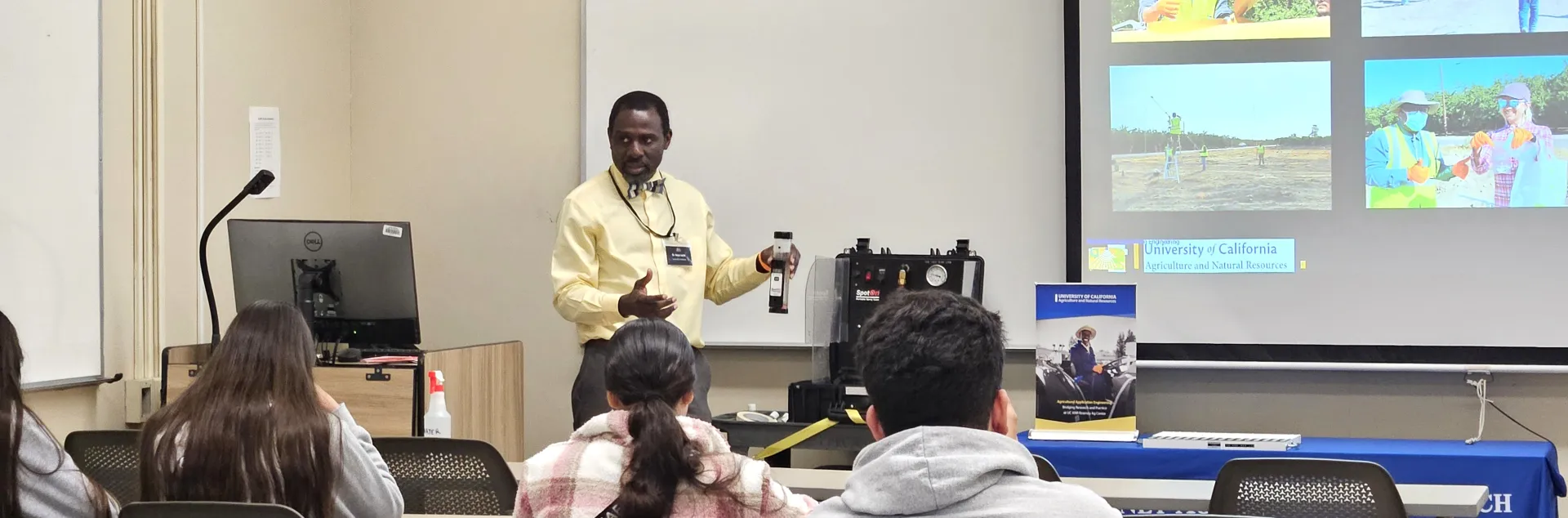
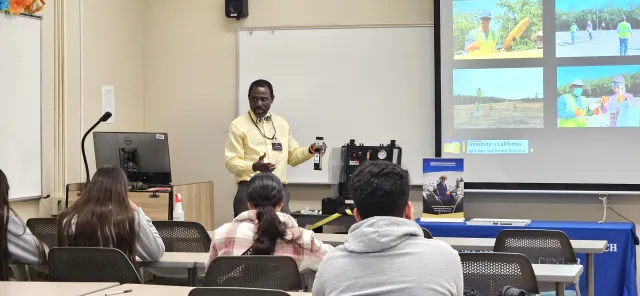
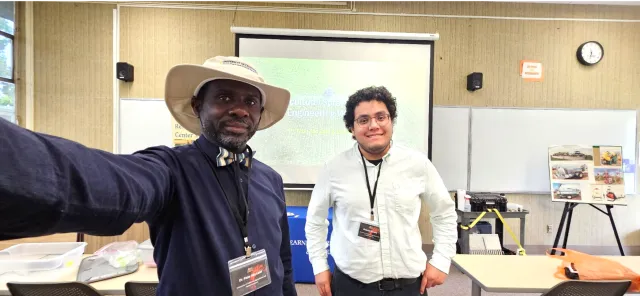
For three years, 2023, 2025, and 2026, UC Cooperative Extension Specialist Dr. Peter Ako Larbi participated in the Reedley College STEM Conference. The STEM conference is a free event open to the public that provides Central Valley middle, high school, and college students opportunities to connect with STEM professionals. Every year, Dr. Larbi delivered a workshop, “Agricultural Spray Application Engineering Workshop”: two sessions each in both 2023 and 2025; and one session in 2026. In 2025, Dr. Larbi’s lab assistant, Jackie Martinez, helped with logistics and provided media documentation. In 2026, Dr. Larbi’s staff research associate, Christian Becerra, co-delivered the workshop.
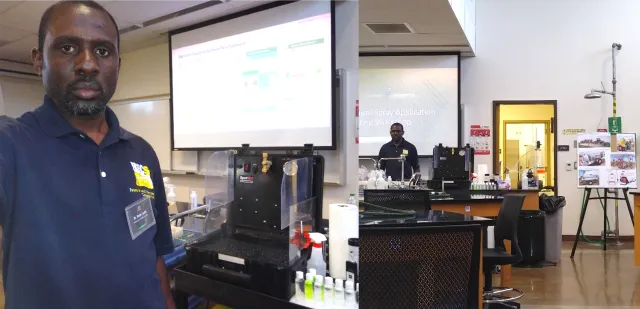
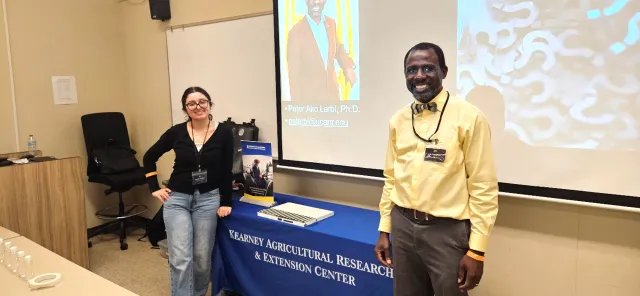
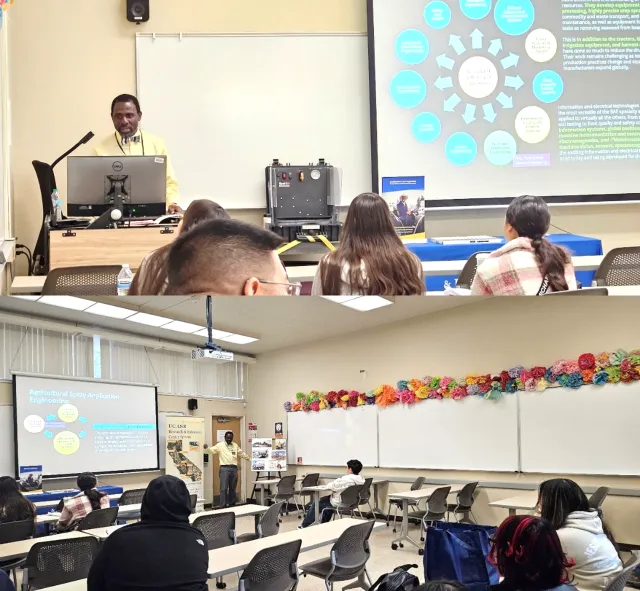
Starting with a brief overview of what Engineering entails and some major engineering disciplines, the workshop introduced participants to Agricultural and Biological Engineering. It focused on Power Systems and Machinery Design Engineering and Information, Electrical and Control Systems Engineering, sub fields forming the basis of his Agricultural Spray Application Engineering practice. In 2026, Christian emphasized how Computer Engineering connects directly to the Information, Electrical and Control Systems Engineering aspect of that practice. He shared how this combination has increased the value of his contributions to the Agricultural Application Engineering (AgAppE) Program headquartered at the Kearney Agricultural Research and Extension Center.
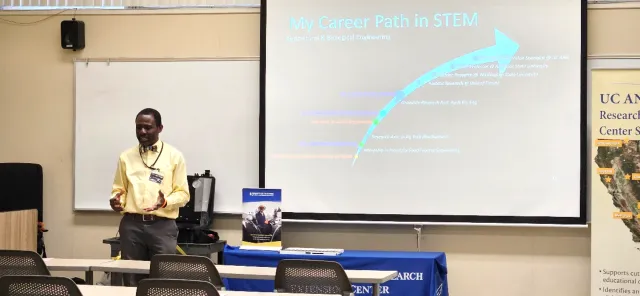
To further inspire the students towards a career in engineering, Dr. Larbi shared highlights of his STEM career journey leading to his current role at UC ANR, including his educational background and significant professional experiences.
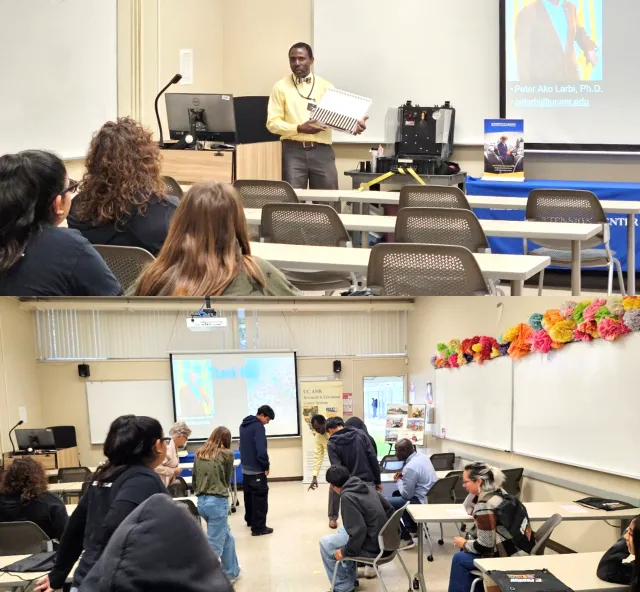
The workshop concluded by discussing the research and extension objectives, outputs, and impacts of the AgAppE Lab at UC ANR, including the focus on: 1) developing and evaluating spray application techniques and technologies; 2) developing and deploying spray application decision support systems; and 3) promoting best practices for safe, economical, and environmentally sound pesticide spray application. Related STEM-based methods– including sensors, automation technologies, and coding techniques – utilized in the practice to enhance precision and support environmental sustainability were explored. Simple demonstrations were performed to illustrate how some of the methods are applied in real-world agricultural systems.
The conference also provided the opportunity for participating STEM professionals to network among themselves during lunch. Dr. Larbi and his staff utilized this opportunity to engage with others.
The Impact
In 2023, the workshop was not evaluated, however, attendees completed evaluation forms in 2025 and 2026, providing feedback on their demographics and learning gained from the workshops. Even with a relatively small sample size (2025: n=25-26; 2026: n=14), the evaluation data reveal several important outcomes about the Agricultural Spray Application Engineering Workshop and its benefits to student participants. A summary of students’ grade level, and levels of interest and exposure to STEM fields is shown in Figure 1. The data show that the workshop reached students across a broad range of grade levels from around the Central Valley. The workshop also reached students with diverse STEM backgrounds. When students were asked which aspect of STEM most interested them, engineering was the most frequently selected STEM area in both years, representing approximately 44% of respondents each year. At the same time, substantial numbers reported “low" or “least” exposure to STEM. Technology had the highest percentage of "medium" and “high" exposure in both years: 2025 (82%) and 2026 (80%). Engineering followed with 60% in 2025 and 55% in 2026. Next was Mathematics with 50% in both years. Science had the lowest overall exposure with 57% in 2025 and 27% in 2026.
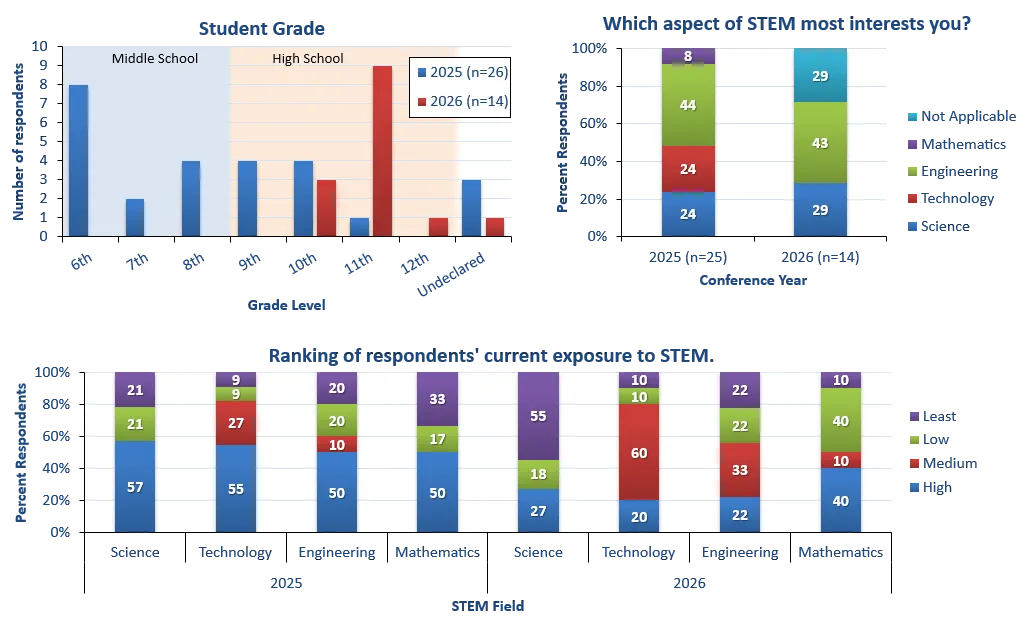
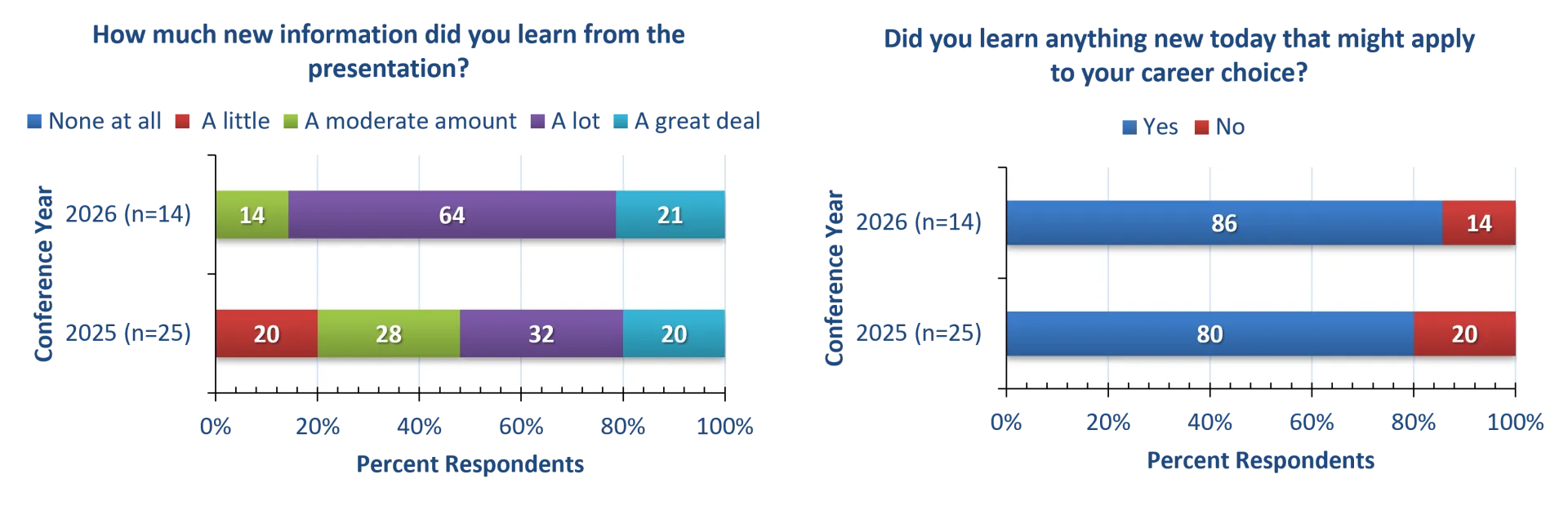
Figure 2 summarizes the learning gains and relevance of the information shared to students’ future careers. Students reported learning substantial new information. Students reported learning "a lot" or "a great deal": 13 of 25 students (52%) in 2025; and 12 of 14 students (86%) in 2026. Students reported at least a moderate amount of learning: 20 of 25 students (80%) in 2025: and 14 of 14 students (100%) in 2026. Particularly noteworthy is that no student in either year reported learning nothing and every 2026 respondent reported learning at least a moderate amount of new information. When asked whether they learned anything that might apply to their career choice, a combined 32 of 39 students (82%) answered “Yes”, while 7 students (18%) answered “No”. This finding is especially significant since it elucidates that students actively engaged with the information they received and most of them recognized direct relevance to their future educational or career decisions.
The data suggest that the workshop content was flexible enough to engage participants at multiple educational stages. This is important because career awareness interventions are valuable both for early exposure (middle school) and for students approaching college and career decisions (high school juniors and seniors). Also, the workshop not only attracted students who were already deeply engaged in STEM but also served students with limited exposure to STEM disciplines, helping to broaden awareness and access.
This workshop supports UC ANR’s efforts related to youth development, workforce preparation, and STEM education by exposing students to careers that address real world challenges. Agricultural engineering, especially, provides various career opportunities at the crossroads of engineering, technology, agriculture, food production, and environmental stewardship. Increasing student awareness of these opportunities can help inspire the next generation of scientists, engineers, and agricultural professionals while highlighting the important role engineering plays in advancing California agriculture and natural resource management.