
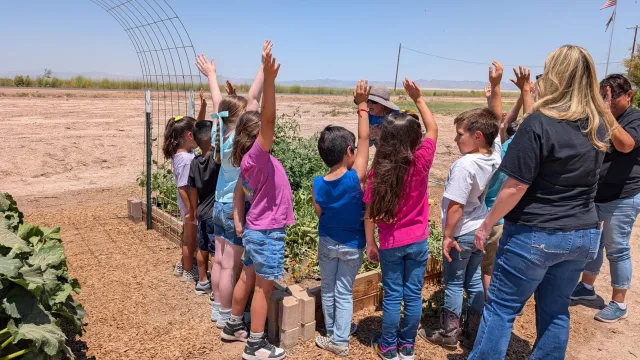
At Mulberry Elementary School District, an artichoke became a small revelation. Few students had ever seen one growing in a field. Then they grew artichokes themselves — watching the plants develop, harvesting them and discovering firsthand where food comes from. It was a simple experience, but in Imperial County, it carried more weight than you might expect.
Here, some of the nation’s most productive farmland stretches across the landscape. The region is often called the “Winter Salad Bowl.” Yet many children growing up alongside those fields have little connection to how food is grown, and many families struggle to access fresh, healthy food. In Imperial County, 28.6% of residents are food insecure and do not always have access to affordable, healthy food.
"Mulberry [Elementary School District] is out in the country, yet many of the students come from town," UC Master Gardener Sue Casey explains. "They can drive through these fields and still not know anything about gardening, farming, or where their food comes from." UC Master Gardener volunteers are working to change that — one seed, one harvest and, sometimes, one taste test at a time.
From Farm Fields to School Gardens
To help students and their families, the UC Master Gardeners of Imperial County are using hands-on gardening lessons to bridge this gap. The UC Master Gardener Program usually focuses on teaching adults, but local volunteers wanted to inspire the next generation, too. By partnering with the University of California Desert Research and Extension Center, the program received a CDFA Farm to School Incubator Grant. This funding helped bring school gardens and gardening classes to K–12 students across the county.
Today, the program works with three districts: the Imperial County Office of Education (ICOE)-Community Schools, El Centro Elementary School District, and Mulberry Elementary School District. These projects have taught students how to garden, given them direct access to fresh produce, and shown how having green spaces on campus can improve their overall well-being.
Building Confidence and Growing Knowledge
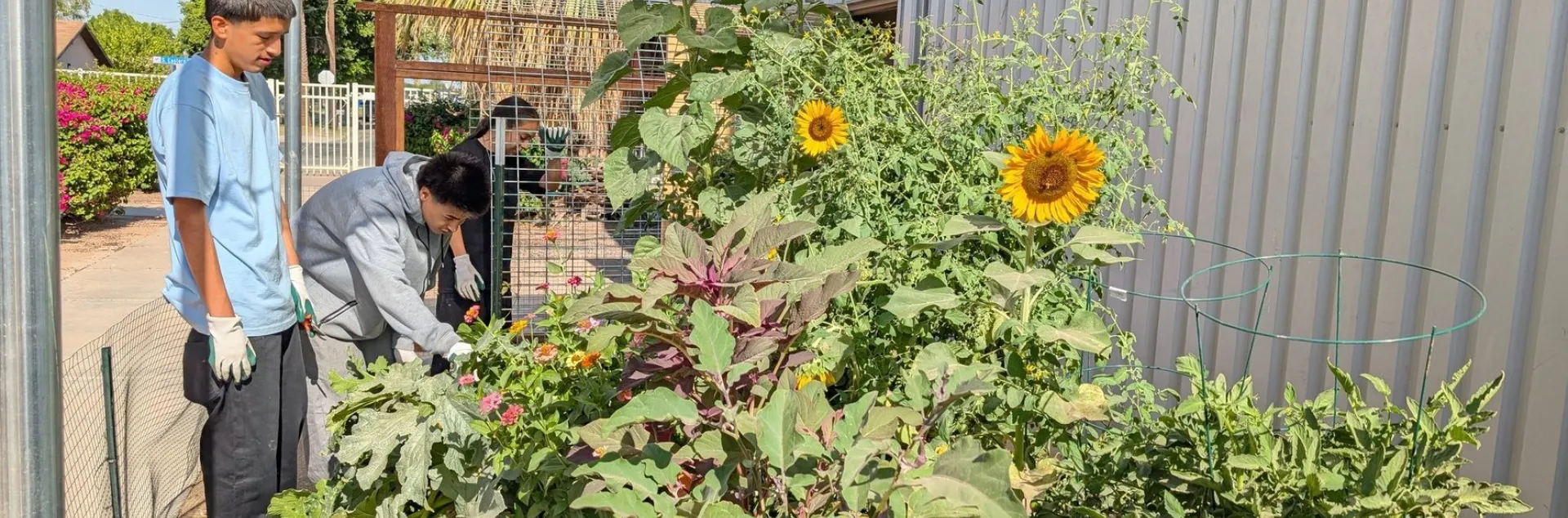
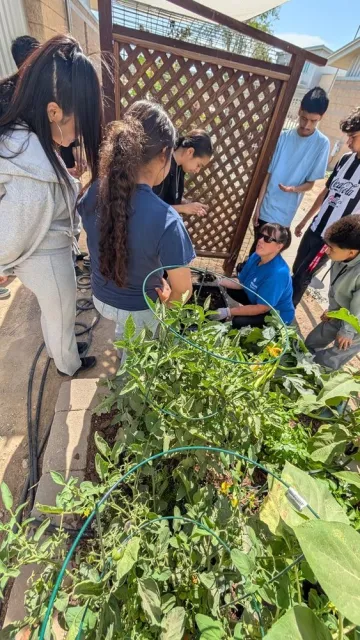
Since gardening became part of their weekly lessons, students at ICOE Del Rio Academy Community School have loved the experience. The school serves students who have missed a lot of school or have had serious behavioral struggles. Even so, every Tuesday and Thursday morning, students arrive early and eager to work in the garden with UC Master Gardener volunteer Lee Davis.
"The goal is to give them the knowledge and confidence to see that gardening is something they can do," Lee Davis says. "More importantly, they take what they've learned home and become the pioneers of a new gardening tradition for their families."
Students learn the entire life cycle of a plant. They start by planting seeds in a grow room, move the young plants into raised beds, and finally harvest the food. For many students, this is the first time they have eaten food straight from a garden.
The program has helped in other ways, too. During the first semester of gardening classes, the school saw a 4% increase in attendance. Students are very excited and often help teach each other. One student, nicknamed "Hawkeye" because "that kid can find anything in the garden," became an expert at managing pests naturally. He now helps teach newer students.
This excitement has followed students home. One student, who proudly said, "I can't believe I can do this," inspired his parents to build garden beds at home so he could keep growing food.
Better Access to Healthy Foods
At Mulberry School District, UC Master Gardener volunteer, Sue Casey focuses on teaching students how to grow food while adding more fresh vegetables to the school cafeteria, where meals are made from scratch. The garden also lets students taste the parts of the plants they grew.
"When we harvest, we do taste testing," Sue Casey said. "Another goal is to increase the intake of fresh vegetables in the school cafeteria, and that has happened."
Artichokes surprised many students. Before the program, few had ever seen one growing in a field. Now that they have grown them successfully, the school hopes to grow even more so students can enjoy them.
The excitement continues at El Centro Elementary School's Home School Academy, which uses a mix of homeschooling and traditional school. UC Master Gardener Coordinator Jessica Delgado says that "Family Harvest Days" are a favorite for the community.
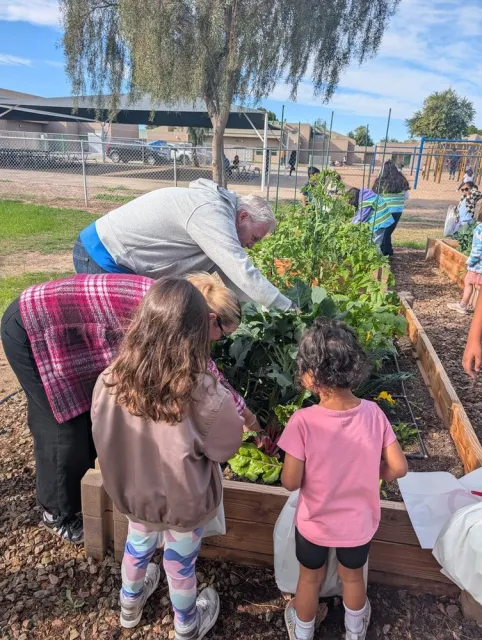
"The parents were so happy to spend a day in the garden with their children," Jessica Delgado said. "They got to see their children harvest, show them what they'd grown, and taste all the different fruits and vegetables they grew themselves."
UC Master Gardener volunteer, Vance McAlister helped students grow large strawberries, tomatoes, cucumbers and celery. For many children, it was the first time they saw these plants growing in the dirt instead of just seeing them on a grocery store shelf.
Creating a Calm Green Space
These gardens provide more than just food and lessons; they are also quiet places to relax. At several schools, the gardens are used to help students' mental and emotional health.
For volunteer Vance McAlister, the garden is about more than nutrition. "The garden is for the social-emotional connection with nature," he says.
At the Home School Academy, the garden beds are right outside the classrooms. Teachers and principals take students there when they need a quiet moment. "When a student is having trouble," Vance McAlister explains, "they'll go to the garden. They'll sit, look at the bugs, look at the plants, and just hang out. It becomes a quiet space for them."
A similar change is happening at ICOE Del Rio Academy. Lee Davis is adding a fountain and benches to make the garden a welcoming place for students to recharge.
"These students are dealing with a lot," Lee Davis says. "The garden is more than a place to grow food. It's also mental, emotional, and physical."
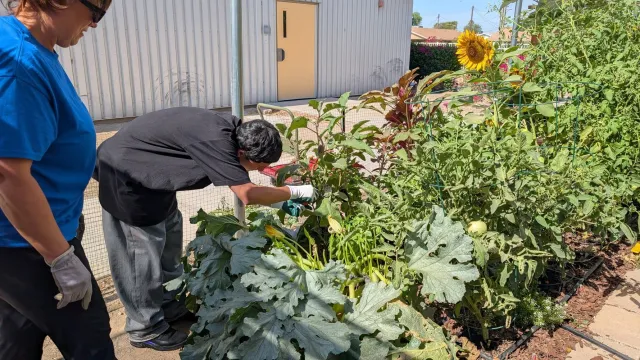
By partnering with the UC Master Gardener Program in Imperial County, schools are connecting families to the process of growing food. The program is healing the youth’s experience with food through gardening that often is not experienced when living in a food insecure region, like Imperial County.
Ready to grow something in your community? Whether you’re interested in starting a garden or becoming a UC Master Gardener volunteer, connect with your local UC Master Gardener Program to learn how to get involved. Find a UC Master Gardener Program.
AI tools were used in the preparation of this article to assist with organizing content and reviewing grammar, clarity and sentence structure in alignment with UC guidelines. All content was reviewed, verified and approved by the author prior to publication.