
Field Chemigation for Branched Broomrape Management in California Processing Tomato
Rohith Vulchi and Brad Hanson, Plant Sciences Department, UC Davis
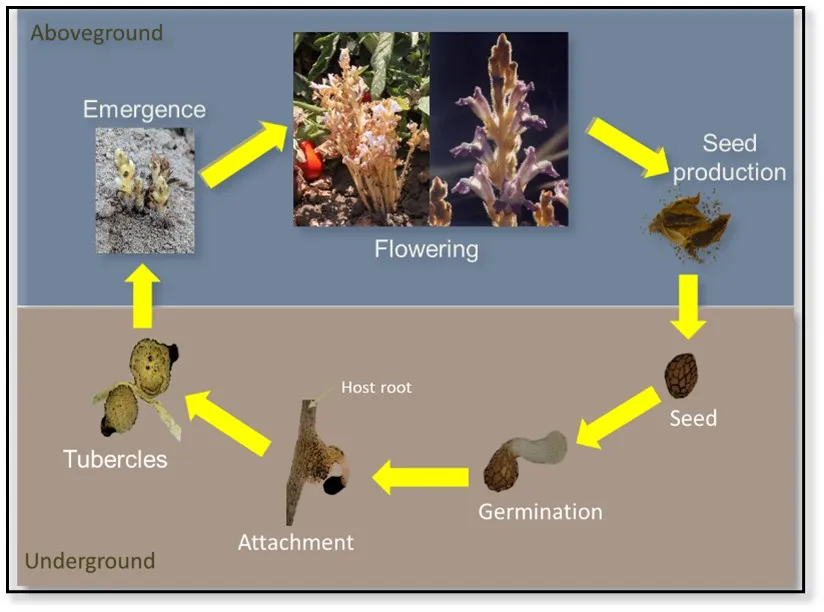
Branched broomrape (Phelipanche ramosa) poses a significant challenge to processing tomato production in California. Unlike many other weeds growers manage, broomrape spends nearly 70% of its entire life cycle underground attached directly to tomato roots, before ever becoming visible. By the time shoots emerge above the soil surface, the plant has already been established belowground for weeks. Once it emerges, it can flower and produce seed within a couple of weeks. Therefore, if rogueing operations do not happen quickly after emergence, broomrape can replenish the soil seedbank before anyone has a chance to remove it. Each stem can produce thousands of seeds, which can remain viable in the soil for several years. None of the herbicides currently registered for postemergence use in California processing tomato effectively control broomrape once it emerges. By the time you can see it, the opportunity for chemical control has already passed.
That biology is what makes chemigation such an important tool in broomrape management. Chemigation is the application of crop protection products through the irrigation system, allowing them to be delivered directly into the crop’s active root zone. In California processing tomatoes, where subsurface drip irrigation is widely used, this approach makes it possible to place herbicide exactly where broomrape is developing. Rather than trying to react to visible broomrape in the field, chemigation allows growers to stay ahead of it. At present, Matrix® SG is the only herbicide registered for branched broomrape control through chemigation in California processing tomatoes under a 24(c) Special Local Needs label. The current label allows three applications of 1.33 oz/acre at 30, 50, and 70 days after transplant, totaling no more than 4 oz/acre annually across all application methods. Over several years, University of California research has shown that this standard protocol reduced branched broomrape emergence by more than 80%. In some years, making the first application around 18 to 20 days after transplanting improved control of the earliest broomrape germination cohort.
Although branched broomrape is classified as an A-listed pest in California, the California Department of Food and Agriculture worked with the tomato industry to develop a compliance agreement framework that allows continued tomato production in fields with broomrape detections under defined management requirements but does not trigger quarantine actions.
Under the compliance agreements, growers follow a defined set of best management practices designed to reduce spread, prevent seed production, and allow continued production while minimizing risk of spreading the pest among fields and regions. Chemigation plays a central role in that strategy. Because the herbicide applications target broomrape at its smallest underground attachment stages, timely chemigation is one of the most important management practices required under the agreement. Calendar days after transplant provide a useful starting point, but broomrape development is heavily influenced by temperature. A warm spring can accelerate development. A cooler season can delay it. Two fields planted on the same day can reach critical developmental stages at very different times depending on weather and location.
Therefore, to help growers better match chemigation timing to broomrape biology, researchers at UC Davis developed the Broomrape Growing Degree Day Calculator. The tool uses transplant date and field-specific weather information to estimate broomrape developmental stages and identify the most effective treatment window for chemigation applications. Instead of relying only on a calendar schedule, growers can use the tool to make timing decisions based on how broomrape is likely developing in that specific field and season.
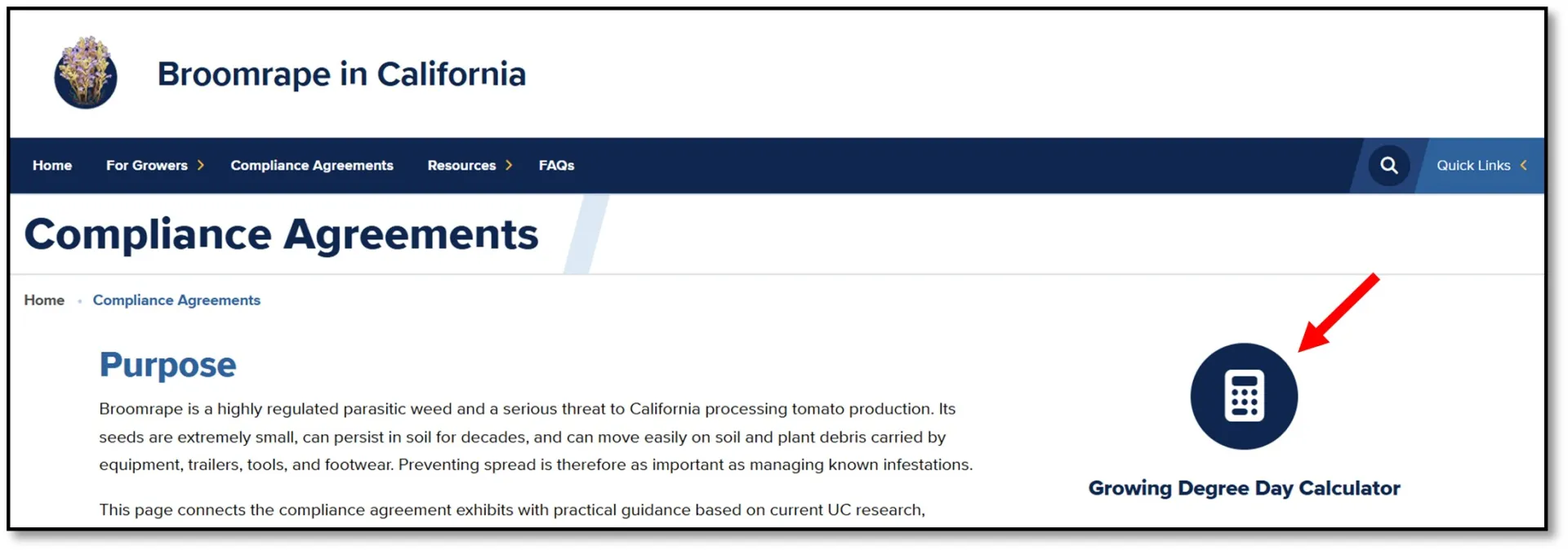
We’ve also developed additional resources to support growers, PCAs, and field crews as they implement these programs in commercial fields. More recently, we added a field chemigation YouTube tutorial video that walks through chemigation timing, equipment setup, and application considerations under California processing tomato production systems.
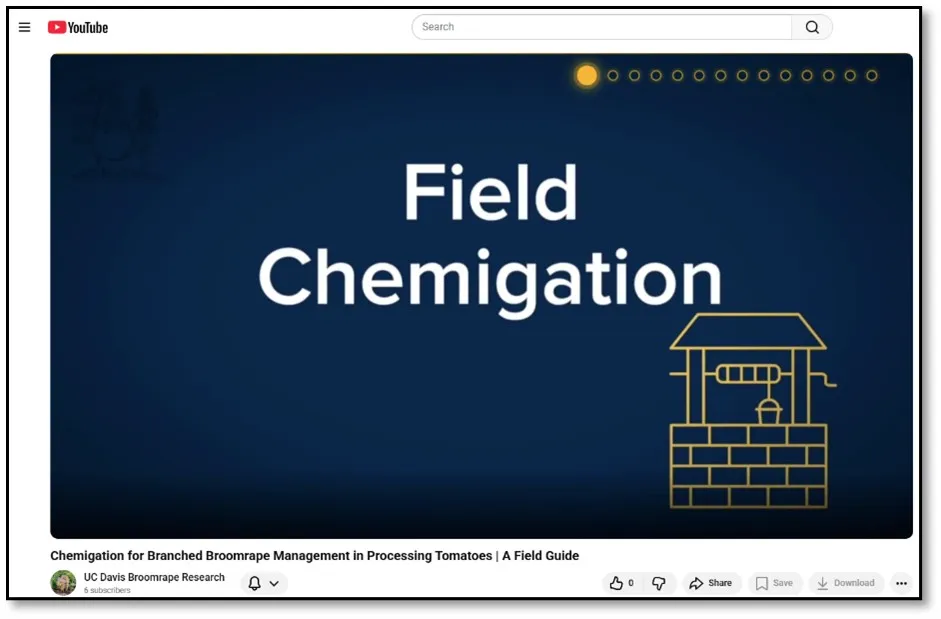
Additional videos covering broomrape identification, scouting, and equipment sanitation are available on the UC Davis Broomrape Research YouTube channel, with more content currently under development. This integrated research and extension effort has been supported by the California Tomato Research Institute, the CDFA Broomrape Board, and the USDA-MBT grant program.