
We were on the last third of our hike on Catalina. It was quite warm and I was very grateful to be going downhill at this point. I was looking forward to reaching the restaurant and getting something cool to drink. But then a plant caught my eye and I slowed down. Its yellow flowers stood out from the surrounding dry terrain. The flowers were such an unusual tubular shape and hung down in a cluster. It seemed very exotic and delicate and I didn’t recall ever seeing it before. I took a few pictures, figuring that I would look it up when I got home.
When we got back from our vacation and I finally got around to using my plant ID app, I thought it was wrong. It listed the plant as Tree Tobacco or Nicotiana glauca. But when I looked that up, the picture was identical to mine.
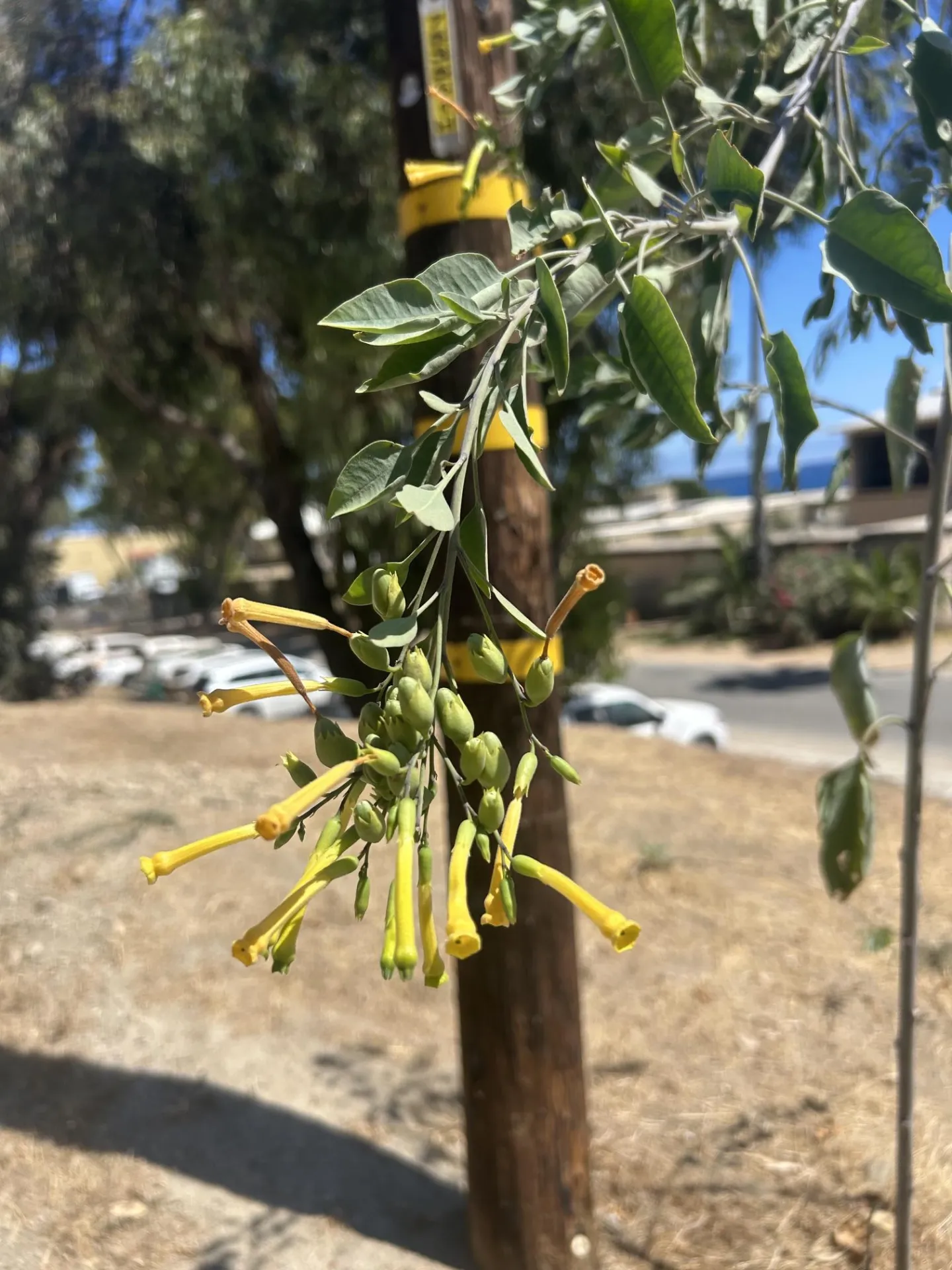
It turns out the plant is native to South America, is a perennial and has a shrub or small tree form, maxing out at 9-15 feet. This plant is very adaptable and can handle temperate, subtropical, arid, and moist conditions. It’s drought-resistant as well. It can handle almost any soil type. It likes full sun to partial shade and does well in USDA Plant Hardiness Zones 7a-10b. It is sensitive to frost.
The North Carolina Extension Gardener Plant Toolbox at plants.ces.ncsu.edu has an excellent article on this plant. They noted that the plant frequently outcompetes native plants and that in many parts of the globe, including California, is considered to be invasive.
And then they mention that it has a severe toxicity rating to humans. Ingesting or smoking leaves or flowers can cause severe reactions and even be fatal. It is also toxic to livestock and pets, including cats and dogs. Okay, invasive tendencies and life-threatening toxicity issues. It seems like I will be enjoying this plant strictly from my photographs.