A Natural Solution for California's Herds: African Catfish Peptides

California's cattle producers and agricultural communities are all too familiar with the rising challenge of antibiotic resistance, making common bacterial infections harder to treat in livestock. But imagine a future where we could tackle these infections with a natural, powerful alternative. Our research points to just that: antimicrobial peptides (AMPs) found in African catfish.

We're really excited about these peptides because African catfish thrive in pathogen-rich freshwater, naturally producing these robust immune compounds in their skin mucus as a defense. This natural origin makes them highly appealing alternatives to synthetic drugs.

Predicted Safety and Potent Action

One of the most compelling aspects of these AMPs is their predicted safety for mammals. Our initial computer analyses suggest that various catfish AMPs are generally recognized as safe (GRAS). We predict they'll be absorbed in the human intestine without causing liver, brain, or heart toxicity. Furthermore, lab tests on a promising peptide, NACAP-II, confirmed it was non-hemolytic, meaning it didn't damage rabbit red blood cells—a strong indicator of its potential safety for mammalian cells.

Beyond safety, these peptides demonstrate effectiveness against problematic bacteria. One study revealed NACAP-II's strong activity against Extended-Spectrum Beta-Lactamase (ESBL)-producing Escherichia coli—a critical concern for both animal and human health due to its resistance to many common antibiotics. Another peptide, ACAP-IV, also showed antibacterial activity against E. coli and Staphylococcus aureus. We believe these AMPs work by directly disrupting bacterial cell membranes, a mechanism that makes it harder for bacteria to develop resistance compared to how they resist traditional antibiotics.
Primary Image
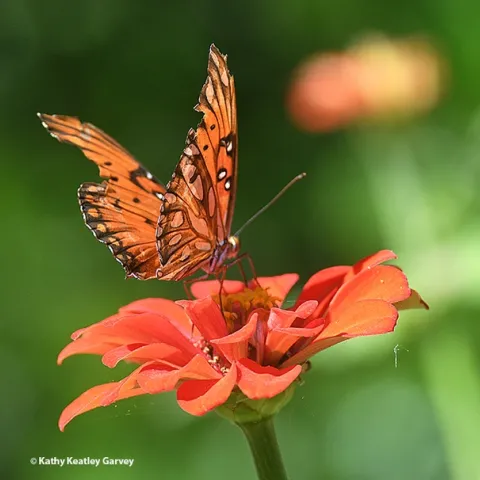
A tattered Gulf Fritillary sipping nectar from a zinnia in a Vacaville, Calif., garden. (Photo by Kathy Keatley Garvey)
Bug Squad: Article

What Good Is a Butterfly?

August 8, 2023
By Kathy Keatley Garvey
In his fascinating book, "Life on a Little-Known Planet: A Biologist's View of Insects and Their World," Connecticut-born biologist/entomologist Howard Ensign Evans (1919-2002) asks "What good is a butterfly?" "To the farmer, it is an adult cabbage worm or carrot caterpillar, and better off dead.
View Article
Primary Image
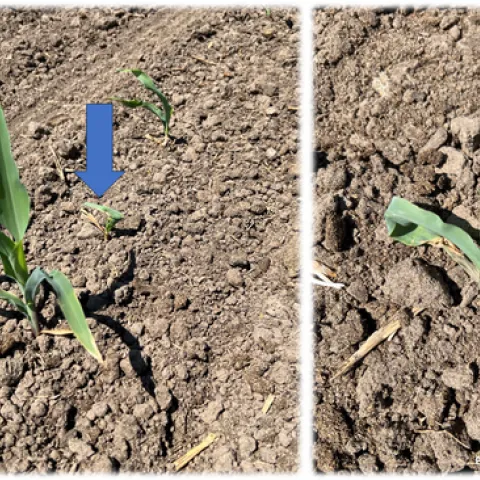
Figure 2. Suspected heat damage on corn due to hot soil temperatures at emergence.
SJC and Delta Field Crops: Article

Field Diagnostics in Field Crops

August 8, 2023
By Michelle M Leinfelder-Miles
Diagnosing problems in the field is never an easy task, but it is one of the most interesting aspects of my job because I usually never encounter the same set of circumstances twice. This summer, I have been called out on a few interesting diagnostics calls, and I wanted to share some observations.
View Article
Nutrition Policy Institute News: Article

NPI shares preliminary results on a school meal reusable trays and cutlery pilot project at the 2023 California Resource and Recovery Association Conference

August 8, 2023
By Danielle Lee, Celeste Felix
Nutrition Policy's Institute's Celeste Felix will present at the 2023 California Resource and Recovery Association Conference about NPI's latest project evaluating how a large, urban school districts' transition to scratch cooking and using reusable serviceware can impact students' dietary intake an...
View Article
Primary Image
thumbnail IMG 1647
Under the Solano Sun: Article

Kauai's Hindu Temple Gardens

August 8, 2023
Tucked away on 382 acres in the island of Kauai, Hawaii, is the Kauai Hindu Temple. It is located in the town ofKapa'a on the eastern side of the island, near theWailua river and MountWaialeale.
View Article
Primary Image
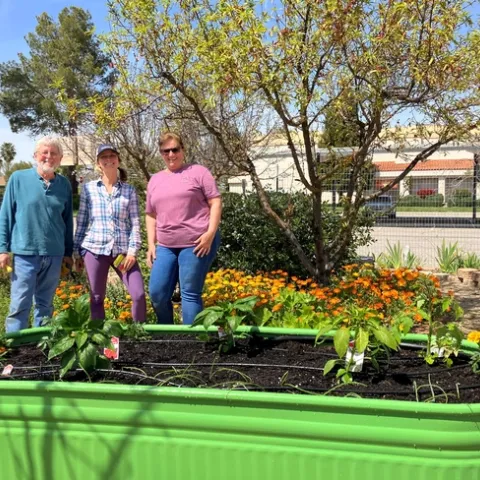
UC master gardeners stand behind a planted raised bed with peppers
UC Master Gardeners- Diggin' it in SLO: Article

Centennial Park Demonstration Garden: Open Garden Day News Release!

August 8, 2023
UC Master Gardeners, whose mission is to extend research-based knowledge and information on home horticulture, pest management, and sustainable landscape practices to the residents of San Luis Obispo County, is now officially in Paso Robles, welcoming residents to visit their new demonstration garde...
View Article
Primary Image
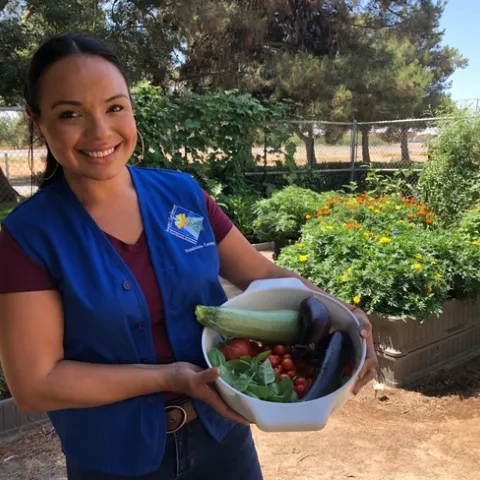
Smiling woman wearing a blue vest standing in a garden.
The Stanislaus Sprout: Article

Become a UCCE Master Gardener in 2024!

August 8, 2023
By Anne E Schellman
Are you interested in helping others and giving back to your community? Do you have a passion for gardening and volunteering? The Stanislaus County* UC Master Gardener Program is accepting applications for 2024.
View Article
Primary Image
University of California Cooperative Extension (UCCE) logo
UC Weed Science (weed control, management, ecology, and minutia): Article

JOB ANNOUNCEMENT :: Agronomy Advisor (Applied Research and Extension)

August 8, 2023
By Gale Perez
Position: Agronomy Advisor Applied Research and Extension (AP#23-09) Location: This position will be headquartered in the UCCE Siskiyou County office in Yreka, CA. Closing date: August 31, 2023 Job Description: https://ucanr.
View Article