A Natural Solution for California's Herds: African Catfish Peptides

California's cattle producers and agricultural communities are all too familiar with the rising challenge of antibiotic resistance, making common bacterial infections harder to treat in livestock. But imagine a future where we could tackle these infections with a natural, powerful alternative. Our research points to just that: antimicrobial peptides (AMPs) found in African catfish.

We're really excited about these peptides because African catfish thrive in pathogen-rich freshwater, naturally producing these robust immune compounds in their skin mucus as a defense. This natural origin makes them highly appealing alternatives to synthetic drugs.

Predicted Safety and Potent Action

One of the most compelling aspects of these AMPs is their predicted safety for mammals. Our initial computer analyses suggest that various catfish AMPs are generally recognized as safe (GRAS). We predict they'll be absorbed in the human intestine without causing liver, brain, or heart toxicity. Furthermore, lab tests on a promising peptide, NACAP-II, confirmed it was non-hemolytic, meaning it didn't damage rabbit red blood cells—a strong indicator of its potential safety for mammalian cells.

Beyond safety, these peptides demonstrate effectiveness against problematic bacteria. One study revealed NACAP-II's strong activity against Extended-Spectrum Beta-Lactamase (ESBL)-producing Escherichia coli—a critical concern for both animal and human health due to its resistance to many common antibiotics. Another peptide, ACAP-IV, also showed antibacterial activity against E. coli and Staphylococcus aureus. We believe these AMPs work by directly disrupting bacterial cell membranes, a mechanism that makes it harder for bacteria to develop resistance compared to how they resist traditional antibiotics.

Primary Image
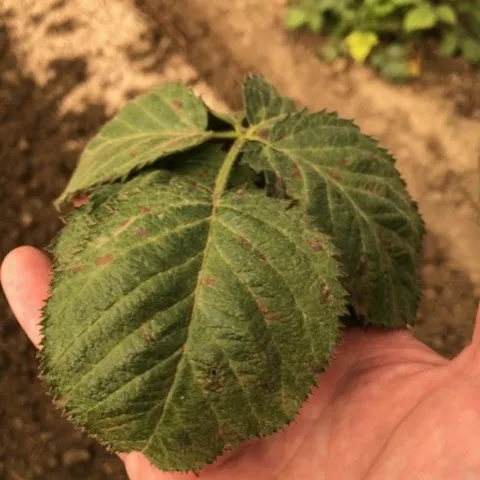
Purple spots on top of blackberry leaf common to downy mildew infection. Photo Mark Bolda, UCCE.
Strawberries and Caneberries: Article

Recent Occurrence of Downy Mildew in Central Coast Blackberries

May 1, 2023
By Mark P Bolda
It shouldn't be much of a surprise that we've picked up some cases of downy mildew, Peronospora sparsa, in a variety of proprietary blackberry up and down the Central Coast. In both cases, the blackberries were uncovered during the rainstorms of March.
View Article
UCCE in the County of San Luis Obispo: Article

TARGETED GRAZING FIELD DAY & SAN BENITO WORKING LANDSCAPES GROUP MEETING

May 1, 2023
TARGETED GRAZING FIELD DAY & SAN BENITO WORKING LANDSCAPES GROUP MEETING Friday,May 5th, 2023 MORNING FIELD TOUR: Evaluating the Effects of Targeted Grazing Liz Reikowski, Willow Creek Land and Cattle, has conducted her own research on grazing leases in south San Benito County with funding from a Su...
View Article
Primary Image
Denise short hair

An Update on the Status of Monarch Butterflies

May 1, 2023
By Anne E Schellman
In April I visited Pismo State Beach's Monarch Butterfly Grove. I knew there wouldn't be any western monarchs who overwintered remaining there (though I saw three flying around!), since they left a few weeks prior to begin their annual migration north.
View Article
Primary Image
Golden retriever wearing a sunflower bonnet.
The Stanislaus Sprout: Article

Pollinator Festival Fun!

May 1, 2023
By Anne E Schellman
On April 1, 2023, the La Loma Native Garden held its 3rd annual Pollinator Festival. Participants stopped by the UC Cooperative Extension Master Gardener booth to spin our Pollinator Wheel and learn about native insects and best landscaping practices to protect them.
View Article
Primary Image
photos by Heather Hamilton
Under the Solano Sun: Article

The Mighty Eucalyptus

May 1, 2023
There are over 700 varities of Eucalyptus , which is native to Australia. The name is derived from the ancient greek work good'. The first collection of eucalyptus was found as early as 1770. The most widely distributed throughout Australia is E.
View Article