A Natural Solution for California's Herds: African Catfish Peptides

California's cattle producers and agricultural communities are all too familiar with the rising challenge of antibiotic resistance, making common bacterial infections harder to treat in livestock. But imagine a future where we could tackle these infections with a natural, powerful alternative. Our research points to just that: antimicrobial peptides (AMPs) found in African catfish.

We're really excited about these peptides because African catfish thrive in pathogen-rich freshwater, naturally producing these robust immune compounds in their skin mucus as a defense. This natural origin makes them highly appealing alternatives to synthetic drugs.

Predicted Safety and Potent Action

One of the most compelling aspects of these AMPs is their predicted safety for mammals. Our initial computer analyses suggest that various catfish AMPs are generally recognized as safe (GRAS). We predict they'll be absorbed in the human intestine without causing liver, brain, or heart toxicity. Furthermore, lab tests on a promising peptide, NACAP-II, confirmed it was non-hemolytic, meaning it didn't damage rabbit red blood cells—a strong indicator of its potential safety for mammalian cells.

Beyond safety, these peptides demonstrate effectiveness against problematic bacteria. One study revealed NACAP-II's strong activity against Extended-Spectrum Beta-Lactamase (ESBL)-producing Escherichia coli—a critical concern for both animal and human health due to its resistance to many common antibiotics. Another peptide, ACAP-IV, also showed antibacterial activity against E. coli and Staphylococcus aureus. We believe these AMPs work by directly disrupting bacterial cell membranes, a mechanism that makes it harder for bacteria to develop resistance compared to how they resist traditional antibiotics.
Primary Image
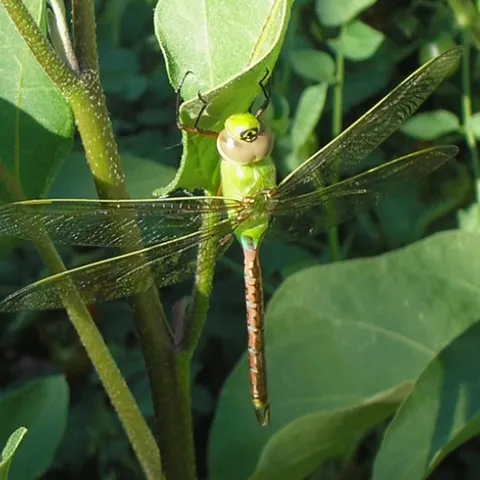
UC Davis distinguished professor Art Shapiro spotted two cabbage white butterflies today (Feb. 8) in West Sacramento, Yolo County. These weren't them. (Photo by Kathy Keatley Garvey)

Bingo! First Cabbage White Butterfly of the Year!

February 8, 2023
By Kathy Keatley Garvey
In between the rain and the cold, UC Davis distinguished professor Art Shapiro of the Department of Evolution and Ecology has been searching in vain for the first white cabbage butterfly (Pieris rapae) of the year.
View Article
Nutrition Policy Institute News: Article

Nutrition Policy Institute showcases text messaging innovation to improve CalFresh participants purchasing of California-grown produce at virtual CalFresh Forum

February 8, 2023
By Danielle Lee, Ron Strochlic
The annual CalFresh Forum, hosted by Nourish California in partnership with the California Department of Social Services, brings together key stakeholders from across California to acknowledge outstanding work, identify opportunities, and discuss strategies to improve the reach and impact of CalFres...
View Article
Primary Image
lemon oil spray damage
Topics in Subtropics: Article

Lemons and Oil and Water Spots

February 8, 2023
By Ben A Faber
A recent call came through inquiring about the cause of water spotting or "staining" on lemons from a coastal orchard. The orchard was sprayed for pests using a horticultural oil in October and at harvest, the spotting was noted.
View Article
Primary Image
Washington State University logo
UC Weed Science (weed control, management, ecology, and minutia): Article

Job announcement :: Horticultural Weed Scientist

February 7, 2023
By Gale Perez
Washington State University (WSU), Department of Crop and Soil Sciences (CSS) within the College of Agricultural, Human, and Natural Resources Sciences (CAHNRS), is seeking a dynamic, motivated, and problem-solving researcher and extension specialist to join an extraordinary team of scientists and e...
View Article
Primary Image
A screenshot from the Urban Pyrethroid and Fipronil Use: Runoff and Surface Water Protection course offered by UC IPM.

Online IPM Course Discount for 2023

February 7, 2023
By Lauren Fordyce
UC IPM's online courses for 2023 are now available! All of UC IPM's courses can be accessed for free. However, if you need Continuing Education Units (CEUs) and a certificate of completion, most courses require payment.
View Article
Primary Image
The Bohart Museum of Entomology's live petting zoo draws scores of visitors. Here a youngster gets acquainted with a stick insect, aka walking stick. (Photo by Kathy Keatley Garvey)

Of Bugs and Plants and Eagles...and More...

February 7, 2023
By Kathy Keatley Garvey
Of bugs and plants and eagles...and more... The 12th annual UC Davis Biodiversity Museum Day, set Saturday, Feb. 18 on the university campus, will feature 11 museums or collections in what is billed as a "Super Science Day.
View Article