A Natural Solution for California's Herds: African Catfish Peptides

California's cattle producers and agricultural communities are all too familiar with the rising challenge of antibiotic resistance, making common bacterial infections harder to treat in livestock. But imagine a future where we could tackle these infections with a natural, powerful alternative. Our research points to just that: antimicrobial peptides (AMPs) found in African catfish.

We're really excited about these peptides because African catfish thrive in pathogen-rich freshwater, naturally producing these robust immune compounds in their skin mucus as a defense. This natural origin makes them highly appealing alternatives to synthetic drugs.

Predicted Safety and Potent Action

One of the most compelling aspects of these AMPs is their predicted safety for mammals. Our initial computer analyses suggest that various catfish AMPs are generally recognized as safe (GRAS). We predict they'll be absorbed in the human intestine without causing liver, brain, or heart toxicity. Furthermore, lab tests on a promising peptide, NACAP-II, confirmed it was non-hemolytic, meaning it didn't damage rabbit red blood cells—a strong indicator of its potential safety for mammalian cells.

Beyond safety, these peptides demonstrate effectiveness against problematic bacteria. One study revealed NACAP-II's strong activity against Extended-Spectrum Beta-Lactamase (ESBL)-producing Escherichia coli—a critical concern for both animal and human health due to its resistance to many common antibiotics. Another peptide, ACAP-IV, also showed antibacterial activity against E. coli and Staphylococcus aureus. We believe these AMPs work by directly disrupting bacterial cell membranes, a mechanism that makes it harder for bacteria to develop resistance compared to how they resist traditional antibiotics.
Primary Image
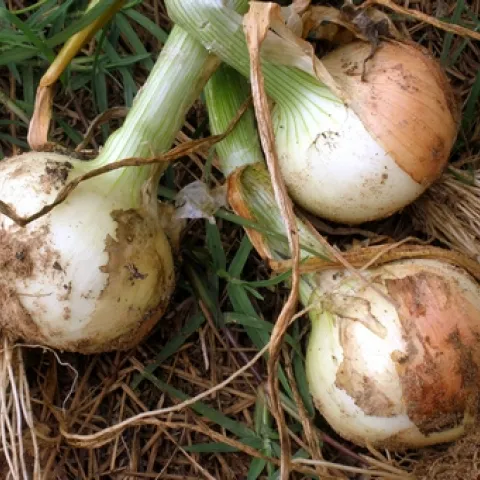
Photo of onion bulbs
HOrT COCO-UC Master Gardener Program of Contra Costa: Article

February is a Good Time to Plant Onions

February 6, 2023
By Help Desk Team
If you've been frustrated when growing onions because the plants produce flower stalks instead of bulbs, it is time to try again. In our Contra Costa County climate, when onions are started in the fall, it is not unusual for them to flower the following spring.
View Article
Primary Image
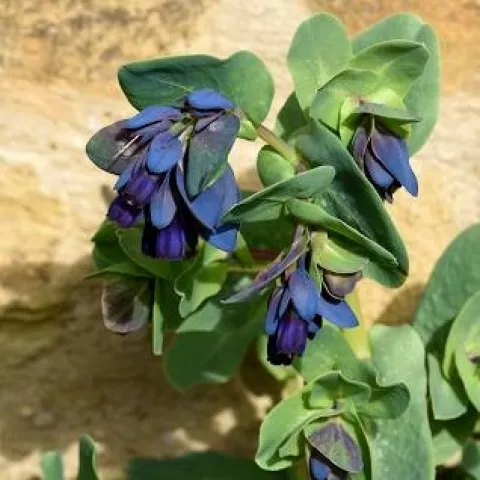
Cerinthe major
Spill the Beans: Article

Growing Cerinthe major

February 6, 2023
by Rainer Hoenicke While perusing the aisles at a nursery a few years back, I noticed a two-foot tall honeywort (Cerinthe major purpurescens'), growing in a large container. It was in full bloom in the middle of February when hardly anything else was.
View Article
Primary Image
David Gonzalves standing in front of Santa Cruz UCCE office
ANR Adventures: Article

Beginnings

February 6, 2023
By Deanne Meyer
Last week was an exciting week in ANR. We welcomed David Gonzalves as our new Area Director for Monterey, Santa Cruz and San Benito Counties. David has worked for Tuolumne and Merced Counties as well as UC Merced. He brings his agricultural roots and administrative expertise to UC ANR.
View Article
Nutrition Policy Institute News: Article

Affiliated Nutrition Policy Institute researcher Lauren Au weighs in on proposed new USDA school nutrition standards in CNN and The New York Times

February 4, 2023
By Danielle Lee, Lorrene D Ritchie
In a recent CNN article, Lauren Au, Assistant Professor at the University of California, Davis in the Department of Nutrition and an affiliated researcher with the Nutrition Policy Institute, shared her thoughts on the proposed changes to school nutrition standards.
View Article
Primary Image
Top 10 Best Weeding Tools for a Healthy Garden In 2022 (ramresearch.org)
Napa Master Gardener Column: Article

You may delay, but weeds will not!

February 4, 2023
Procrastination is rarely one's friend, but never is this truer than when dealing with weeds. Some gardeners say, breezily, that a weed is simply a plant in the wrong place. I say that it is something that you didn't plant and don't want.
View Article
Primary Image
Lauren Ponisio, assistant professor of biology, University of Oregon, doing field research.
Entomology & Nematology News: Article

Lauren Ponisio: Disease in Plant-Pollinator Communities

February 3, 2023
By Kathy Keatley Garvey
Lauren Ponisio, an assistant professor of biology at the University of Oregon who seeks to preserve and restore populations of bees and other pollinators, will speak on "Disease in Plant-Pollinator Communities" at the UC Davis Department of Entomology and Nematology seminar at 4:10 p.m.
View Article
Tulare County Cooperative Extension: Article

February 2023

February 3, 2023
In this issue: How Late is Too Late for NOW Winter Sanitation? U.S. EPA proposed changes to rodenticide labels for agricultural use: opportunity for public comment Madera County Almond Day - March 23, 2023 Madera/Merced Pistachio Day - April 13, 2023 In Memoriam: UCCE Farm Advisor G.
View Article