A Natural Solution for California's Herds: African Catfish Peptides

California's cattle producers and agricultural communities are all too familiar with the rising challenge of antibiotic resistance, making common bacterial infections harder to treat in livestock. But imagine a future where we could tackle these infections with a natural, powerful alternative. Our research points to just that: antimicrobial peptides (AMPs) found in African catfish.

We're really excited about these peptides because African catfish thrive in pathogen-rich freshwater, naturally producing these robust immune compounds in their skin mucus as a defense. This natural origin makes them highly appealing alternatives to synthetic drugs.

Predicted Safety and Potent Action

One of the most compelling aspects of these AMPs is their predicted safety for mammals. Our initial computer analyses suggest that various catfish AMPs are generally recognized as safe (GRAS). We predict they'll be absorbed in the human intestine without causing liver, brain, or heart toxicity. Furthermore, lab tests on a promising peptide, NACAP-II, confirmed it was non-hemolytic, meaning it didn't damage rabbit red blood cells—a strong indicator of its potential safety for mammalian cells.

Beyond safety, these peptides demonstrate effectiveness against problematic bacteria. One study revealed NACAP-II's strong activity against Extended-Spectrum Beta-Lactamase (ESBL)-producing Escherichia coli—a critical concern for both animal and human health due to its resistance to many common antibiotics. Another peptide, ACAP-IV, also showed antibacterial activity against E. coli and Staphylococcus aureus. We believe these AMPs work by directly disrupting bacterial cell membranes, a mechanism that makes it harder for bacteria to develop resistance compared to how they resist traditional antibiotics.

Primary Image
An assassin bug drills a pest, a spotted cucumber beetle. (Photo by Kathy Keatley Garvey)
Bug Squad: Article

Let's Hear It for Biocontrol, Integrated Pest Management

August 23, 2019
By Kathy Keatley Garvey
Let's hear it for biocontrol. You've seen lady beetles, aka ladybugs, preying on aphids. But have you seen an assassin bug attack a spotted cucumber beetle? No? How about a crab spider munching on a stink bug? All biocontrol, part of integrated pest management (IPM).
View Article
Napa Master Gardener Column: Article

How Much Should I Water?

August 23, 2019
By Susanne von Rosenberg, U. C. Master Gardener of Napa County One of the questions that home gardeners ask Napa County Master Gardeners most frequently is: How much should I water? As with many gardening questions, the answer is: It depends.
View Article
Under the Solano Sun: Article

Gardening Challenges: Allergies and the Outdoors

August 23, 2019
A lot of us have allergies. I seem to have trouble most of the year. So it does make gardening a challenge at times when your eyes are watery, runny nose and sneezing. But as gardeners, we continue to garden. There is a book written by Thomas Leo Ogren titled Allergy-Free Gardening.
View Article
Stanislaus County: Article

Evapotranspiration Report - 08/22/2019

August 23, 2019
Hello all, Please find the attached document to provide the previous weeks estimated water use report in terms of evapotranspiration for almonds, peaches, walnuts, established vineyard, alfalfa, and pasture in Stanislaus County.
View Article
Primary Image
The winner of the 2018 Healthy Snack Day photo contest was submitted by UCCE Tulare County.
ANR Employee News: Article

Snack healthy on Healthy Snack Day and win great prizes

August 23, 2019
By Jeannette Warnert
The UC ANR Staff Assembly Wellness Committee is sponsoring Healthy Snack Day activities on Sept. 12. Healthy Snack Day is a statewide day of action celebrating the benefits of eating foods in between meals that that are nutritious and fun.
View Article
Primary Image
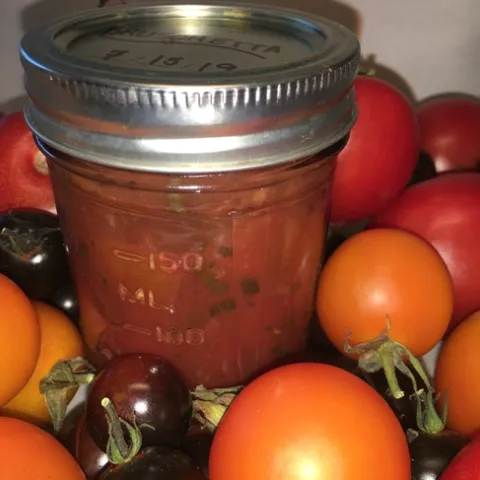
Photo by Sarah Arana
UC Master Gardeners- Diggin' it in SLO: Article

Tomato Workshop

August 23, 2019
Tomato Talk By Sarah Arana UCCE Master Food Preserver I planted some tomatoes this year and I have more than my family can eat. What's the best way to preserve some for the winter? Adam M.
View Article
Primary Image
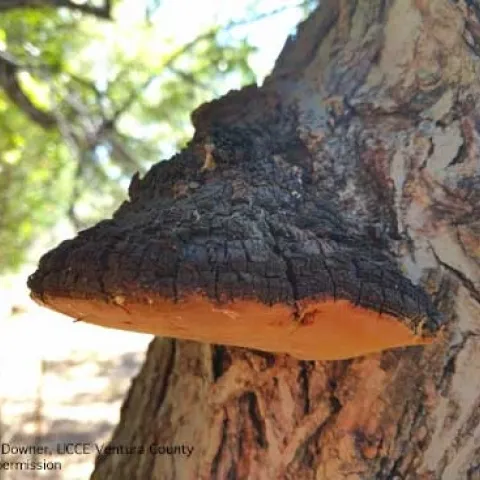
A conk, the fruiting body of the fungus <i>Phellinus ignarius</i> on black walnut. (Credit: AJ Downer, UCCE Ventura County)
Pests in the Urban Landscape: Article

Wood Decay Fungi in Landscape Trees

August 23, 2019
Landscape trees provide welcome shade, fruit, homes for wildlife, and even a place for kids to climb. But if the wood is damaged, disease-causing fungi can infect the tree. A number of fungal diseases decay wood in both tree branches and trunks, weakening and sometimes killing the tree.
View Article
Primary Image
Puncturevine flowers, J Alosi
The Real Dirt: Article

Ouch! It’s Puncturevine!

August 23, 2019
Puncturevine (Tribulus terrestris) is an attractive green plant with small yellow flowers commonly seen growing prostrate along the side of the road. A native to Southern Europe, it's also referred to as goathead. However, underneath its foliage lies danger: spiky seedpods with needle-point spikes.
View Article
Primary Image
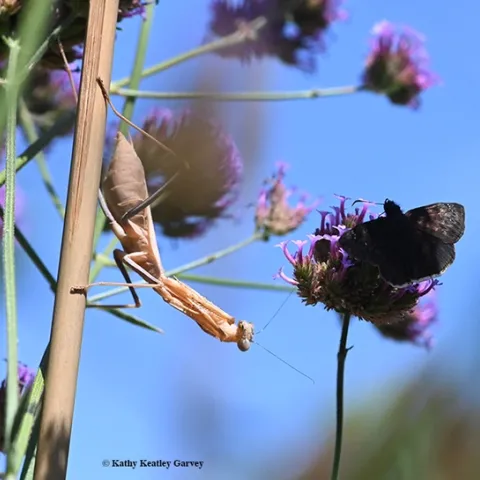
A female praying mantis, Stagmomantis limbata (as identified by praying mantis expert Lohit Garikipati of UC Davis) eyes a duskywing butterfly, genus Erynnis, nectaring on verbena. (Photo by Kathy Keatley Garvey)
Bug Squad: Article

Just Look, Don't Take?

August 22, 2019
By Kathy Keatley Garvey
When we last left Ms. Mantis, a female Stagmomantis limbata residing in our verbena patch, she was munching on a honey bee. A successful ambush stalker, she was. But not always. Her plan to take down a duskywing butterfly, genus Erynnis, didn't go so well.
View Article