A Natural Solution for California's Herds: African Catfish Peptides

California's cattle producers and agricultural communities are all too familiar with the rising challenge of antibiotic resistance, making common bacterial infections harder to treat in livestock. But imagine a future where we could tackle these infections with a natural, powerful alternative. Our research points to just that: antimicrobial peptides (AMPs) found in African catfish.

We're really excited about these peptides because African catfish thrive in pathogen-rich freshwater, naturally producing these robust immune compounds in their skin mucus as a defense. This natural origin makes them highly appealing alternatives to synthetic drugs.

Predicted Safety and Potent Action

One of the most compelling aspects of these AMPs is their predicted safety for mammals. Our initial computer analyses suggest that various catfish AMPs are generally recognized as safe (GRAS). We predict they'll be absorbed in the human intestine without causing liver, brain, or heart toxicity. Furthermore, lab tests on a promising peptide, NACAP-II, confirmed it was non-hemolytic, meaning it didn't damage rabbit red blood cells—a strong indicator of its potential safety for mammalian cells.

Beyond safety, these peptides demonstrate effectiveness against problematic bacteria. One study revealed NACAP-II's strong activity against Extended-Spectrum Beta-Lactamase (ESBL)-producing Escherichia coli—a critical concern for both animal and human health due to its resistance to many common antibiotics. Another peptide, ACAP-IV, also showed antibacterial activity against E. coli and Staphylococcus aureus. We believe these AMPs work by directly disrupting bacterial cell membranes, a mechanism that makes it harder for bacteria to develop resistance compared to how they resist traditional antibiotics.
Primary Image
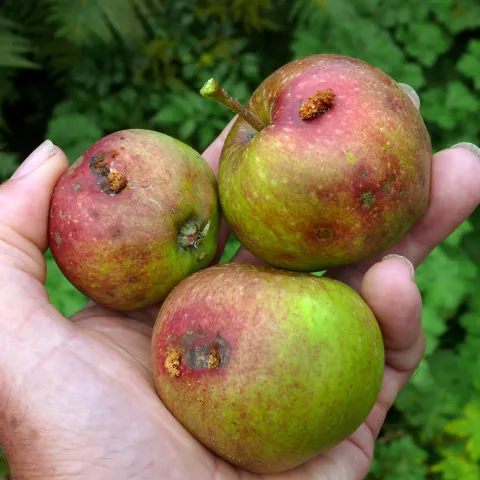
Fruit infested with codling moth
UC Marin Master Gardeners: Article

Codling moths: protect your fruit tree from them now!

March 31, 2025
 If you have fruit trees, especially apples, pears, or walnuts, now is the time to be on the lookout for the codling moth. This is the time of year (mid-March to early April) when the adult codling moth, a little grayish-brown lepidopteran, emerges from its cocoon.It has spent the winter pupating,…
View Article
Primary Image
Hand holding sparkler firework at night
The Backyard Gardener: Article

A New Look!

March 31, 2025
By Dustin W Blakey
The Inyo-Mono Master Gardeners have a new look to their website and blog! Recently UC ANR updated its web platform to something a little more modern. The old system was cobbled together with parts that could no longer be maintained, so here we are with a new site.Our URLs have changed, but don't worry!…
View Article
Nutrition Policy Institute News: Article

New study reveals that California middle and high school students desire healthy and fresh school meals

March 31, 2025
By Brianna Aguayo Villalon, Danielle Lee, Wendi Gosliner, Kassandra A Bacon
 A recent study published in the Journal of Nutrition Education and Behavior revealed that students desire healthy and fresh school meals. Amid the COVID-19 pandemic, the federal government provided waivers to schools to serve meals free of charge to all students (known as universal school meals or…
View Article
ANR Employee News: Article

All invited to media training, practice interviews May 1 in Davis

March 31, 2025
By Michael Hsu
Intended for UC ANR academics and staff who work with journalists, this interactive training covers tips on working with the news media, engaging reporters and influencers via social channels, and preparing for and doing interviews in a variety of formats.
View Article
ANR Employee News: Article

Names in News

March 31, 2025
By Pamela S Kan-Rice
Leonel Jimenez joined UC ANR on Feb. 3 as area director for UC Cooperative Extension in Kings, Kern and Tulare counties. Jimenez is based at the UCCE office in Tulare County and can be reached at (559) 684-3300 and lrjimenez@ucanr.edu.
View Article
Event Primary Image
squirrel
Grown in Marin: Event

Conservation and Control of Ground Squirrels

Event Date
Apr 17, 2025

This event is hosted by Central Coast Rangeland Coalition. For more information and to register, visit: https://surveys.ucanr.edu/survey.cfm?surveynumber=45625
Grown in Marin
View Event
RREA: Page

Contact Us

2025 UC ANR RREA Technical Advisory CommitteeChair, Ricky Satomi, Forestry & Natural Resources Advisor, UC Cooperative Extension, Sutter-Yuba CountiesJeffery Stackhouse, Livestock & Natural Resources Advisor, UC Cooperative Extension, Humboldt and Del Norte …
View Page
RREA: Page

UC ANR RREA Project & Student Intern Grants Program

The UC Agriculture & Natural Resources RREA Project & Student Intern Grant Program solicits project proposals that develop and/or support new or existing Cooperative Extension projects and/or activities to address the educational and extension needs in the management of California's…
View Page
RREA: Page

2025-26 CALL FOR PROPOSALS

Submission Deadline: October 10, 2025**2026 Call For Proposals coming soonThe UC ANR Renewable Resources Extension Act Statewide Program is soliciting proposals that will develop and/or support new or existing UC Cooperative Extension projects and activities addressing the educational and extension needs in…
View Page
RREA: Page

California RREA Program Logic Model

California RREA Program Logic ModelWe invite you to view the UC ANR California Renewable Resources Extension Act (RREA) Program Logic Model. The purpose of this logic model is to guide UC RREA grant applicants and the RREA Technical Advisory Committee (TAC) in identifying projects that best achieve…
View Page