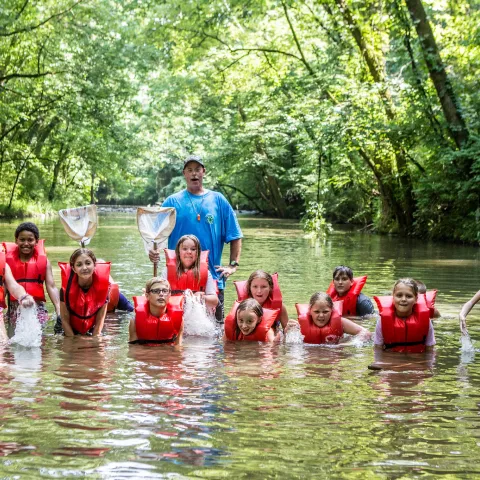
Thanks to support from volunteers, partners and supporters, California 4-H is working to create a Ready Generation. We are empowering youth with the skills to lead within their families, schools, communities, and the workforce.
The University of California 4-H Youth Development Program (California 4-H) is open to all youth ages 5 to 18 in every county in California. California 4-H believes in the power of young people. We see that every child has valuable strengths and real influence to improve the world around us. California 4-H…
The University of California 4-H Youth Development Program (California 4-H) is open to all youth ages 5 to 18. You join 4-H through your local county UC Cooperative Extension office. We are in every county in California! Please go to your county 4-H site to get started on joining.
California 4-H wants all young people to have a place where they can grow, learn, and feel welcome. We are working to make sure every young person has a fair chance to succeed.
The 4-H Thriving Model of Positive Youth Development (PYD) shows that youth in 4-H programs with a high-quality, safe and caring environment will grow and thrive. Thriving youth can reach essential life goals.
Personal Growth projects help you develop your skills in the areas of decision making, communication, leadership, coping with change, and positive self esteem. These are all essential skills to thrive in your work and life. The following are examples of Personal Development projects.
Applying the right amount of water in each irrigation event is essential to improve both water and nitrogen use efficiency. When irrigation is excessive, water can be lost through deep percolation and/or runoff, carrying soluble nutrients such as nitrate with it.
Technology and Advantages of Soil Moisture Sensors Soil moisture sensors (SMS) can provide invaluable information to support irrigation scheduling decisions, along with field observations and crop knowledge.
Irrigation Scheduling Irrigating a crop involves two important decisions: when to start the irrigation, and for how long to irrigate. These decisions are most accurate when guided by sensors and/or techniques that estimate important parameters such as soil moisture content and crop water use.