
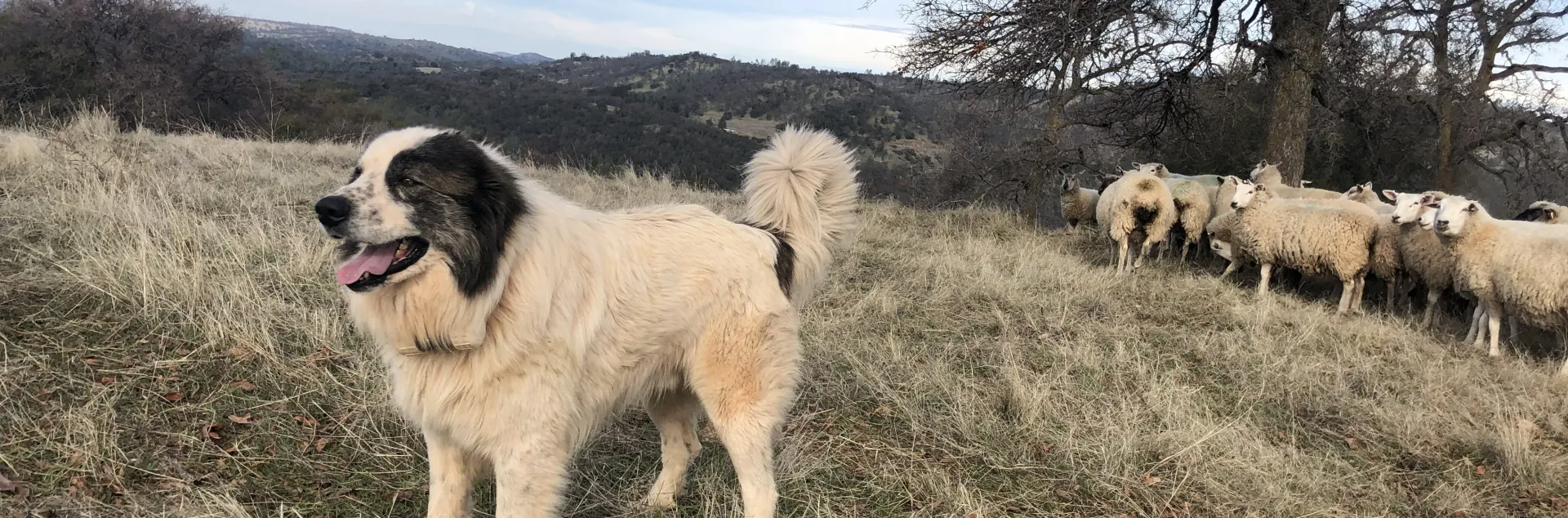
Livestock guardian dogs (LGDs) can be one of the most effective tools for protecting your livestock from most predators – regardless of the scale of your operation! But a poorly trained dog – one that roams away from your operation or harms your livestock – can be incredibly frustrating. The following article is based on my 20 years of using LGDs with sheep and goats, as well as my research into LGD behavior, economics, and genetics.
Training begins with bonding
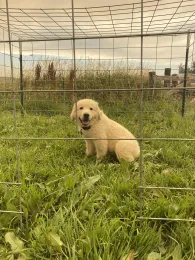
“Training” your LGD pup revolves around ensuring a solid bond between the dog and your livestock. While I find that it is important to socialize a pup to the kinds of activities he’ll experience in my operation, creating the dog-livestock bond occurs most easily when the pup is 8 to 14 weeks of age. We want the dog to prefer to be with livestock at all times; a pup is most psychologically open to forming this bond between the ages of 8 and 14 weeks.
Ideally, an LGD pup should be around livestock even before its eyes open; the bonding process can start as early as 5 weeks of age, while the pup is still with the bitch (in other words, the pup should not be removed from the bitch at 5 weeks). LGD puppies should be bonded to the type of livestock they will be guarding (I’ve bonded pups with cattle, sheep, and goats – and I’ve talked to producers who’ve bonded them with poultry). During the bonding process, I try to regularly supervise and watch a new puppy from a distance for evidence of prey drive (an unwanted behavior), submissive behavior to livestock and a calm temperament (both good things!). While some behaviors like chasing stock can be corrected if dealt with sternly and immediately, other things like dominant behavior towards livestock is more difficult to change in your puppy. If this is continually seen in your young dog, you may need to choose a new puppy. Puppies tend to be easily excited when humans are with them, but when observed from a distance a new puppy should slowly approach livestock and remain calm unless they are alerted to a predator or unknown animal at their location.
In my experience, I’ve also found that bonding pups with littermates or with an older dog (at least initially) disrupts their ability to bond with livestock. Pups that are bonded with littermates tend to prefer the company of other dogs rather than livestock, which creates problems later in the process. Similarly, pups that are over-socialized with humans at this early stage will always prefer to be with humans (in my experience). That said, I will place an adolescent dog with an experienced dog as part of its final exam (see below).
What is a bonding pen
I like to keep LGD pups in bonding pens until at least 6 months of age. At that point, I’ll place them in larger pens under close supervision until 12 months of age. I typically start with a hard-wire pen that the dog cannot escape from, and transition to an electro-net fence within 4-5 weeks. I still keep these electro-net paddocks on the small side (2 or 3 nets) to make sure the pup interacts with the livestock.
I like to start a pup with 2-4 older nonlactating ewes or does – in my experience, putting a pup with lambs or kids encourages play (and eventually chasing) behaviors. Older females, on the other hand, seem to have very little sense of humor when it comes to playful puppies. I find that this helps reinforce submissiveness to livestock later in the bonding process.
I like to hand-feed my pups, mostly to keep the livestock away from the dog food (which seems to prevent food aggression later in the dog’s life). I also provide a puppy-sized water dish, and some sort of shelter (access to a stall or shed, for example). When I’ve bonded a pup with cattle, I also make sure the dog has an “escape pen” where it can get away from livestock. Finally, if possible, I like to change out the livestock every so often – to ensure the dog bonds with my entire herd, not just a handful of individual animals.
After about a month a puppy should be bonded well to stock and can be moved into a larger pen, as described above. I try to monitor the puppy closely during this time, as they will have more room to explore and may start chasing stock in this larger area. Often during this period stock will move away from the puppy without the dog noticing. This can cause the puppy to run towards the stock, which can turn into a chasing game for the puppy. This behavior should be immediately corrected (verbally or with a long-line). If you are not able to regularly supervise your dog during this time, a dangle stick or drag can be used to correct the puppy’s behavior when you are not around.
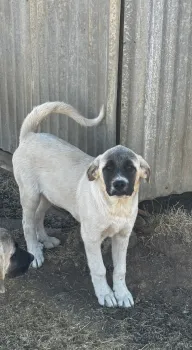
As the puppy approaches 5- 6 months of age, I will usually move it into a larger paddock and add more livestock. If I feel like the bonding process has gone well, I may place it with an older dog (provided we’re not lambing or kidding). That said, I will not place a pup that is not well-bonded with an older dog at this point. And I won’t trust a pup to fully guard livestock on its own until at least 18 months of age. A young pup is no match for larger predators. Sometimes these “teenaged” dogs develop an attitude – typically roughhousing play with the livestock. At this stage, I’ll put the dog with rams or bucks, who tend to have even less of a sense of humor than my old ewes or does!
Socializing and training a guardian dog
While I find that the bonding process is by far the most critical part of the “training” period, I do try to socialize my pups as they get older. I try to spend 5-10 minutes three to four times a week with a new puppy to properly socialize them to humans. During these sessions, I slowly rub my hands all over the dog, especially their feet. I place my fingers inside their mouths and check tooth development, and I check their ears for ticks and infections. I try to brush a pup regularly, as well. As the pup gets older, I’ll try to expose it to other external stimuli – cyclists, for example, or hikers.
While my pups mostly learn their names, I find that commands like “come” and “stay” are difficult to train (and in my experience, largely unnecessary). I will occasionally reward a pup with treats, but only in the presence of livestock. This can make giving medications easier in the future.
In addition to training my LGD pup to obey very basic commands, I leash and tether train them as well. Leash training is important when I need to take them to the veterinarian or for moving them between pastures. I start out teaching a puppy to walk on a lead for just 2-3 minutes at a time and slowly increase the time each week until they walk without pulling or straying away from me. I continue this regularly throughout the bonding phase and whenever possible.
Tether training a pup is important in case it is ever caught in a snare. I also sometimes need a dog to be tethered while I’m working livestock in the corrals. I start with a normal collar and a short chain or cable (so the pup can’t chew through the tether for 1-2 weeks for 2-3 minutes each time. If necessary, I’ll transition to an anti-pull collar for a few weeks. As the puppy gets used to the tethering, I gradually increase the time until the dog will calmly lay for 1-2 hours or longer.
Final exam
A successfully bonded LGD, at least for me, must be submissive to livestock, attentive to its environment, and trustworthy around livestock and people (at least around people who deserve its trust!). In my operation, a dog’s final exam comes when it experiences lambing or kidding for the first time. And at this stage, I have found that an older, experienced LGD can help reinforce the kind of behavior I need from my dogs during lambing and kidding. Usually, an inexperienced dog will be very interested in a ewe or doe that’s in labor – after all, this is a behavior that a young dog has never seen. A young dog may be worried at this point – and its anxiety can disrupt the ewe’s ability to deliver its lambs. An older dog, in my experience, tends to lay off at a distance from the laboring female, giving her space – and waiting for the afterbirth. And the anticipation of a tasty afterbirth snack is the key – on multiple occasions, I’ve watched an older dog chase a younger dog away from a laboring ewe to protect this post-parturition snack! I should add that eating the afterbirth also eliminates an attractant for coyotes and other scavengers.
A few final thoughts
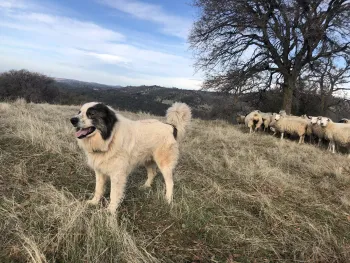
This morning, when I went out to feed my small flock of sheep and goats before work, I found my old LGD, Bodie (who is nearly 11), lying outside the electro-net paddock. Something (probably a deer) had knocked down a short section of the fence during the night. Rather than wandering the neighborhood, Bodie preferred staying close enough to his livestock that he could still protect them.
Early in my ranching experience, I had LGDs that no fence – not even an 8-foot cyclone fence – could contain. Looking back, I realize that this was a bonding failure, not a fencing failure. A poorly bonded dog goes wherever it wants to go; a well-bonded dog stays with its livestock, even when the fences are down.
While there are some things we can do to correct problem behaviors, these corrections are all based on the dog’s desire to be with livestock. A dog that is bonded to humans – or to other dogs – generally doesn’t succeed in my operation.