
In the past few years, the number of calls that the rice advisors have been getting about bakanae have increased substantially. In almost all cases, the grower or PCA reached out to us because there was high incidence of bakanae in the field even though the seed had been treated with bleach. This led to some doubts about the effectiveness of the bleach treatment.
Last year I collected seed from three M-209 fields that had very high incidence of bakanae even though the seed had been treated with bleach. I used this seed in the spring for a greenhouse test.
Four treatments were tested:
Table 1. Overview of four bleach treatments with soak time and recorded observations.
Treatment | Free chlorine concentration | Soak time | Observations |
1 | 1500 ppm | 24 hr | Recommended treatment |
2 | 3000 ppm | 2 hrs, then 22 hrs in fresh water | Recommended treatment |
3 | 1500 ppm | 12 hrs, then 12 hrs in fresh water | Shorter soak time than recommended |
4 | 700 ppm | 24 hrs | Lower concentration than recommended |
The results show that the recommended bleach treatments were very effective at reducing the incidence of bakanae. When using lower bleach concentrations or shorter soaking times than recommended, results were not as good. These results are preliminary since we are still waiting for heading.
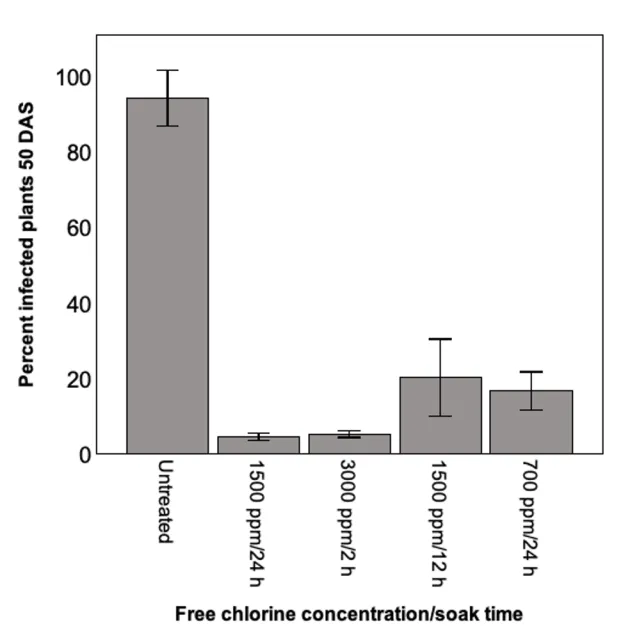
Figure 1. Different bleach treatments against the percentage of bakanae-infested plants 50 days after seeding (DAS).