
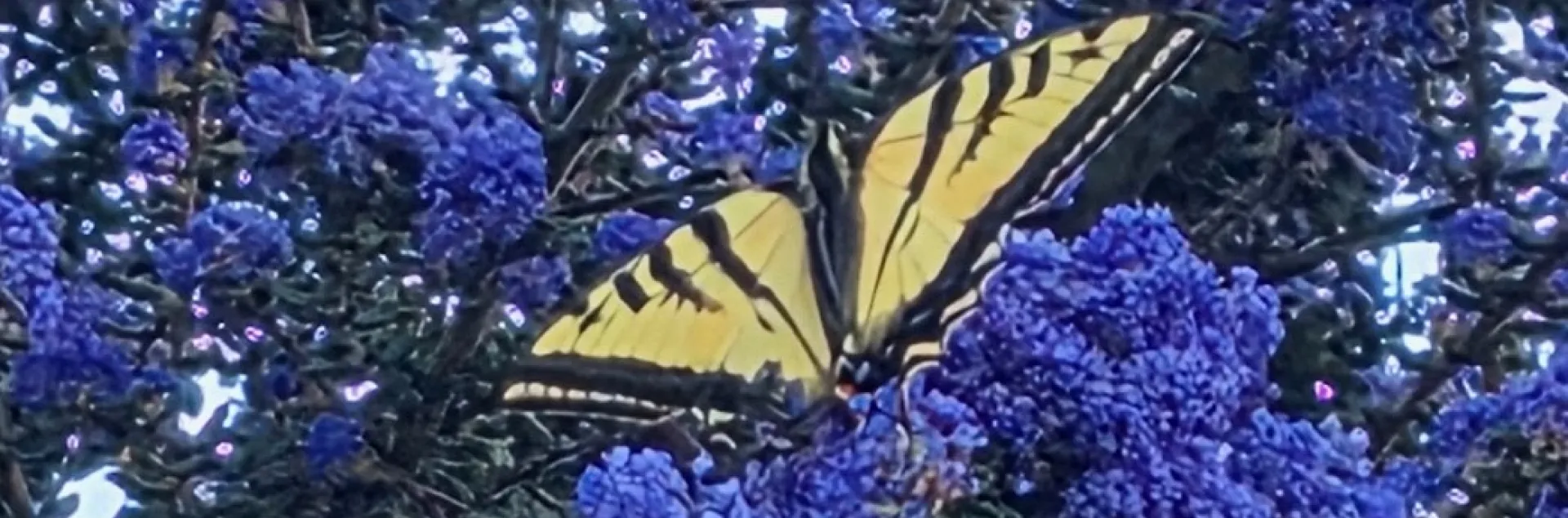
We’ve recently been learning more about the critical importance of pollinators - such as bees, wasps, butterflies, moths, hoverflies, and hummingbirds - for successful gardens. With insect and bird populations dropping, creating habitat for them is more necessary than ever, and many gardeners are adding plants to their gardens for just this purpose. Because our native insects have co-evolved with local plants, they have developed specialized relationships with them. But what exactly can we grow to create habitat for our local pollinators? Calscape has a wealth of useful information on supporting wildlife on their website.
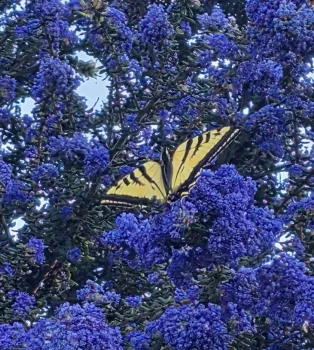
Gardeners wanting to add plants for pollinators are advised to choose three or more species each that bloom at different times, not only to give year-round support to pollinators but also to create a vibrant garden with color that changes with the seasons throughout the year. Many plants bloom during spring and summer, but it can be more challenging to find plants that bloom in winter and fall. This is where Calscape can help, with blooming times listed for each plant. Ceanothus and manzanitas bloom in the winter, for instance, and California fuchsia blooms in the fall, so these can be valuable additions to a pollinator garden.
Calscape is currently beta testing a new interactive plant-selection tool for farmers and gardeners, the Pollinator Companion, which synthesizes information from large databases on plants and pollinators. Based on the work of Dr. Laura Melissa Guzman and Dr. Chris Cosma, who have teamed up with others on this project, it identifies plants that support specific native pollinators. Some of the information is particularly useful to farmers, who can learn which plants attract pollinators helpful in growing alfalfa, for instance. But it is also useful to home gardeners who are growing fruit trees or vegetables on a smaller scale. The site allows users to search for appropriate plants first by location and then by other filters, such as soil, sun, and water requirements. The chart below lists plants suitable for San Joaquin County with varying water and sun requirements, starting with plants requiring full sun. What is new with this site is that crops benefiting from specific pollinators are included, if known. You can see, for example, that California buckwheat supports pollinators that are useful for growing onions, asparagus, and melons. If the specific crops associated with the pollinators are not known, the pollinators themselves are listed. This chart includes only a sample of the more extensive information available online.
Plant | Type * Size | Water | Sun | Flower Color | Bloom Time | Crops Sharing the Same Pollinators |
California Buckwheat Erigonum fasciculatum | Shrub Perennial Herb 1 - 7 ft Tall | Low Very Low | Full Sun | Cream Pink | Summer | Onions Asparagus Melons |
Purple Sage Salvia leucophylla | Shrub 2 – 5 ft Tall | Low Extremely Low | Full Sun | Pink Purple | Spring Summer | Onions Asparagus Peppers |
Narrow Leaf Milkweed Asclepias fascicularis | Perennial herb 2 – 3 ft Tall | Low Very Low | Full Sun | White Pink Lavender | Summer Fall | Asparagus Peppers |
Miniature Lupine Lupinus bicolor | Annual herb Perennial herb 3 – 16 in Tall | Moderate | Full Sun | Blue Purple Lavender White | Spring | Apples Apricots Broccoli |
Big Berry Manzanita Arctostaphylos glauca | Shrub 3 – 20 ft Tall | Very Low | Full Sun | Pink White | Winter Spring | Blackberries Boysenberries Loganberries |
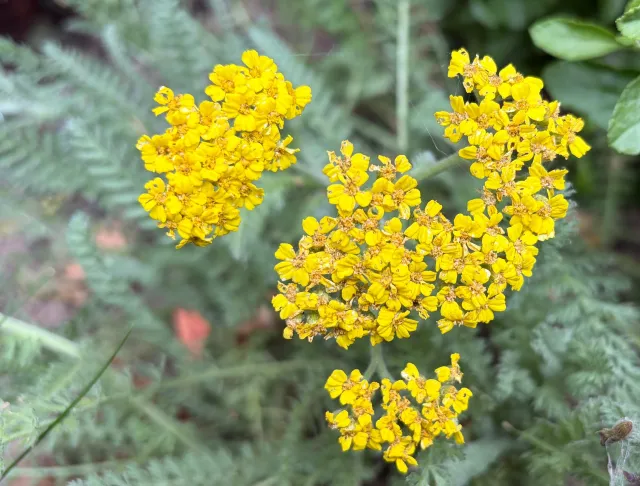
Golden Yarrow Eriophyllum confertiflorum | Shrub Annual herb Perennial herb 2 ft Tall | Low Very Low | Full Sun | Yellow | Winter Spring Summer | Onions Peas |
California Poppy Eschscholzia californica | Annual herb Perennial herb 2 – 24 in Tall | Very Low | Full Sun | Orange Yellow | Winter Spring Summer Fall | Blackberries Boysenberries |
Hairy Ceanothus Ceanothus oliganthus
| Shrub 10 ft Tall | Very Low | Full Sun | Blue Purple | Winter Spring | Currants Gooseberries Watermelon |
California Fuchsia Epilobium canum | Perennial Herb 3 ft Tall | Low Very Low | Full Sun Partial Shade | Red | Summer Fall | Supports urban digger bee and pipevine swallowtail |
Elegant Clarkia Clarkia unguiculata | Annual herb 3 ft Tall | Low | Full Sun Partial Shade | Red Pink | Spring Summer Fall | Buckwheat
|
Scarlet Bugler Penstemon centranthifolius | Perennial Herb 2 – 4 ft Tall | Low | Full Sun Partial Shade | Red | Spring Summer | Aronia Berries |
Coyote Mint Monardella villosa | Shrub 2 ft Tall | Low Very Low | Full Sun Partial Shade | Pink Lavender | Summer | Mint Strawberries |
Baby Blue Eyes Nemophila menziesii | Annual Herb 6 in Tall | Low | Full Sun Partial Shade | Blue | Spring | Supports narrow-leg bee and caerulean miner Bee
|
Blue-eyed Grass Sisyrinchium bellum | Perennial Herb Geophyte 1 – 2 ft Tall | Low | Full Sun Partial Shade | Blue Purple Lavender | Winter Spring | Supports obscure bumble bee and black-tailed bumble bee |
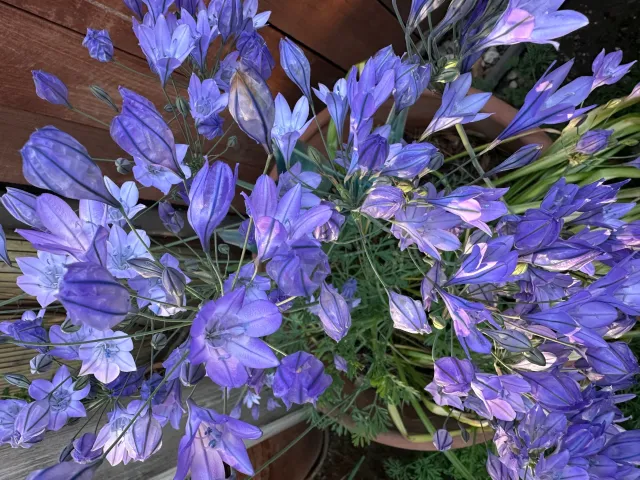
Ithuriel’s Spear Triteleia laxa | Perennial Herb Geophyte 2 ft Tall | Very Low | Deep Shade Partial Shade Full Sun | Blue Lavender | Spring Summer | Supports urban digger bee and alfalfa looper moth
|
Hummingbird Sage Salvia spathacea | Perennial Herb 1 – 3 ft Tall | Very Low | Deep Shade Partial Shade Full Sun | Pink Red | Winter Spring Summer | Blackberries Boysenberries |
Foothilll Penstemon
| Perennial Herb 3 – 5 ft Tall | Very Low | Full Sun Partial Shade | Blue Purple Lavender | Winter Spring Summer | Supports urban digger bee and pipevine swallowtail |
- Annual herb: a plant that completes its life cycle in one growing season, needing to be replanted each year.
- Perennial herb: a plant with non-woody stems that lives for more than two years, dying back in winter but regrowing from its roots in spring.
- Geophytes: herbaceous plants with underground storage organs like bulbs, corms, or rhizomes.
- Shrub: a small to medium-sized perennial woody plant.
This is only a sample of the wealth of resources available on the Calscape website, which allows users to access information on specific plants by growing region, with filters for plant type, sun and water needs, care, flower color, and season, and more. It also includes garden design ideas and the nurseries that carry each plant. This newest tool, the Pollinator Companion, provides gardeners and farmers with useful tools to plan and grow gardens and crops in ways that benefit our essential pollinators.