
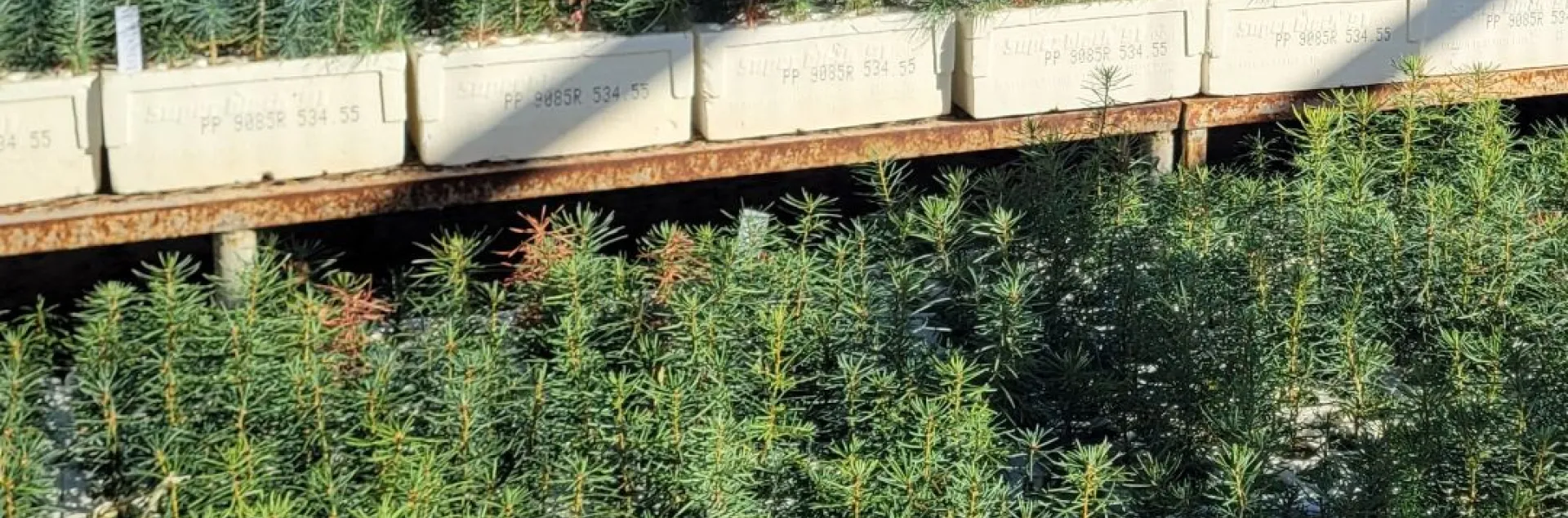
Reforestation success depends on obtaining appropriate seedlings and maintaining their quality from nursery to planting site. However, California faces critical bottlenecks in seed collection, nursery capacity, and coordinated reforestation efforts. This has led to a backlog of 1.5 million acres of burned forestland requiring reforestation since 2023 (Williams et al. 2023). Seed availability can limit reforestation projects, as cone crop cycles create narrow windows that vary by species. For example, Douglas-fir produces viable cone crops every 5 to 7 years, while ponderosa pine cycles every 2 to 3 years (Jopson and Gray 2020).
The California Reforestation Pipeline Partnership’s efforts have expanded seedling production from millions to tens of millions annually, though demand continues to outweigh supply in most cases. Outreach programs like American Forest’s Cone Corps and CALFIRE’s Reforestation Because of You engage landowners and natural resource professionals in monitoring and collection efforts. In tandem, UCCE’s Forest ReCONEissance survey, is a crowd-sourced tool that allows users to report cone-bearing trees in their local area.
Post-fire reforestation involves multiple time-sensitive phases, from site-preparation to seedling ordering to long-term stewardship (See Post-Fire Reforestation). Understanding nursery timelines, seed requirements, and handling protocols can have a significant impact on planted seedling survival and establishment (Dumroese et al. 2016).
Selecting Appropriate Seed
Choosing the right seed requires careful consideration of both the desired species and site characteristics including sun exposure, slope, and soil moisture, all of which influence seedling success. For example, south-facing slopes with more sunlight and rocky soils are better suited for shade-intolerant species like ponderosa pine, while north-facing slopes retain moisture longer, and support shade-tolerant species. Before contacting nurseries, identify the site’s seed zone, elevation band, and desired species. California's 85 seed zones, each divided into 500-foot elevation bands, guide seed selection based on topography, soil and current and past climate.
However, since temperatures are warming, reforestation efforts may need to develop strategies that take into account genetic adaptation to future climates (Davis et al. 2023; North et al. 2019).
One strategy is to choose seeds from areas within the same seed zone but from lower elevations (or farther south) that are currently warmer than the site to be planted. Another option is to choose seeds from warmer areas outside the current seed zone boundary.
Research on planting after wildfires on three California national forests found that seedlings from lower-elevation sources consistently outperformed local -elevation seeds (Young et al. 2020). Current guidelines suggest that of seeds used for reforestation, 70% should come from the current local seed zones, 20% from one warmer zone, and 10% from two warmer zones to provide “climate insurance” (Stewart et al. 2026). This approach plans for uncertainty by using a variety of seeds that grow well under different climates, while focusing on locally adapted seed.
Tools such as, Climate-Adapted Seed Tool (CAST), and Seeds of Change, help identify seed sources best adapted to local climate conditions for specific planting sites, while also allowing users to explore seeds from other zones. Consult your Registered Professional forester for guidance.
Additional decisions are needed on planting density, species and arrangement as well as which areas to replant. See Post-Fire Seedling Planting: Density, Species and Arrangement and Post-Fire Reforestation Planting for Resilience for guidance.
Ordering Seedlings from Nurseries
Reforestation involves coordinating a series of involved tasks, including site preparation, competing vegetation control, and seedling procurement. All require advance planning and may have overlapping timelines. Seedling orders must be placed well before planting to allow nurseries the time to grow the new trees from seed.
Orders must be placed 12 to 18 months before seedlings are to be planted. Orders placed by December yield seedlings ready for planting the following fall (10-11 months) or spring (14-18 months). This lead time allows nurseries to optimize seed treatment —which can involve up to 120 days of stratification depending on species. Stratification is the process used to trigger germination by exposing the seed to cold and moisture (mimicking natural winter conditions). They must also schedule greenhouse space and coordinate growing conditions (Landis et al. 2010).
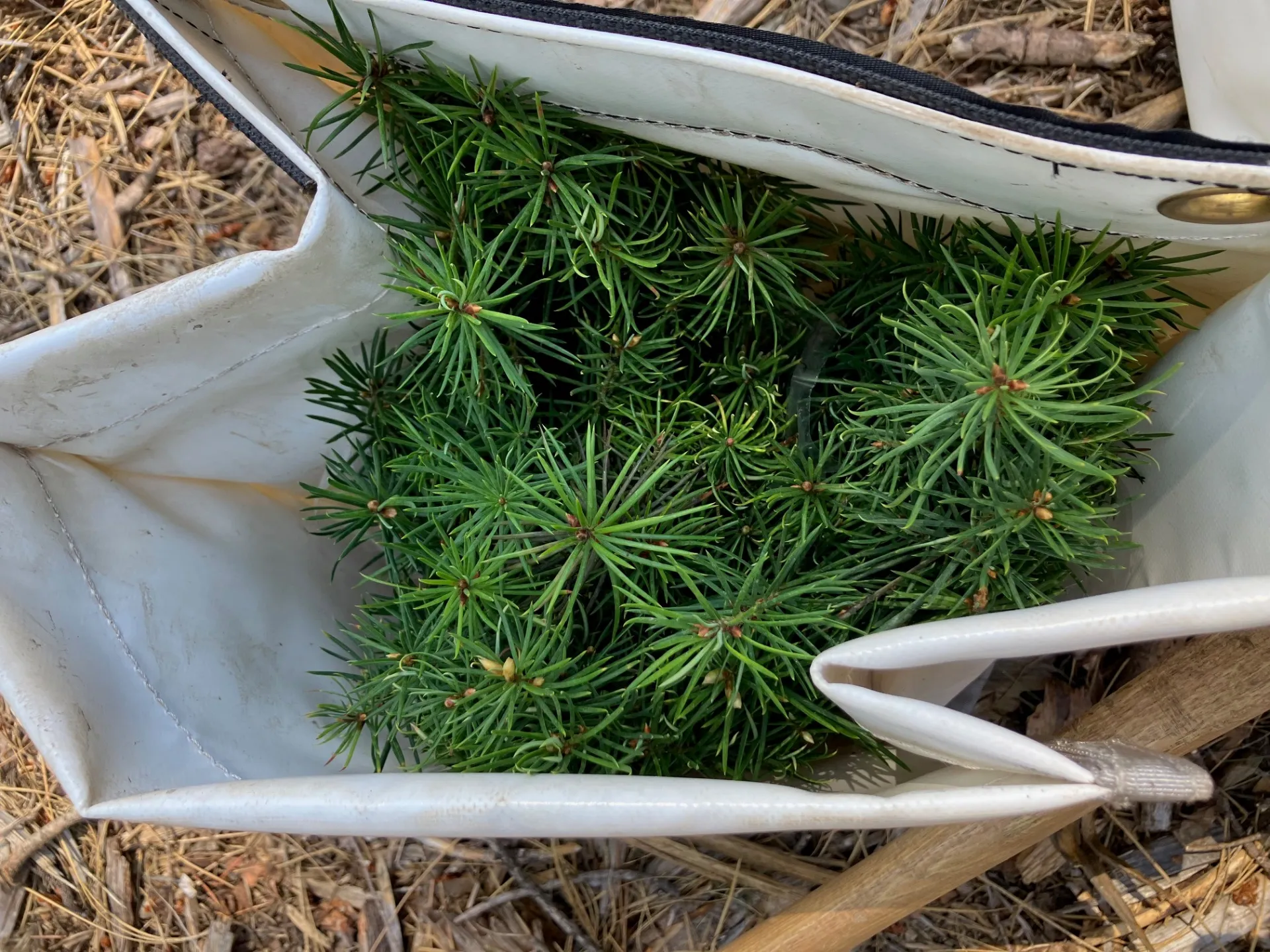
Stock type: Orders must specify the way the seedlings will be produced and the way they will be delivered. Though bare root seedlings are still produced, seedlings grown in containers with soil that is delivered with the tree (plugs) are the standard for California reforestation because they retain moisture better and maintain intact root systems. Standard containers (100ml) meet most reforestation needs, while larger containers (150ml) provide better survival on harsh sites.
Available California Nurseries
Three primary sources serve reforestation needs for California's private landowners:
The US Forest Service’s Placerville Nursery operates through El Dorado Resource Conservation District partnerships, requiring orders by December 31st.
CAL FIRE's L.A. Moran Reforestation Center accepts direct orders until October 31st from landowners managing 20-5,000 acres
Private nurseries including Cal Forest and Sierra Pacific's new Gazelle facility operate on contract basis year-round but typically require customer-to provide the seed.
Other options for smaller landowners are contacting local RCDs or Fire Safe Councils that are placing larger seedling orders for reforestation projects.
Seedling Storage, Transport, and Handling
The quality of seedlings significantly influences their ability to survive once planted. Quality must be maintained throughout growth, delivery, storage, transport and planting, Common mistakes include dropping boxes, exposing seedlings to direct sunlight and allowing roots to dry. These can reduce survival rates substantially. Proper handling protocols, however, consistently improve establishment without requiring major investments or specialized equipment.
Note the quality of seedlings once they are delivered from the nursery. If seedlings cannot be planted immediately, work with the nursery and partners to find a refrigerated storage location. This maintains dormancy and prevents quality deterioration. Seedlings require constant temperatures of 33-36°F inside boxes with humidity above 95% to avoid premature dormancy break and mold development (Camm et al. 1994).
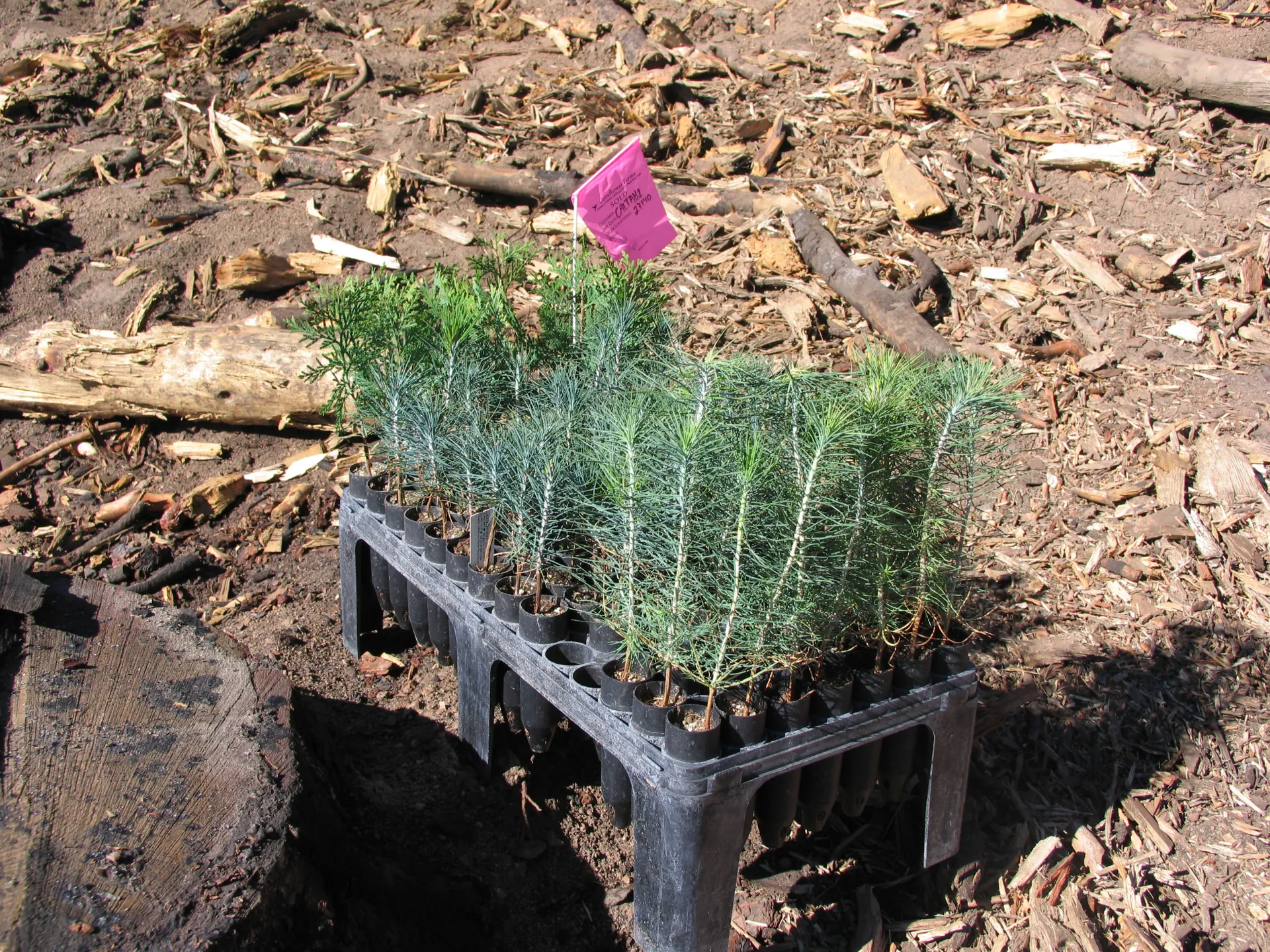
If you are transporting seedlings over 50 miles, a refrigerated truck is best. Coolers work well for most situations. For very short distances, seedlings may be bundled in reflective planting tarps.
Upon arrival, inspect seedlings for damage, such as mold. For example, quality plugs remain intact when lifted and display white root tips, while brown or mushy roots indicate storage problems. Handling techniques while planting can mean the difference between 60% and 90% survival rates (Stewart et al. 2026). Batch seedlings for planting by removing only 10-15 at a time during planting and keep others either in the coolers or under wet burlap to prevent harming the seedlings.
Once planted, on-going care is needed to ensure seedling survival. See Post-Fire Managing Competing Vegetation to Improve Reforestation Outcomes.
Further Reading and ResourcesUCANR Forest Fact Sheet.
|
Find the printable version of this fact sheet below. Note that the pdf is for print purposes ONLY.
