
As Californians face ever-changing challenges, the University of California Agriculture and Natural Resources has hired UC Cooperative Extension experts to address pressing needs and placed them across the state to work directly with community members.
UC ANR has added scientists to focus on oak woodlands, coastal water resilience, irrigation efficiency, weeds, livestock, agricultural waste management and bioenergy production, land equity, small farms, organic production, and greenhouse and controlled environment agriculture.
Since 1914, UC Cooperative Extension researchers have collaborated hand in hand with community members to develop science-based solutions on many critical issues.
Aoyama to advance research, nurture partnerships for California oak woodlands
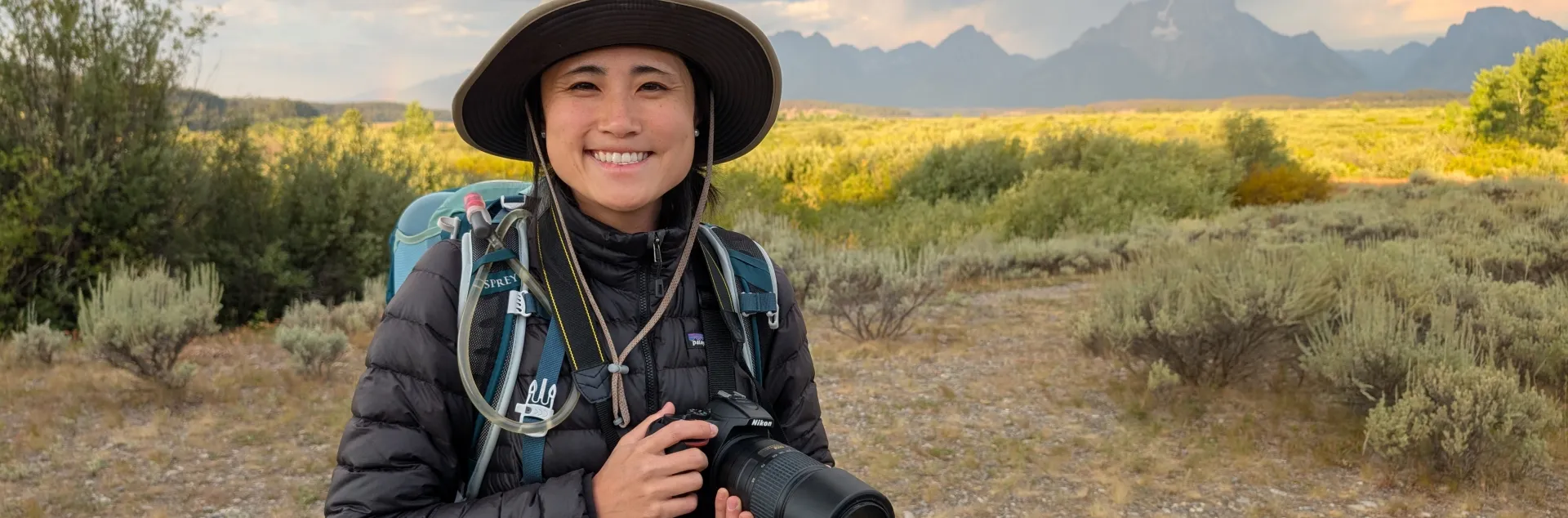
Lina Aoyama, a UC Cooperative Extension specialist in oak woodland stewardship in Mendocino County, will study oak woodland management and restoration across the state.
“I am motivated to find creative solutions to restore and manage resilient California oak woodlands in the face of climate change, wildfires and the threat of invasive species,” Aoyama said.
Although she grew up in the suburbs of Los Angeles and Tokyo, Aoyama loved spending time outdoors, which inspired her to earn a bachelor’s degree in molecular environmental biology at UC Berkeley.
Her first job out of college was working as a range technician at the Point Reyes National Seashore, where she became interested in rangelands and restoration. She went on to earn a master’s degree in range management from UC Berkeley and then a Ph.D. in restoration ecology at the University of Oregon.
After her graduate studies, Aoyama worked as the long-term agricultural research network coordinator at the U.S. Department of Agriculture’s Agricultural Research Service in Fort Collins, Colorado. Immediately prior to joining UC ANR, she finished a postdoctoral study on grassland fire behavior modeling and fuel reduction treatments at the University of Colorado, Boulder.
In her new role, Aoyama looks to cultivate strong partnerships across California, especially with Tribal communities that have been stewarding oak woodlands for many generations.
“I will prioritize building lasting relationships and build my program with a posture of learning, intentionality and care,” Aoyama said. “I am excited to collaborate with many of you to shape the future of our oak woodlands.”
Aoyama is based at the UC Hopland Research and Extension Center and can be reached at linaaoyama@ucanr.edu.
Richardson joins UCCE as hydrology, agriculture and water resilience specialist

Christina Richardson is an assistant professor of Cooperative Extension in coastal hydrology, agriculture and water resilience, based in the Department of Earth and Planetary Sciences at UC Santa Cruz.
In this role, Richardson will build an applied research and extension program focused on increasing coastal water resilience. Her program will characterize the diverse water challenges facing California’s coastal regions and develop and refine solutions to address them.
Richardson brings a broad background in coastal hydrology and aquatic biogeochemistry, with work in both natural and highly managed landscapes in California and across diverse environmental stressors, including wildfire and wastewater.
Prior to joining UC ANR, Richardson was a postdoctoral researcher at UC Santa Cruz, with recent projects examining post-fire water quality in Central Coast watersheds, carbon cycling across working lands in the Sacramento-San Joaquin Delta, and coastal groundwater and river responses to climate change.
She earned her Ph.D. in earth sciences from UC Santa Cruz and her M.S. in geology and geophysics from the University of Hawaii at Manoa. Before graduate school, she worked with the U.S. Geological Survey on coastal groundwater quality.
Richardson is based at UC Santa Cruz and can be reached at cmrichar@ucsc.edu or via https://sites.google.com/ucsc.edu/coastalhydro.
Ayoub joins Kearney REC as water resources advisor

Ahmed Ayoub is a UCCE water resources advisor serving Fresno, Tulare, Kings and Madera counties.
Ayoub holds a Ph.D. in biodiversity, agriculture and environment from the University of Bari, Italy, where his research focused on modernizing surface irrigation systems and improving water-use efficiency.
He previously worked as a researcher and advisor at the International Center for Advanced Mediterranean Agronomic Studies (CIHEAM), Bari, Italy, designing capacity-building programs and applied research projects on precision irrigation and smart agricultural technologies.
His work integrates field experimentation, sensors development and decision-support tools to enhance irrigation management and sustainability. He has led and contributed to international research initiatives funded by organizations such as the European Space Agency and Horizon programs, and has conducted training workshops for farmers, technicians and water managers across multiple regions.
Ayoub’s research includes developing soil-moisture monitoring systems, smart tensiometers, and innovative gated pipe technologies that improve irrigation efficiency, uniformity and water productivity. He aims to support growers in adopting data-driven irrigation strategies that improve resilience, resource efficiency and agricultural sustainability.
Ayoub is based at UC Kearney Agricultural Research and Extension Center in Parlier and can be reached at abdelmon@ucanr.edu.
Ohadi joins UCCE as weed science specialist
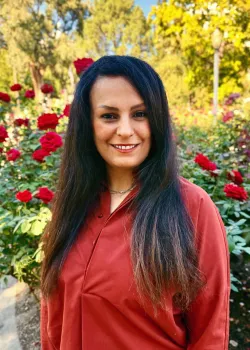
Sara Ohadi is a UC Cooperative Extension specialist in weed science. Her research and extension program focuses on improving weed and invasive plant management in California’s agronomic crop production systems.
Ohadi brings a broad background spanning row crops, specialty crops and natural ecosystems. Her work integrates weed ecology, biology and population genetics with applied field research to better understand how weeds establish, spread and adapt within production systems. She works closely with growers and advisors to develop integrated management approaches that are practical, effective and sustainable.
Prior to joining UC Riverside, she worked in industry, where she led field research programs and collaborated with growers throughout Northern California. She looks forward to building strong partnerships with UC Cooperative Extension advisors, commodity groups and producers to support informed decision-making and strengthen weed management across the state.
Ohadi earned her Ph.D. from the University of Melbourne, Australia, where her research focused on invasive coastal plant population diversity and genetics. She then completed two postdoctoral appointments: one at Texas A&M University working on weed management in sorghum production systems, and another with the UC Davis Rice Weed Science Program, where she supported research on weed and algae management in California rice.
Ohadi is based in Riverside and can be reached at sara.ohadi@ucr.edu and (951) 827-4616.
Lane to serve Lake, Mendocino counties as livestock and natural resources advisor
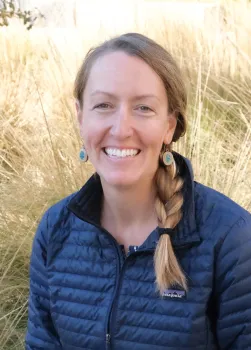
Jennie Lane, a UCCE livestock and natural resources advisor for Lake and Mendocino counties, will work with livestock producers and land managers to collaboratively address local needs and priorities to improve livestock and rangeland health.
“Lake and Mendocino counties offer abundant natural resources for nature-based economies, including livestock production and outdoor recreation,” Lane said. “I hope to contribute in a way that supports producers through research, education and outreach.”
Lane grew up outside of Buffalo, New York, and earned her bachelor’s degree in biology and history at SUNY (State University of New York) Geneseo in the western part of the state.
After completing veterinary school at Michigan State University, Lane worked in equine ambulatory practice for several years. Her interest in livestock development and human health led her to complete her master’s in public health at UC Berkeley, with a focus on maternal and child health and nutrition.
Lane then spent time in Ethiopia, Tanzania and Malawi, collaborating with livestock producers and Extension specialists on nutrition-sensitive agriculture and the role of animal-source foods in supporting household nutrition and rural livelihoods.
After working a year in Washington, D.C., with Land O’Lakes International Development, Lane joined the One Health Institute at UC Davis in 2017. She worked on a variety of education and research projects focused on livestock disease and wildlife health surveillance, watershed restoration, food system resilience and disaster preparedness.
In her new role, Lane said she is excited to work closely with community members on key issues that impact livestock production, livelihoods and ecosystem health.
“Ultimately, a long-term goal would be Mendocino and Lake counties receiving recognition for their innovative and sustainable ranching, livestock and rangeland management practices that reduce wildland fire risks and support healthy soil, watersheds and ecosystems – while simultaneously contributing to food security, food and nature tourism and economic opportunity,” she said.
Lane is based at the UCCE office in Lakeport and can be reached at jklane@ucanr.edu. For updates on livestock and natural resources in Lake and Mendocino counties, she encourages people to join her email list: https://forms.gle/L97UhnJSSKJY5HyU8.
Maharlooei joins UCCE as ag waste, bioenergy production specialist
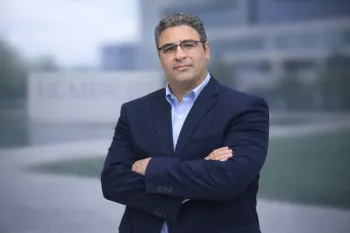
Mohammad Maharlooei is an assistant professor of Cooperative Extension in agricultural waste management and bioenergy production at UC Merced. Maharlooei will focus on developing engineering- and technology-driven solutions to reduce crop loss and waste during harvest and postharvest operations.
He will work on the design and prototyping of machinery and equipment to convert agricultural residues and byproducts into value-added products – a process known as valorization. This helps divert materials from landfills and supports more sustainable and circular agricultural systems.
“UC ANR is a pioneer in agricultural residue management and byproduct valorization,” Maharlooei said. “In this role, my goal is to develop impactful extension and research programs that reduce crop loss and ensure that food is used as food whenever possible, thereby strengthening food security and environmental sustainability in California and beyond.”
Born and raised in Shiraz, Iran, Maharlooei follows in the footsteps of his father, who worked at the university in his hometown.
“My interest in agricultural machinery began early in life,” Maharlooei explained. “My father was a technician in the Department of Agricultural Machinery Engineering, and I spent many of my childhood summer vacations working alongside him as a hobby; that early exposure sparked my fascination with agricultural systems and ultimately shaped my career path.”
At Shiraz University, Maharlooei earned a bachelor’s degree in agricultural machinery engineering, a master’s in mechanics of agricultural machinery engineering, and a Ph.D. in mechanical engineering of agricultural machinery.
After receiving his doctorate, he joined Shahid Bahonar University of Kerman (Iran) as a faculty member. He was also a visiting researcher at North Dakota State University and a postdoctoral researcher at UC Merced prior to joining UC ANR.
“Agriculture plays a critical role in global food security, yet significant losses occur between harvest and consumption,” Maharlooei said. “I am motivated by the opportunity to design practical, engineering-based solutions that reduce waste, improve efficiency and enhance sustainability across agricultural systems.”
Maharlooei is located at UC Merced and can be reached at mmaharlooei@ucanr.edu.
Ruiz to lead Climate Action and Land Equity project
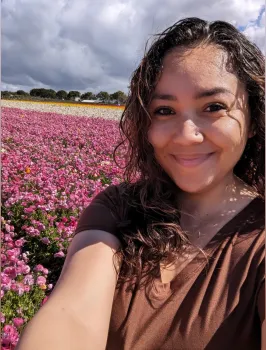
Darlene Ruiz is UC Cooperative Extension’s land use academic coordinator for the Climate Action and Land Equity (CALE) project for Southern California.
In this role, she supports efforts to expand equitable land access, diversify land management, and strengthen technical assistance and capacity for historically underrepresented communities engaged in agriculture and natural and working lands stewardship. The initiative contributes to statewide climate-smart planning and advances California’s goals for resilient, inclusive land management.
Prior to her current position, Ruiz was a small-farms staff research associate with UCCE in San Diego County, where she strengthened research collaborations and provided education and resources for small- to mid-scale and aspiring farmers. She brings a combination of lived experience and academic training to her work and is passionate about sustainable agriculture, food equity and supporting underserved communities in accessing land and resources.
Ruiz holds a bachelor’s degree in neurobiology, physiology and behavior with a minor in Chicana/o studies from UC Davis, and a master’s degree in agricultural education from California Polytechnic State University, San Luis Obispo.
Ruiz is based at the UCCE office in San Diego and can be reached at druiz@ucanr.edu.
Baldi joins UCCE as a horticulture and small farms advisor
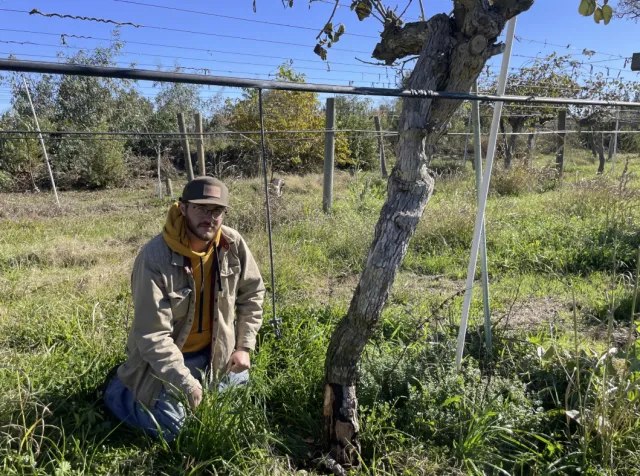
Ben Baldi, UCCE horticulture and small farms advisor serving Placer and Nevada counties, brings experience in small-scale farming, Cooperative Extension and international agricultural development.
He most recently served as a staff research associate supporting orchard systems advisors in the Sacramento Valley. Prior to moving to California, he managed several farming operations and worked with University of Massachusetts Cooperative Extension. Baldi also brings international experience working with small vegetable farmers in Cambodia and with mushroom cultivation in Jamaica.
Baldi holds a bachelor’s degree in plant and soil science from the University of Massachusetts, Amherst, and a master’s degree from UC Davis in international agricultural development with a specialization in plant pathology.
As a small farms advisor, Baldi will focus on supporting the diverse needs of producers across Placer and Nevada counties. He plans to implement a needs-based program and build partnerships with growers, agencies and community organizations, providing resources and localized management strategies.
Baldi is based in Auburn and can be reached at btbaldi@ucanr.edu.
Hale joins UCCE as organic production specialist

Lauren Hale is an associate UC Cooperative Extension specialist in organic production, faculty director of the Organic Agriculture Institute, and adjunct faculty member in the Life and Environmental Sciences Department at UC Merced.
Hale joins UCCE from the USDA Agricultural Research Service’s Water Management Research Unit in Parlier, where she worked as a research soil scientist for the past seven years.
At USDA-ARS, her research focused on agricultural management that improves biological soil health and, in turn, water productivity of irrigated Central Valley crops, mainly through adoption of conservation practices like cover crops and organic amendments. Prior to this, Hale was a postdoctoral researcher at the University of Oklahoma studying microbial community dynamics and soil carbon storage.
She earned her Ph.D. in environmental sciences from UC Riverside and a bachelor’s degree in microbiology from North Carolina State University.
In her new role, Hale will apply her expertise in soil microbiology and soil health to advance research for organic growers and also bring together interdisciplinary teams to address pressing challenges. She noted that solutions for organic producers can be used by all growers, as they can enhance strategies for integrated pest management and water management, and help promote climate resilient farms.
“Although California leads the nation in organic production, this is only the second statewide position focused on organic agriculture,” Hale said. “Houston Wilson served as the founding director of the Organic Agriculture Institute and worked with a team of academic coordinators to quickly develop many education, extension and research strengths. I am very excited to build on this work and help bring state-of-the-art research to California growers.”
Hale is based at UC Merced and can be reached at lehale@ucanr.edu.
Brown joins UCCE to advise nurseries and greenhouse growers
Carrie Brown is the UCCE environmental horticulture and controlled environment agriculture advisor serving Santa Cruz, Monterey, San Mateo and San Benito counties.
She is developing an applied research and extension program to support the region’s environmental horticulture industry, including nursery, greenhouse and other controlled-environment production systems. Brown also serves as the academic advisor for the UC Master Gardener program in Monterey and Santa Cruz counties.
Brown’s work focuses on helping greenhouse and nursery producers improve crop productivity and sustainability through efficient water and nutrient management, integrated pest management, and the evaluation of emerging technologies that can enhance production efficiency and profitability.
A key priority for her program is connecting with growers to better understand current challenges and opportunities facing the industry and to develop research and educational programs that address those needs.
She is currently meeting with producers and industry partners throughout the region and welcomes the opportunity to visit operations, learn about production systems and discuss potential research collaborations.
Based in Watsonville, Brown can be contacted at clybrown@ucanr.edu or (831) 228-9393.
Safre joins UCCE as specialist in ag tech and innovation
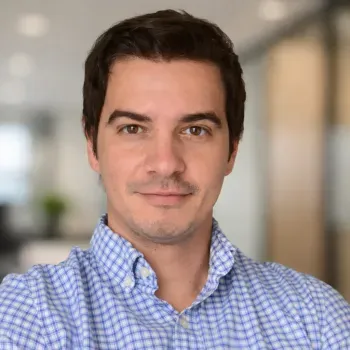
Anderson Safre is a UC Cooperative Extension specialist with a statewide appointment in agricultural technology and innovation.
Safre’s research focuses on precision agriculture applications in specialty crops, including the development of low-cost sensing hardware and computer vision approaches for yield mapping, as well as plant water stress estimation and evapotranspiration using UAV (unmanned aerial vehicle) imagery.
Safre integrates satellite, UAV and ground-based sensing systems with data analytics to support irrigation scheduling, improve water-use efficiency, and accelerate technology adoption in agriculture.
Originally from Brazil, Safre holds two Ph.D. degrees, one in civil and environmental engineering from Utah State University and another in agronomy from São Paulo State University, as well as a master’s degree in agronomy from São Paulo State University.
In recognition of his research excellence, Safre was named Ph.D. Student of the Year (2025) by both the Department of Civil and Environmental Engineering and the College of Engineering at Utah State University.
Safre is based at the UC Kearney Agricultural Research and Extension Center in Parlier and West Side Research and Extension Center in Five Points and can be reached at andersonsafre@ucanr.edu.