
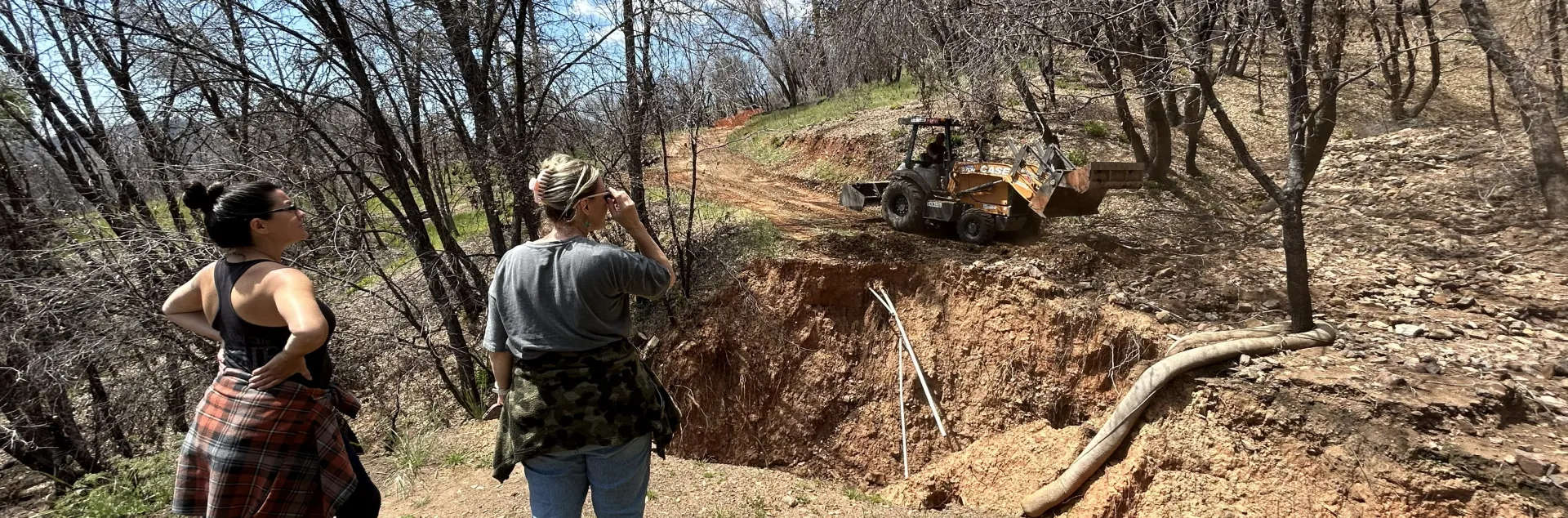
Post-Fire Erosion
High-intensity rainfall events following a high-severity wildfire can trigger erosion, runoff, and sedimentation. As area burned by high-severity wildfires is increasing in area, post-fire erosion control treatments are becoming increasingly necessary to prevent soil erosion and protect human values at risk.
Hillslope erosion during heavy rainstorms following a high-severity wildfire occurs due to the loss of roots and vegetation holding soil in place and alteration of soil physical and chemical properties. Severe heating of soils can lead to a reduction in soil infiltration rates and formation of a water-repellent layer in the soil.
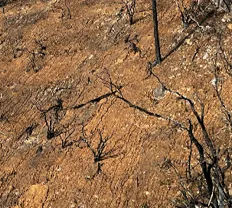
Hillslope erosion occurs through three processes: (1) rainsplash when raindrops hit bare soil and detach soil particles; (2) sheeting from water flowing over weakened soils and carrying soil particles along with it; and (3) rilling, the process of water becoming concentrated in incisions on the landscape and developing into larger flow paths if not mitigated (Image 1).
The effects of wildfire on soil properties are often not consistent over space and time. The magnitude of post-fire hillslope erosion is dependent on multiple factors, including topography, burn severity, time since fire, and the intensity of rain events prior to the reestablishment of vegetation. While high-severity wildfire may increase erosion potential through these processes, low-intensity fire may increase soil fertility by releasing nutrients into the soil. Post-fire erosion may increase by an order of magnitude following a wildfire but is likely to return to pre-burn erosion rates within two to three years post-fire with the regrowth of vegetation and depletion of easily erodible surface material (Prats et al. 2016).
Erosion control techniques
The purpose of erosion control is to reduce post-fire flooding and erosion caused by uncontrolled runoff on slopes that have become impermeable or water repellent and denuded of vegetation. These treatments generally fall into three categories: (1) mulching, (2) erosion barriers, and (3) seeding.
Mulching treatments have been found to be the most effective erosion control technique on hillslopes (Robichaud et al. 2014). These treatments provide ground cover that traps sediment, allows water to infiltrate, and slows the development of concentrated flows. Mulching treatments may be applied using agricultural straw, wood shreds, or wood chips and typically, a mulch application rate of 60 to 70 percent ground cover is ideal for limiting erosion (Prosdocimi et al. 2016). Care should also be taken to avoid spreading mulch too thick as it can limit the regeneration of native vegetation (Robichaud et al. 2010)
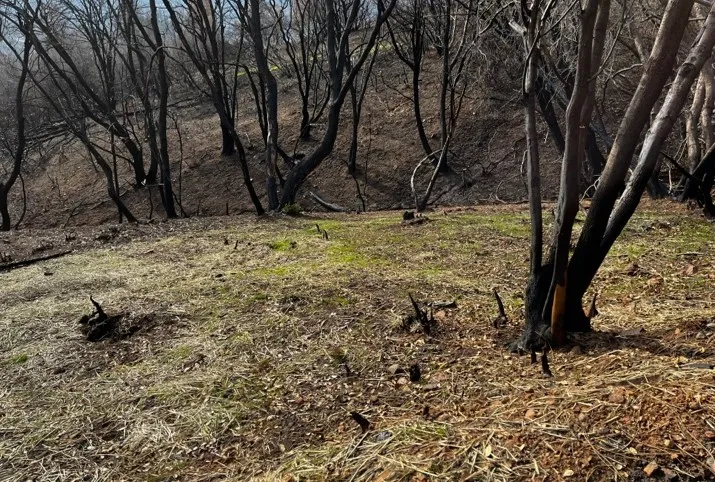
Agricultural straw mulching is a low-cost and effective erosion control strategy, but it may be less effective during high-intensity rainfall events than wood mulch and has the potential to be transported off hillslopes by wind (Image 2). Straw mulches also come with the risk of introducing non-native species that could compete with regenerating native vegetation, even if certified weed-free (Shive et al. 2017).
Wood mulching has been widely recognized as the most effective erosion control treatment on hillslopes due to its longevity and resistance to wind displacement. Wood mulch may be purchased or produced on site through chipping or shredding. The most effective wood mulches are those with fragments longer than two inches in length and less than one inch wide (Foltz and Wagenbrenner 2010).
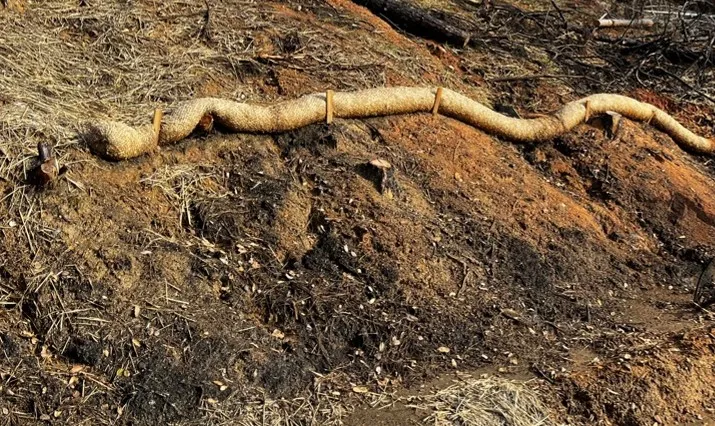
Erosion barriers are linear treatments installed to restrict sheet flow and trap soil on hillslopes. The use of these treatments has declined as more effective mulching treatments have developed. Some considerations for installing erosion barriers are that they may be expensive to install if using off-site materials and are likely to fail during short-duration high intensity rainfall events because they do not provide ground cover and can channelize flow if installed incorrectly (Image 3; Robichaud et al 2008). Erosion barriers can be constructed using either contour log felling or straw wattles.
Contour log felling is the practice of cutting down dead trees and placing them on the contour of the slope, with a reservoir area on the uphill slope that catches eroded soil. These are only suitable for sites with slopes between 25 and 60 percent. Contour logs must be long enough (15-20 feet in length), accurately placed along the contour, and installed at a high enough density with soil berms installed at the ends of the log.
Fiber rolls or “straw wattles” are similar to contour logs but are rolls about 9 inches in diameter and up to 25 feet long manufactured from rice straw wrapped in degradable netting. An advantage to fiber rolls is they provide a seedbed for vegetative recovery, but they may contain noxious weeds. Fiber rolls are only suitable on slopes less than 40 percent.
Seeding has been found to be a largely ineffective treatment for controlling hillslope erosion (Peppin et al. 2010). Heavy rainfall events can cause seeds to be washed downslope and if successful, may limit regeneration and introduce invasive species. Seeding in conjunction with mulching may increase the effectiveness of this treatment by improving moisture retention and protecting seeds from being washed downslope.
Steps to mitigate erosion
Contact a professional to receive advice about erosion control needs. |
Allowing for natural recoveryIt may be appropriate to close burned areas and allow for natural recovery on sites with low or patchy moderate to high soil burn severity, gentle slopes, and in areas that do not threaten values at risk. Fire and erosion are natural processes and forested landscapes throughout California are fire adapted. Following a wildfire, removing, or disturbing ash, surface litter, downed trees, roots, and other remnant vegetation protecting the soil can initially increase erosion potential. |
Table 1: Assessing soil burn severity
| Severity | Features |
| Low Severity |
|
| Moderate Severity | • Surface litter may be charred but recognizable leaves and needles remain on ground • Thin layer of black to gray ash at soil surface with recognizable litter underneath • Soil structure may be slighter altered at the top of the soil profile • Roots near surface may be charred or scorched but largely unchanged |
| High Severity | • Little to no effective ground cover with only ash or bare soil remaining. • Thick layer of powdery gray or white ash. Soil surface may be black, brown, or reddish brown beneath ash layer. • Soil structure loose and weakened due to loss of fine roots and soil organic matter • Water does not infiltrate at surface or deeper within soil |
Parsons et al. 2010 | |
Find the printable version of this fact sheet below. Note that the pdf is for print purposes ONLY.
