
Phytophthora root rot is a common soilborne disease of raspberry. At least nine Phytophthora species have been reported as root pathogens of raspberry. P. fragariae var. rubi, which is now known as P. rubi, is the species that many industry professionals thought was the most common. In mid-May 2026, a report of raspberry collapse on a ranch outside of Watsonville was sent to Mark. The symptom is unlike the classic Phytophthora symptoms, consisting of one to several canes of the plant suddenly wilting, especially in warmer weather. There is no apparent discoloration. The symptoms seen here have been accompanied by a very obvious yellowing of the cane that is about to wilt and those around it, as evidenced in the photos below. Work by Yu-Chen discovered that the pathogen at hand is P. citricola, which is not new and is actually not that uncommon in raspberry plantings in Santa Cruz.
P. citricola is now recognized as a species complex and includes multiple species: P. acerina, P. capensis, P. caryae, P. multivora, P. pachypleura, P. pini, and P. plurivora (1). Many woody plants were reported to be hosts of P. citricola.
Here we introduce the idea of the species complex for P. citricola. You may have noticed that pathogen names frequently change in plant pathology publications and presentations. This is due to the advancements in DNA sequencing and molecular systematics that have greatly improved our understanding of the evolutionary relationships among species. For growers and pest management professionals, taxonomic changes can be confusing. However, these name changes generally do not alter disease symptoms, pathogen biology, or recommended management practices. The primary benefit of updated nomenclature is improved accuracy in pathogen identification, which supports research, disease monitoring, regulatory activities, and the development of effective management strategies.
While this is a good thing to know, the actions that PCA's or growers would want to take for this species of Phytophthora would be generally the same as for any other species of this disease. These steps are nicely outlined in the UC IPM guidelines for caneberries:
https://ipm.ucanr.edu/agriculture/caneberries/phytophthora-root-rot/#gsc.tab=0
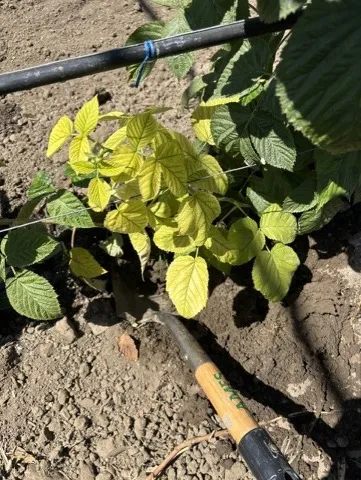
Photo 1: Very yellowed cane, stunted and unhealthy. It is being dug up for laboratory diagnosis of the causal agent.
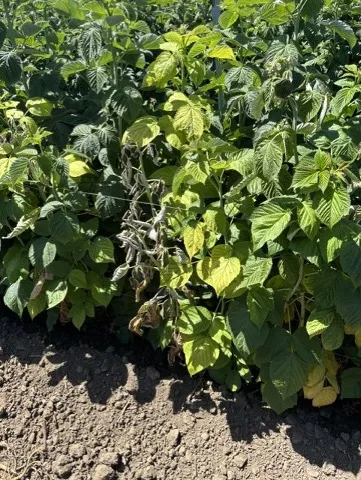
Photo 2: More yellowed canes. As symptoms advanced, one of them developed severe wilt.
Reference cited
- California Department of Food and Agriculture. California pest rating proposal for Phytophthora multivora P.M. Scorr & T. Jung, 2009.