By Ellen Michels.
Many of us are aware that the Monarch butterfly population has been precipitously declining over the last several decades. The Western Monarchs (those west of the Rocky Mountains that migrate to overwinter on the California coast) have seen a steep drop in numbers. According to the Xerces Society, the Western Monarch Count for 2026 reported a total of 12,260 monarch butterflies in the 249 overwintering sites monitored in California. This is the third lowest count since monitoring began in 1997, when there were an estimated 1.2 million Monarchs.
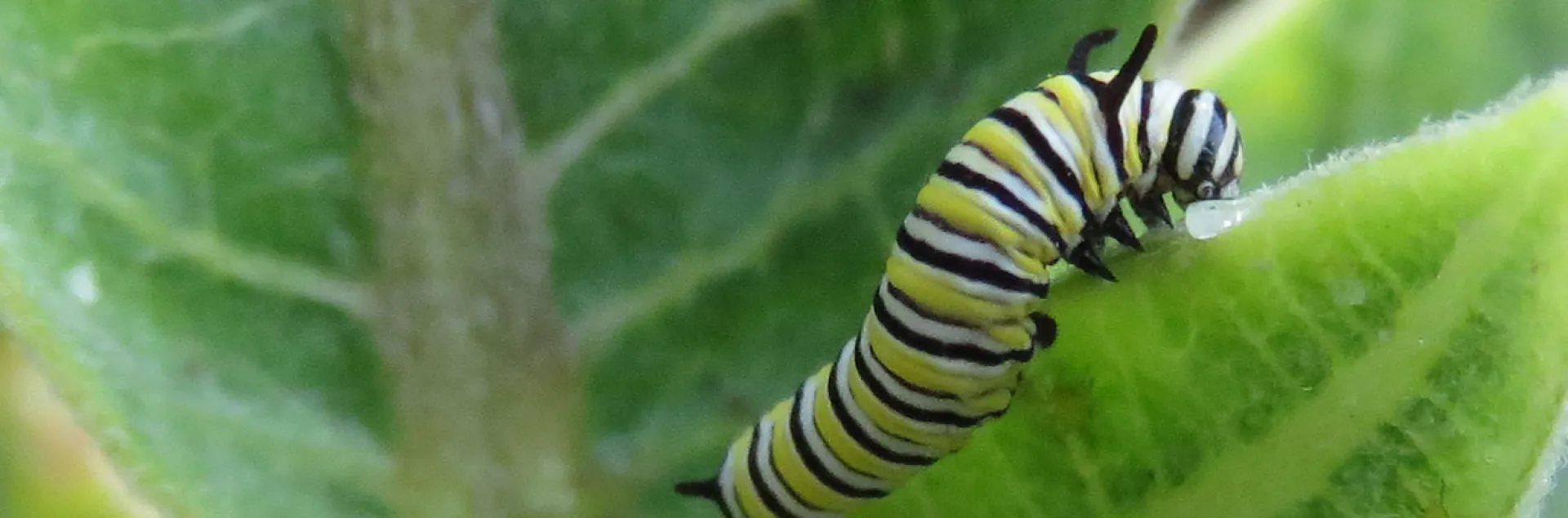
The Xerces Society for Invertebrate Conservation lists several reasons why this is happening, including habitat loss, pesticide use, and a changing climate. Increasing development and transformations in agriculture and land use have resulted in less wildlife habitat and fewer milkweed plants (milkweed is the only plant monarch caterpillars can eat), as well as fewer plants that provide nectar for the adult butterflies. Pesticide chemicals will kill not only pests, but also beneficial insects, including monarchs. And changing weather patterns affect the timing of milkweed growth and the availability of nectar plants during the monarch migration.
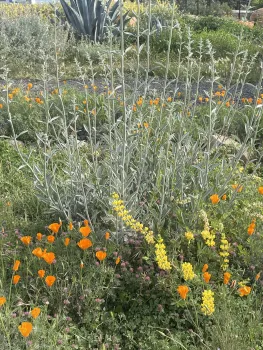
It may seem as if these challenges are overwhelming, and that there is nothing an ordinary citizen can do to help, but that is not true. As gardeners, we can do a lot in our own yards to help the monarchs. In the words of noted entomologist, ecologist and author Doug Tallamy, “Changing the plant base of all of suburbia is quite an undertaking, but all you have to worry about is your eighth of an acre.”
Two years ago, I decided to do my part. Having rebuilt our home in Paradise after it was destroyed by the Camp Fire in 2018, we purchased the lot next door to build a home for our son, and I consequently had a blank slate of dirt, rocks and weeds with which to do something helpful for the environment. I had heard about the Monarchs and More Western Habitat Program (M&MWHP), which provides milkweed plugs and native wildflower seed mixes for native pollinator habitat creation in California, so I applied.
My application was accepted and my husband and I began the arduous task of preparing the quarter-acre site for planting. This involved solarization – covering the existing land, which was full of burr clover, mustard, and miscellaneous weeds, with sheet plastic and letting the hot sun cook the existing plants and weed seeds during the summer months.
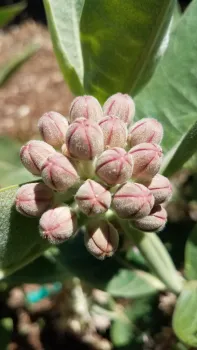
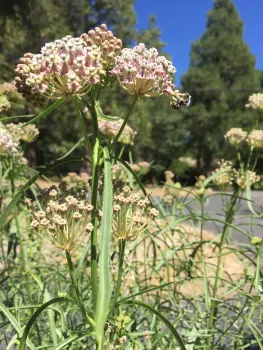
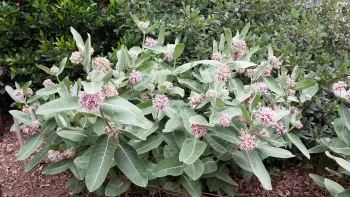
Towards the end of 2024 we received a native seed mix from M&MWHP which included regional annuals and perennials, designed with overlapping bloom periods throughout the growing season. We also received almost 200 milkweed plugs: half Showy Milkweed (Asclepius speciosa), and half Narrowleaf Milkweed (Asclepius fasicularus). My husband laid down some drip and sprinkler irrigation lines, and we sowed the seeds and planted the milkweed plugs early in 2025.
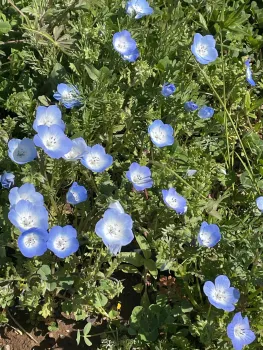
In the spring of 2025, we began to reap the rewards of all that hard work. One of the first wildflowers to appear was Baby Blue Eyes (Nemophila menxiesii) with gorgeous little blue flowers close to the ground. We also saw lots of lupines, both blue and yellow, Elegant Clarkia (Clarkia unguiculata), and of course a plethora of California poppies (Escholzia californica).
In the summer came Serpentine Sunflowers (Helianthus bolanderi), Yarrow (Achillea millefolium), and Gumplant (Grindelia camporum). We had also planted some other natives we had on hand, including Blanketflower (Gaillardia), White Sage (Salvia apiana) and Coyote Mint (Monardella villosa). The pollinator garden was an ever-changing collage of color, buzzing with every kind of bee imaginable. But no monarch butterflies that year.
Our pollinator garden is now in its second year. It became evident this past spring that the solarization had not killed all the weed seeds. In addition to the native wildflowers, we were burdened with an abundance of clover, mustard, cranesbill and other miscellaneous weeds. So much so in fact, that some of the desirable wildflowers either could not compete with the weeds or were accidentally removed along with the weeds. There were still saw lots of Yellow Lupine (Lupinus microcarpus densiflorus), Yarrow, and Milkweed. Gumplant is the predominant feature now that we are in the heat of summer. I plan to reseed native wildflowers in the fall to hopefully bring back some of the smaller and more delicate wildflowers next year.
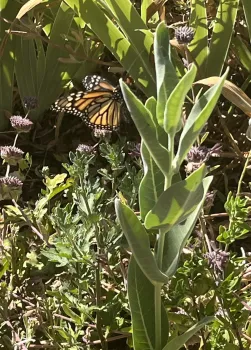
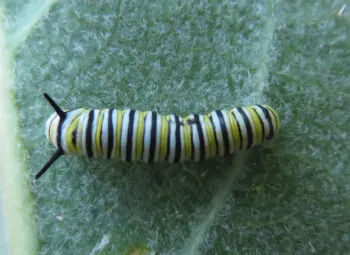
Both kinds of milkweed continue to grow and flower. A few weeks ago, we were rewarded with our first monarch siting! Since then, we have seen more butterflies, and we are on the lookout for eggs and caterpillars. Seeing these butterflies in our garden has been very rewarding. There is no better evidence that what we do in our own yards can have a positive impact, both locally and regionally. If enough small gardens like this are planted along the Western monarchs’ migratory path, we can create habitat corridors. The monarchs will be able to find the resources they need to reproduce (milkweed) and sustain themselves (nectar plants) throughout their lifecycle, and their numbers may once again rise.
To return to Doug Tallamy, “when we all take part, we create the connected habitats that life depends on.”
Visit Homegrown National Park to learn more about Tallamy and his concept of turning your yard into a Homegrown National Park.
UC Master Gardeners of Butte County are part of the University of California Cooperative Extension (UCCE) system. To learn more about us and our upcoming events, and for help with gardening in our area visit the UC Master Gardener website. If you have a gardening question or problem, email the Hotline at mgbutte@ucanr.edu or leave a phone message on our Hotline at 530-552-5812. To speak to a Master Gardener about a gardening issue, or to drop by the MG office during Hotline hours, see the most current information on our Ask Us section of our website.