
Week-long course to cover new federal drone restrictions, film-making, thermal data and flying drones from boats
Ten years ago, if you spotted a drone flying overhead, it was most likely a hobbycraft operated recreationally. That changed in 2016, when the Federal Aviation Administration streamlined access to drone licenses for commercial and professional use.
Sean Hogan, academic coordinator of the Informatics and GIS (IGIS) Program at the University of California Agriculture and Natural Resources, marks that time as the beginning of the drone revolution. New possibilities emerged, such as data collection and landscape mapping.
“I started dabbling in it, and that dabble very quickly became a torrent of people wanting to have drones for all their projects,” Hogan said.
Once people learned about the technology’s potential, they reached out to Hogan and IGIS with questions: What should I buy? What regulations do I have to abide by? What can I even do with the drones?
“There was just one ask after another,” Hogan remembers.
Now, the technology has become ubiquitous. Unmanned aerial vehicles are lighting up stadiums with choreographed displays, filming sweeping landscapes for movies, precisely spraying pesticides on crops and, soon, even delivering packages to your doorstep.
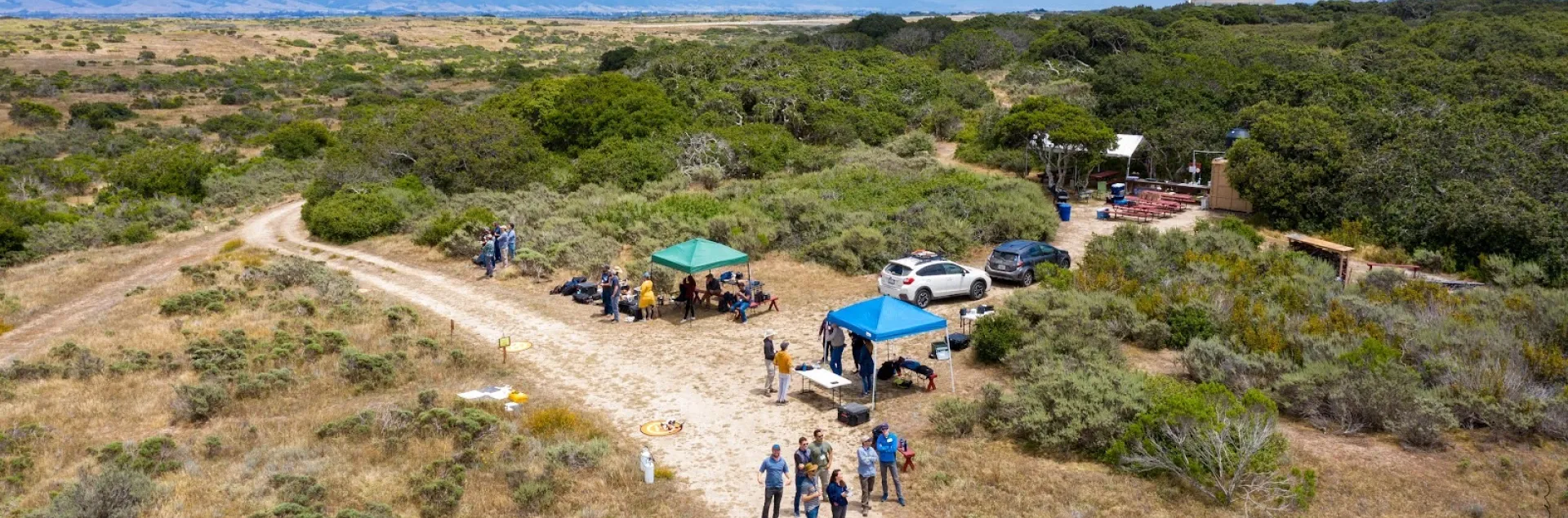
Hogan and Andy Lyons, IGIS program coordinator, have played an active role in that evolution. In 2017, they responded to public demand by launching DroneCamp, a week-long short course in using drones for mapping, research and education. For the last 10 years, this collaboration of UC and California State University institutions has expanded access to drones and boosted participants' confidence in safely using them for new purposes.
“The university is the perfect provider for this,” Lyons said. “Part of our mission is to train people on the tools we use in our own research.”
Learning to wield the power of drones
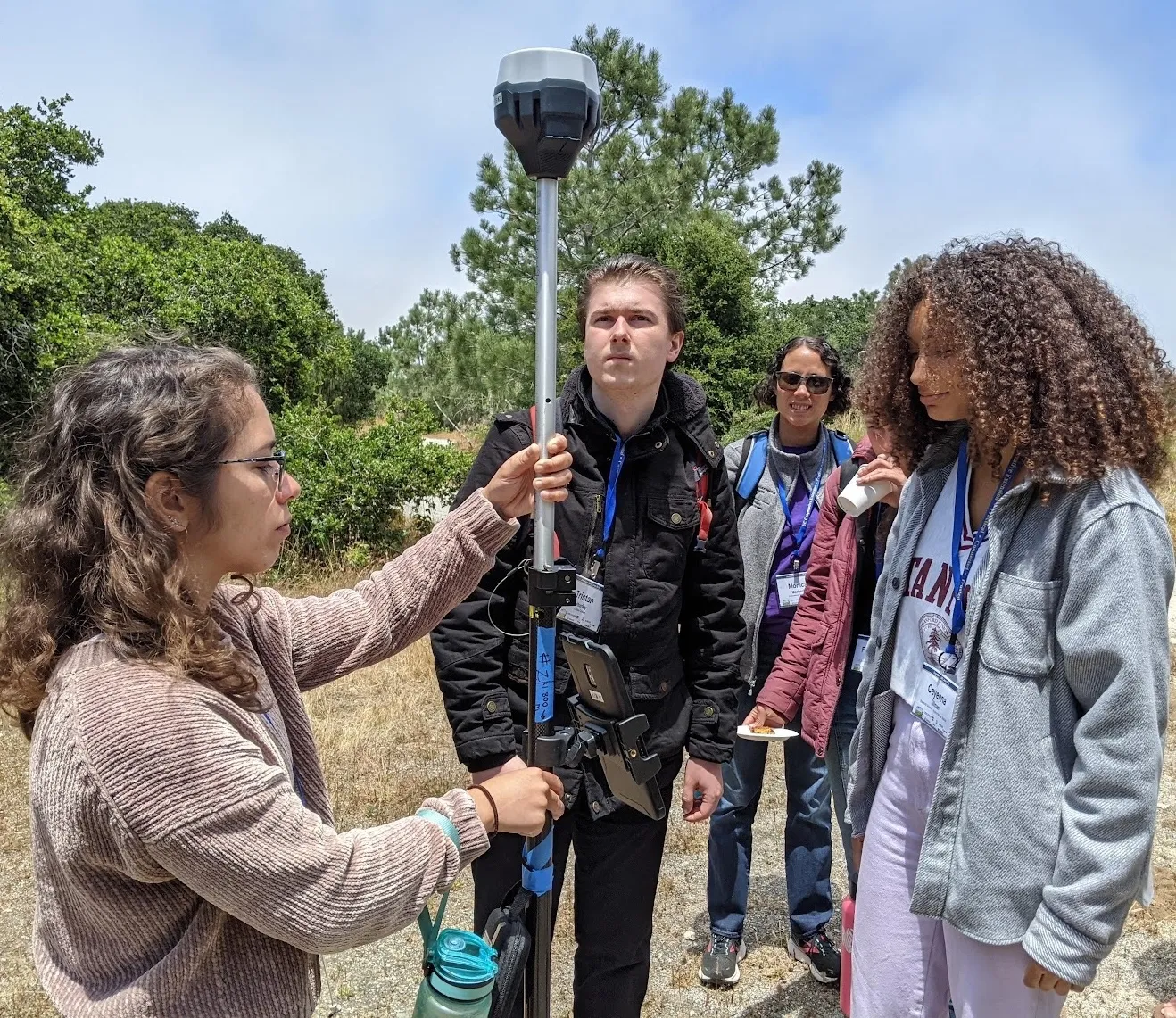
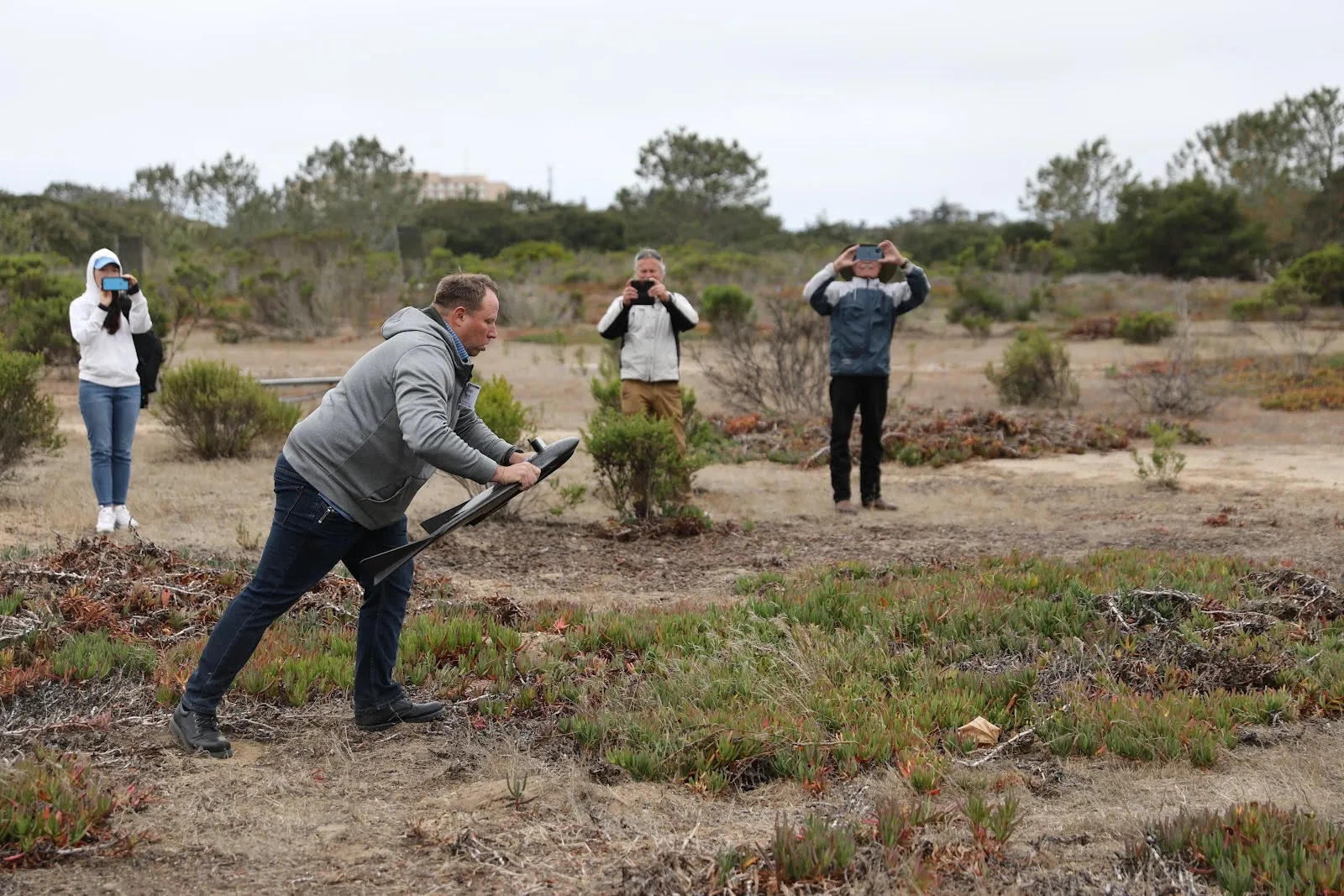
Harnessing drones' potential is complicated. Besides learning to fly (the fun part), users also need to understand regulations and safety, manage equipment, plan flights, manage photos, make maps and analyze the results with GIS software. DroneCamp covers this entire workflow through one intensive week of expert guidance and hands-on practice.
Just as it has for the last eight years, DroneCamp will be hosted at CSU Monterey Bay. The event runs from Aug. 3-7. Registration is full, but members of the press are invited to attend and learn more about the state of drone technology.
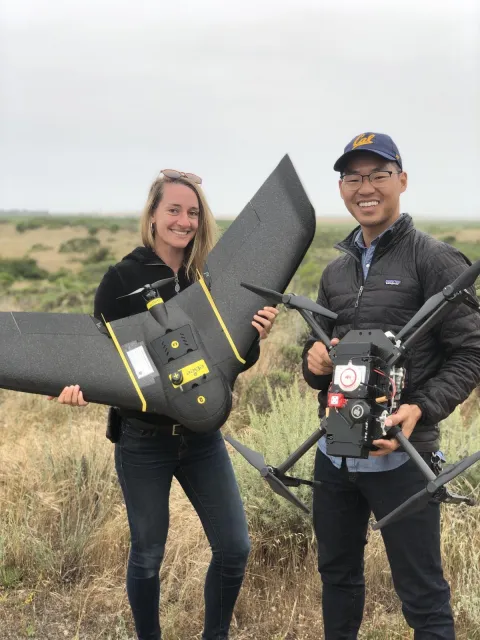
This year’s workshop will address the recent federal regulations targeting drone purchases. In December 2025, the government severely restricted the purchase of non-American drones, disrupting reliance on Chinese-made drones that currently dominate the market.
“We have a lot of people who are very concerned about what that means for our research projects,” said DroneCamp instructor Brandon Stark, director of the University of California’s Center of Excellence on Unmanned Aircraft System Safety. “We're at the mercy of what industry is able to provide for consumers in the U.S.”
Instructors will share the current landscape of American-made drones and give a walkthrough of building drones from kits.
To celebrate the 10th anniversary of DroneCamp, several alumni will return to share how they’ve used drones in their careers, such as tracking sea turtle hatchlings and wetland birds. This year’s program also includes several new workshops on specialized topics, including cinematography, thermal data and flying drones from boats. The program will conclude with a tour of the state-of-the-art Joby Aviation Facility, where participants will see the future of drone taxis.
The full camp agenda is available at https://dronecampca.org/2026-agenda/.
DroneCamp has grown over the years, attracting additional instructors from UC and CSU campuses. More than 430 people have attended in person, and another 720 have attended virtually. Participants are diverse, representing education, nonprofits, farm service, business and local government.
In addition to improving participants’ professional skills, DroneCamp may also enhance their social life: a couple who met during a previous DroneCamp workshop recently got engaged. To Lyons, that speaks to the passion that participants typically bring to the workshop.
“The focus is on building community… we try to inculcate that spirit of camaraderie,” Lyons said.