
By Michelle McNeill.
Many of us are successfully growing Meyer lemons, Bearss limes, Satsuma mandarins, and navel oranges. But have you heard of Nagami Kumquat (Fortunella margarita (Nagami)) Yuzu (Citrus junos), Finger Lime (Citrus australasica), Flying Dragon (Poncirus citrus trifoliata), or Buddha’s Hand (Citrus medica)? These are just a handful of odd and unusual citrus varieties, including several that can survive in our area. In fact, Nagami Kumquat, Yuzu, and Flying Dragon are cold tolerant to well below freezing!
First, though, it is very important to note that citrus trees or their seeds must never be purchased from nurseries outside of California because importing citrus into California is dangerous to the survival of our own citrus industry and is highly illegal. A deadly citrus disease present in other states will destroy the California citrus industry and eliminate the successful survival of our valued backyard citrus production. Both Huanglongbing (citrus greening) and its vector, the Asian Citrus Psyllid, are present in Southern California and will destroy backyard citrus, and our valuable citrus industry, if they become established in our state. For this reason, citrus purchased in Southern California should never be brought to areas north of the Tehachapi Mountains. Four Winds Growers in the Bay Area of Northern California specializes in growing semi-dwarf citrus and offers rare and unusual citrus varieties that can be purchased.
All of the citrus varieties discussed below require full sun, good drainage, and consistent watering without waterlogging. All should be pruned in early spring to remove dead or diseased branches and to maintain shape.
Let’s take a brief look at the growing habit, fruit, and potential uses of each variety:
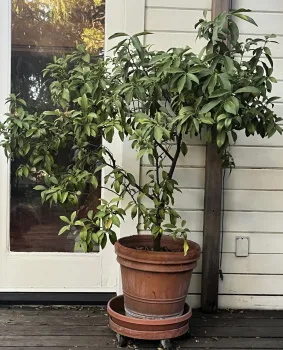
Nagami Kumquat is an evergreen tree that produces orange fruit the size and shape of a large olive. It is very prolific, producing fruit most of the year. This is the most useful of the five varieties discussed here, and it survives well when planted in our area. Kumquat can survive temperatures down to 19 degrees Fahrenheit. The entire fruit is edible, including the skin, flesh and seeds. The skin is sweet and the flesh is juicy and sour. Kumquats can be eaten fresh or used for preserves, marmalade, or garnish for drinks. Fruit can be cut into thin slices for salads. Leaves can be used to make a flavorful tea. The tree is a symbol of prosperity and good luck in its native China, where it is often seen planted in a container alongside a home’s front door.
Yuzu is an evergreen tree with 2-inch thorns throughout. This variety originated and grew wild in Tibet and central China. The fruit is the size and shape of a tangerine, with a bumpy, textured skin and lots of seeds inside. The flavor is often described as a cross between grapefruit, mandarin and lemon. Due to its extreme tartness and abundant seeds, the yuzu fruit is rarely consumed fresh, but the skin and juice are widely used in everything from drinks and sauces to desserts. Yuzu can be substituted for the zest or juice of lemons or limes and (like the Kumquat) is winter hardy down to 19 degrees. The fruit can be harvested when green in late summer to fall, and when yellow from October to December. Rich in vitamin C, Yuzu is a treasured symbol of wintertime and wellness in Japan, where the fruits are used in multiple ways and the leaves, too, are considered a premium garnish and flavoring agent.
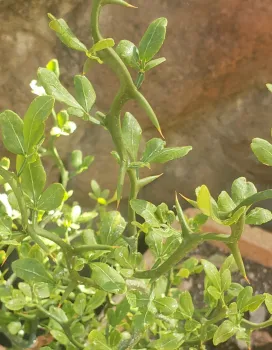
Flying Dragon is a deciduous tree with contorted branches and curved, hook-shaped thorns said to resemble dragon’s claws. The tree has a corkscrew growth habit and makes an attractive winter specimen when the leaves have dropped. Since it is deciduous, Flying Dragon is extremely cold hardy, tolerating temperatures as low as 0 to minus-10 degrees F. Its primary use is as a dwarfing rootstock for other edible citrus varieties. It bears bumpy yellow fruit that is approximately two inches in diameter, with extremely sour juice that is not usually considered edible. In China the tree is sometimes planted in rows to form a thorny, impenetrable hedge against animals and trespassers.
Since Kumquats, Yuzu, and Flying Dragon are cold-hardy, they can be planted in the ground. The next two varieties, Finger Lime and Buddha’s Hand, are very frost-sensitive and must be grown in containers and brought indoors during the winter or grown in a greenhouse; if not, they must be very well protected from winter cold. They will remain relatively small when planted in containers.
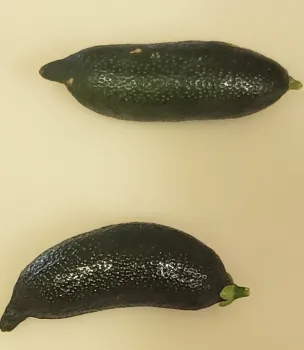
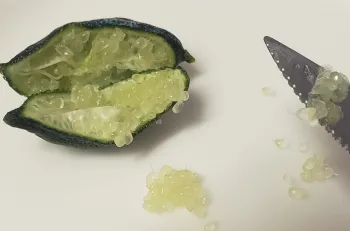
Finger Lime is an evergreen tree with smaller, quite sharp thorns throughout. It is cold hardy only down to 28 degrees F. It will briefly tolerate light frost, but may drop its leaves and fruit. Young trees and new spring growth are easily damaged. It must be protected from our local winter weather to prevent it from being killed by freezes in the mid-20s. It produces long, narrow, finger-shaped fruit, and is also known as sushi lime or citrus caviar because the pulp, consisting of tart, juicy pearl-like vesicles, resembles caviar. It is used as garnish for a wide range of dishes, and in desserts and cocktails. The fruit adds a bright citrus flavor with no sogginess. Finger limes can be eaten fresh: just cut open, squeeze the little balls into your mouth and pop them between your teeth for a refreshing lime flavor. Different varieties produce green, red or yellow-skinned fruit. The fruit of the finger lime can be stored in the freezer to enjoy any time of year.
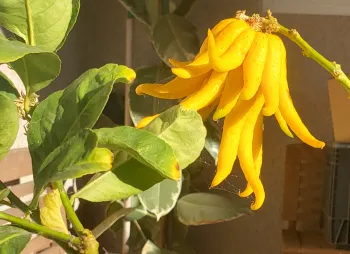
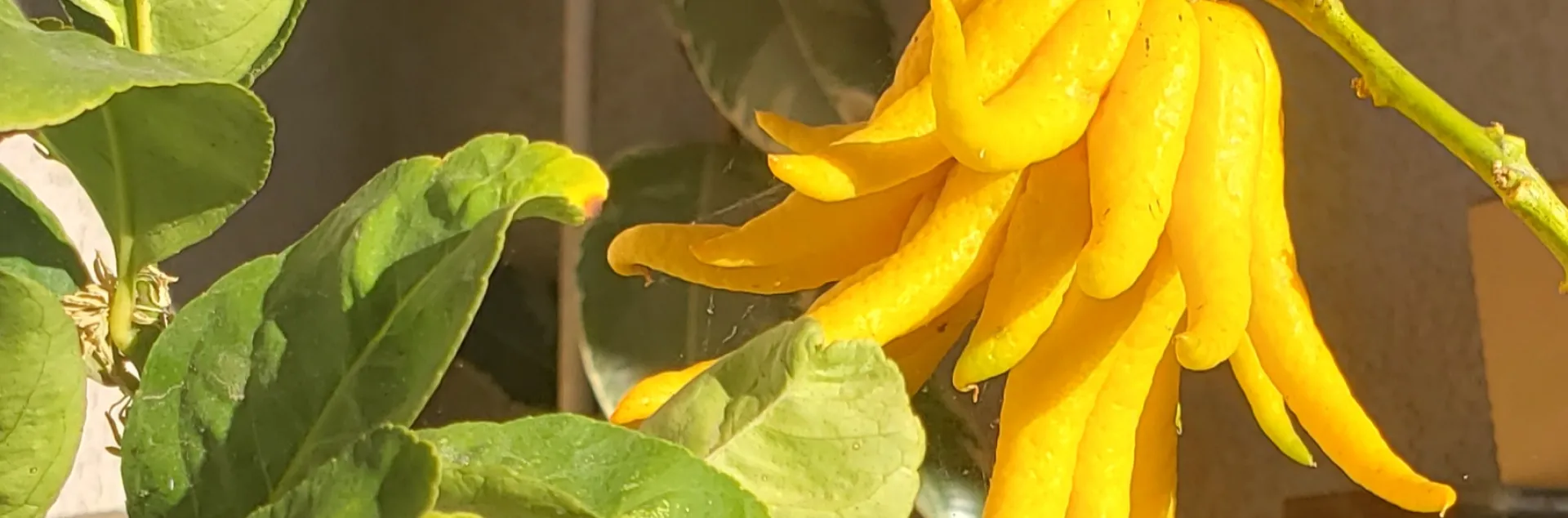
Buddha’s Hand is an evergreen tree with some sharp thorns, but nowhere near the thorniness of the other varieties discussed. Its fruit has finger-like segments connected at the base and resembling open or closed hands. The fruit ranges in size from six to twelve inches, and is essentially all peel (no seeds and no juice). Buddha’s hand citrus is hardy only down to 32 degrees F., so it must be grown in a greenhouse or brought indoors during our winters. It is very sensitive to even light frost, which can damage its “fingers” and kill branches. The fruit is more fragile than standard lemons because of its thin skin and lack of protective juice. It is useful for zesting, candying, marmalades, sauces, marinades and cocktails. Its intense fragrance makes it ideal for room freshening and scenting linens or clothing. In China, it symbolizes good fortune and spiritual enlightenment and is a popular offering during festivals and ceremonies.
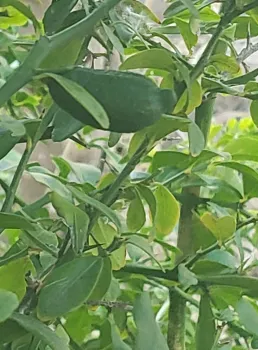
Here in Northern California, early spring is the time to plant citrus, whether in the ground or in pots. This allows the new trees to become well established before facing the colder temperatures of winter. Citrus trees will benefit from light balanced fertilizer applications in spring with the last applications completed by June. This allows the trees’ growth to slow down and harden off before the risk of winter frost or freeze arrives.
We are lucky to have many good options for growing citrus in our area, including Meyer lemons, Bearss limes, Kumquats, Mandarins, and Naval oranges, that all produce excellent fruits. But these less common citrus varieties can be fun to experiment with. They can add new flavors to your cooking and interesting focal points in your garden. But bear in mind that the more unusual citrus varieties introduced in this article may have very narrow uses, and/or are particularly sensitive to the cold temperatures our region can experience in the winter months.