
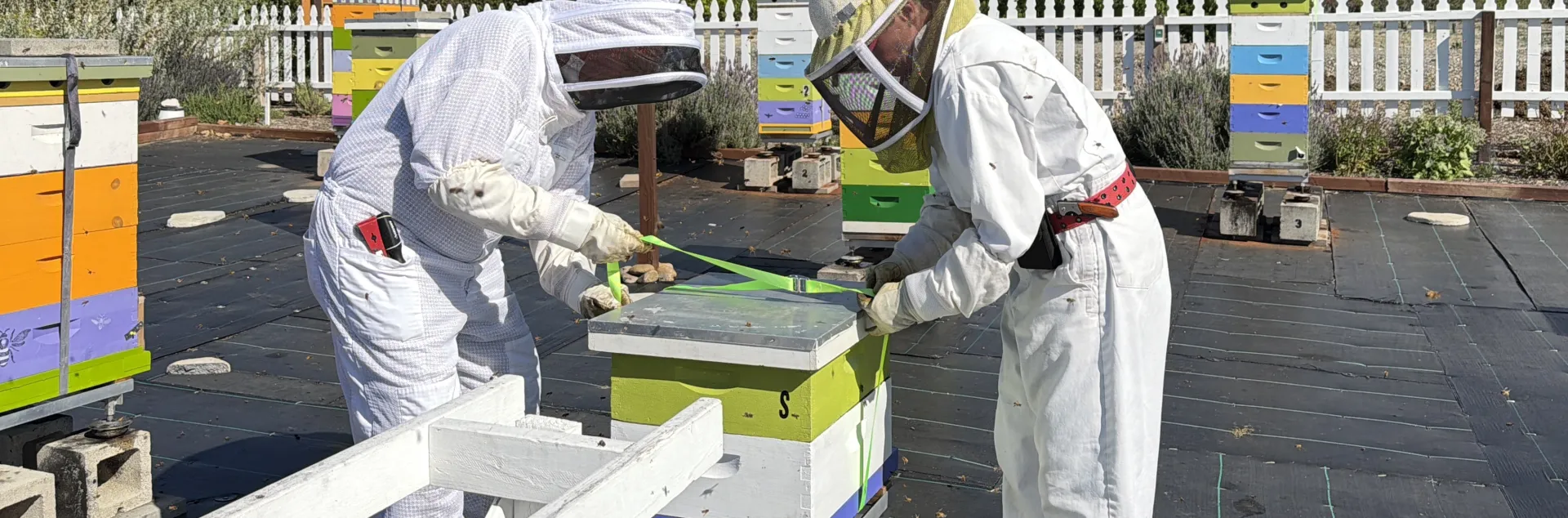
Amid the constant hum of thousands of bees, open hive boxes and volunteers dressed in veils and protective beekeeping suits, the OC Bee Team apiary, hosted at the University of California Agriculture and Natural Resources (UC ANR) South Coast Research and Extension Center (SCREC), celebrated 10 years of education, collaboration and community service.
The anniversary celebration on July 14 brought together volunteers, specialists, researchers and members of the Orange County beekeeping community, along with Wendy Mather of UC Davis. Elina Niño, director of the California Master Beekeeper Program, joined the celebration virtually via Zoom. For many participants, the event was also a reunion of people who, over the years, have built a community around caring for honey bees.
Located in Irvine, the teaching apiary is one of the University of California’s important sites for hands-on beekeeping education. Here, the hives do more than produce honey—they serve as living classrooms where participants learn about honey bee behavior, colony health, pest and disease management, and the essential role pollinators play in healthy ecosystems.
Lindsey Pedroncelli, interim director at SCREC, emphasized the apiary’s unique role within UC ANR.
“South Coast REC is the first and only Research and Extension Center within UC ANR to host a California Master Beekeeper Program apiary,” Pedroncelli said.
The program supports educational outreach throughout Orange County while providing hands-on learning opportunities for volunteers, students, beekeepers and community members. According to Pouliquen, the Orange County Bee Team currently has 25 active volunteers who help care for the apiary and support its educational activities.
Every Tuesday, volunteers gather to conduct routine hive inspections. During these sessions, they examine hive boxes, locate queens, check for eggs and larvae, evaluate colony development and determine whether any hive requires special attention.
The work demands patience, careful observation and teamwork. It also requires trust among participants, as each person plays an important role in ensuring both the safety of the group and the well-being of the bees.
A Family Built Around Bees
Over the past decade, the apiary has become much more than a training site. For its members, it represents a place of friendship, collaboration and belonging.
The dedication and leadership of Karine Pouliquen, apiary manager and lead volunteer for the California Master Beekeeper Program Orange County Bee Team, have been instrumental to the apiary’s success.
With more than two decades of experience working with honey bees, Pouliquen has mentored and trained countless volunteers. Her leadership, expertise and commitment have helped maintain the apiary as a welcoming and safe environment where people with varying levels of experience can learn directly in the field.
“The success of the apiary comes from working together as a team, with a common goal and a shared vision,” Pouliquen said.
During hive inspections, she explains each procedure, carefully observes colony behavior and guides first-time participants through every step. Because colonies in a teaching apiary can sometimes become defensive, making timely decisions is essential to protect both the bees and the people working with them.
Beyond learning beekeeping techniques, participants also gain knowledge about honey bee biology, pollinator-friendly plants, seasonal changes and the proper use of beekeeping equipment. This work has been made possible through the dedication of volunteers and the continued support of SCREC staff.
“We’re all volunteers,” members of the group often say—a simple phrase that captures the collaborative spirit that has sustained the apiary for an entire decade.
Community and Belonging
For Wendy Mather, co-manager of the California Master Beekeeper Program, one of the most meaningful aspects of the celebration was witnessing the strong sense of unity among the Irvine volunteer team.
She described the apiary as much more than a place to learn beekeeping skills. Over the years, it has also become a space for friendship, collaboration and belonging.
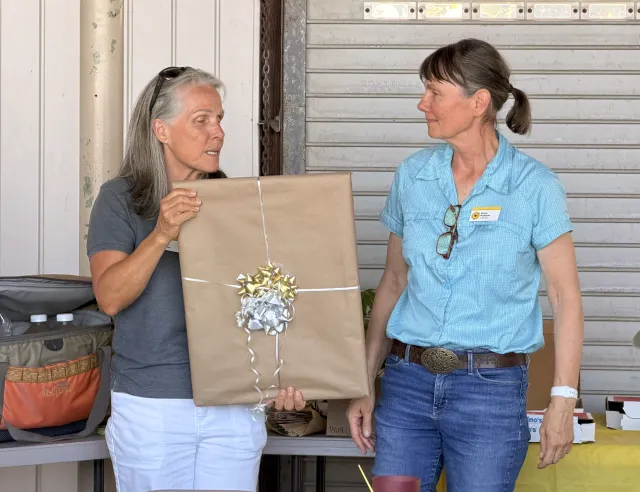
During the celebration, Mather noticed Pouliquen talking with another volunteer and was struck by the warmth and affection between them—a connection she described as invaluable.
That sense of closeness reflects what the apiary has created beyond beekeeping: a community built through years of learning, working and caring for bees together.
Many people who initially joined to learn about bees have also found lasting friendships, mentorship and a welcoming community where they can exchange knowledge and experiences.
The participation of Mather in person and Niño virtually reinforced the close connection between university research, practical education and the knowledge volunteers bring back to their communities.
Ten Years of Bringing Science to the Community
Every hive inspection presents a new opportunity to learn. Conditions inside a colony can change from one week to the next, requiring volunteers to observe carefully, document their findings and make informed decisions based on what they discover.
As bees continue flying in and out of the hives collecting nectar and pollen, the team is already preparing for the next chapter.
Ten years after its founding, the South Coast REC apiary continues to grow—not only as a center for hands-on learning but also as a thriving community united by a shared commitment to protecting pollinators.
The hum of the bees never stops. Inside the hives, thousands of honey bees work continuously in remarkable coordination. Outside, the volunteers do much the same: they observe, learn, collaborate and care.
Stepping into an apiary does more than change the way people understand honey bees—it can also transform how they think about stewardship, collaboration and community.
Apiary Tours 2026
OC Bee Team volunteers share their knowledge and passion for honey bees with the public through guided apiary tours at South Coast REC. These hands-on experiences offer participants a unique opportunity to step inside the apiary, learn about the work volunteers do to care for the colonies, and discover the important role honey bees and other pollinators play in our environment.
If you’re interested in seeing the apiary up close and learning directly from the volunteers, upcoming tours are scheduled for:
Upcoming dates:
Saturday, August 29
Friday, September 11
Time: 9 a.m.–11 a.m.
Location: South Coast Research and Extension Center, Irvine, California
Cost: $25 per person. Register online. Credit card payment is required.
Age requirements: Children ages 12–15 must be accompanied by a registered adult. Youth ages 16–17 may participate without an accompanying adult with a parent or guardian signature.
What to wear: Personal protective equipment (PPE), including a beekeeper suit, hat, veil and gloves, will be provided for use during the tour. All participants are required to wear closed-toe shoes. Participants are also encouraged to bring a filled water bottle.