
Table of Contents
- Greetings from UC ANR
- What is Targeted Grazing?
- Grazing for Wildfire Prevention
- Grazing Plans and Leases
- Things to Consider when Hiring and Target Grazing Contractor or Certified Range Manager (CRM)
Greetings from UC ANR
I have been receiving a number of questions lately on the use of grazing as a method to reduce fuels in forests and oak woodlands. Though only 12% of our workshop participants indicated on the preworkshop assessment that this is something they have previously done, I have a hunch that interest in targeted grazing will continue to increase. Fortunately, we have many experts within UC ANR to answer all of our questions. We are planning a follow-up workshop specifically on targeted grazing for Tuesday, December 7th, 5:30pm - 7:30pm. I will be sending out a registration link in October. So, be on the lookout for it! Lastly, as an added bonus, the Forest Stewardship Education Program has recently expanded the stipend process beyond RPFs, to include Certified Range Managers. So, if your management goals include the possibility of grazing, I hope you find this issue an informative first step!
Cheers,
Kim Ingram, kcingram@ucanr.edu
What is Targeted Grazing?
According to the Targeted Grazing Handbook, targeted grazing is defined as "the application of a specific kind of livestock at a determined season, duration and intensity to accomplish defined vegetation or landscape goals...The major difference between good grazing management and targeted grazing is that targeted grazing refocuses outputs of grazing from livestock production to vegetation and landscape enhancement."
UC ANR Range and Livestock Advisor Dan Macon explains that targeted grazing contractors typically provide the livestock, fencing, staff, livestock watering equipment, predator protection, and other infrastructure necessary to safely and effectively manage livestock. By managing the type and number of animals, the duration of grazing, the season and frequency of grazing, and the spatial distribution of livestock, targeted grazing can help landowners and managers achieve a variety of vegetation management goals.
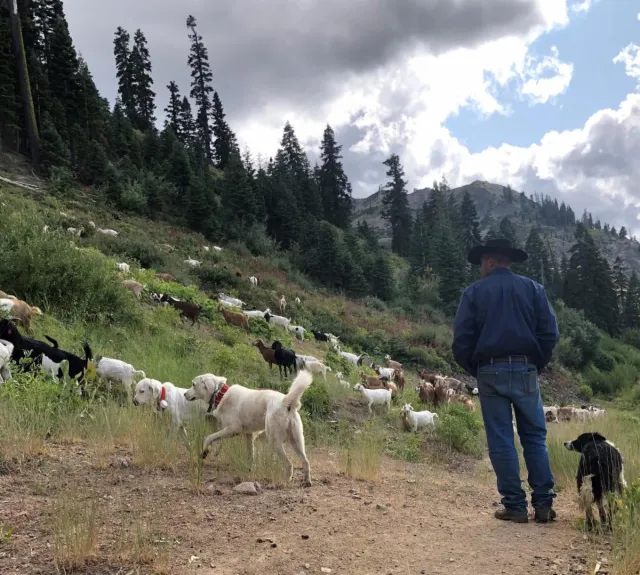
According to Dan, targeted grazing can reduce or modify fine fuels and ladder fuels to reduce wildfire danger in many environments. Indeed, targeted grazing and prescribed fire are the only fuels treatment methods that actually remove fuel.
Impacts of targeted grazing include:
- The removal of herbaceous and some woody materials
- Trampling of vegetation and modification of fuel profile
- Cycling of nutrients
Targeted grazing can work well where other fuels management techniques are too costly or inappropriate, such as grazing in riparian areas or on steep, rocky slopes.
However, it is important for landowners to understand that targeted grazing is not necessarily a one-time activity. In dealing with invasive or hardy species, grazing may be needed for several years in order to have an impact. Grazing will also leave the landscape 'patchy'. You can't always control what an animal will eat and what they won't!
Grazing for Wildfire Prevention
Managed grazing on California forestland has been around since the early 19th century. As the grasses and shrubs in the Central Valley dried up in the summer, sheep and cattle were driven up into the Sierra Nevada where they consumed fine fuels on the forest floor. According to the US Forest Service Tahoe National Forest, by the early 1900's, rangers were working with ranchers to mitigate grazing effects on streams, wetlands and other sensitive habitats by using an allotment system.
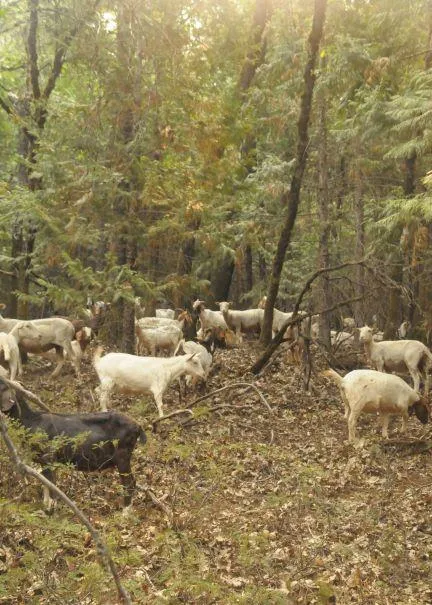
This system defined areas where grazing was allowed, restricted the number or sheep or cattle in each allotment, and provided managers the opportunity to monitor the health of each allotment. Though California forests evolved with fire, we know the size, intensity and scope of wildfires has been increasing over the last several decades. Fire on the landscape behaves in response to three things: topography, weather and the fuel profile. Grazing is one way to alter the fuel profile through vegetation removal, aka chomping up the vegetation! Grazing can both alter the distribution of fine fuels on the forest floor, as well as eliminate some of the lower ladder fuels. Grazing will not prevent wildfire, but reducing the accumulation of fuels changes fire behavior, maybe enough to allow fire fighters to successfully attack the fire before it grows too large or too hot.
Grazing Plans and Leases
If you are considering the use of livestock grazing on your forestland, you should have a grazing plan. Just like a forest management plan, a grazing plan should spell out your goals and objectives, your desired timeframes, and the areas of your forest that you would like grazing to occur on. A Certified Range Manager can help you develop your plan. You can get technical advisor from your local University of California (UC) Cooperative Extension livestock advisor.
“Livestock grazing leases can be an effective and economical tool to reduce fire fuel loads and enhance biodiversity on large landscapes,” states Tracy Schohr, Livestock and Natural Resources Advisor, “Each grazing lease will be unique to the property’s specific characteristics and landowner objectives.”
The information in your plan will support the lease agreement between you and the grazing contractor. The grazing lease should clearly describe the responsibilities of both you as a landowner and those of the grazing contractor as well as steps that might need to be taken to mitigate any potential negative impacts.
UC ANR's Publication "A Guide to Livestock Leases for Annual Rangeland" has information that can be applied to forest landowners looking to establish a grazing lease.
Remember the outcomes from grazing will be more varied than from other traditional vegetation management techniques. Your plan and lease should consider any follow-up actions that may be needed, including using multiple tools (e.g. mechanical, hand, chemical) to reach your land management goals.
Things to Consider when Hiring and Target Grazing Contractor or Certified Range Manager (CRM)
Just like finding a Registered Professional Forester (RPF), it is always best to talk with several Certified Range Managers (CRMs) or targeted grazing contractors, before hiring one. You should be able to clearly articulate your management goals and the expectations you have for target grazing with them. Make sure your expectations and the realities of targeted grazing are aligned.
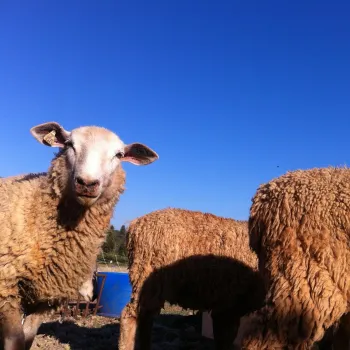
Ask for references and don't be afraid to actually call them up! Ask the reference about their experiences. Were they satisfied with the outcomes? Would they hire the contractor again?
Ask for a job estimate so you can compare between contractors and how targeted grazing compares to other fuels management activities.
For a list of Certified Range Managers who may be able to consult with you, click here.
To find grazing contractors that work in your area, click here. Additionally, the Match.Graze website connects landowners and livestock producers, pairing up livestock needs with landowner objectives.
UC Cooperative Extension also has Livestock and Natural Resources Advisors and Specialists who are CRMs and can offer assistance.
Please download Grazing for Change for more information on grazing specifics and its multiple benefits to forest landowners.
Find the printable version of this newsletter below. Note that the pdf is for print purposes ONLY.
