
Table of Contents
- Greetings from UC ANR
- Biochar basics: the 'what' and 'why'
- Biochar and soil interactions
- Biochar project considerations
- Burn piles- for a biochar bonus
- Q&A with Fred Seavey, private forest landowner in Napa County and Forest Stewardship Workshop participant
- Knowledge gaps
- Economic considerations
Greetings from UC ANR
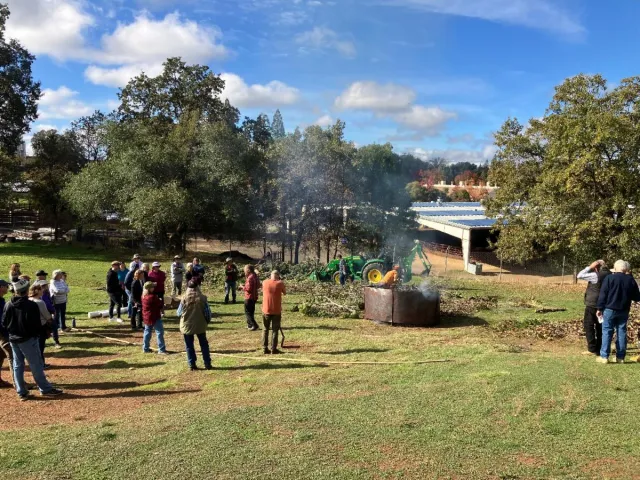
For many forest landowners, active forest management involves some level of biomass removal. Recall that biomass is defined as "the living or dead weight of organic matter in a tree, stand, or forest; and the wood product from chipping of unmerchantable trees, limbs, tops and slash." Unfortunately, there is a deficit of local places to take biomass for energy or other products in California, leaving many landowners wondering what to do with excess biomass from their management activities. Most of our landowners are familiar with utilizing burn piles as a tool to eliminate excess woody debris. In fact, for Forest Stewardship participants that had their initial site visits, piling and burning was the 3rd most recommended forest management activity behind thinning and utilizing prescribed fire. Additionally, many have been asking us if biochar could be an additional tool in their management tool box to get rid of biomass and create something of value.
There are many un-answered questions around biochar, or should I say there are many "it depends" answers. However, there is a lot of research being conducted around effective and efficient biochar methods, biochar scalablity to larger forests, implications on forest health including soils, carbon storage capabilities, and markets just to name a few. In this newsletter, we are going to lay out some foundational information on biochar applications for small forest landowners. This is just a beginning 'conversation' as new information frequently becomes available.
Lastly, a big 'Thank You' to Cindy Chen, Woody Biomass Advisor, for her help in developing this newsletter.
Cheers,
Kim Ingram, Forest Stewardship Education Coordinator
Jannike Allen, Forest Stewardship Community Education Specialist
Biochar basics: the 'what and why'
What is biochar?
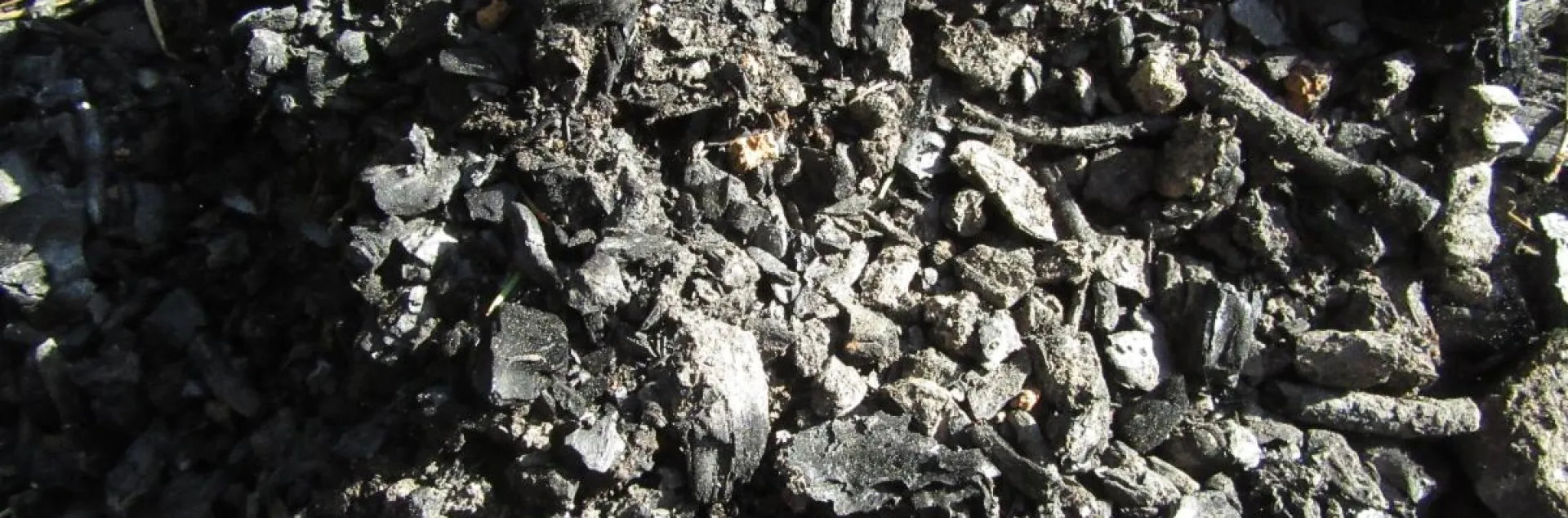
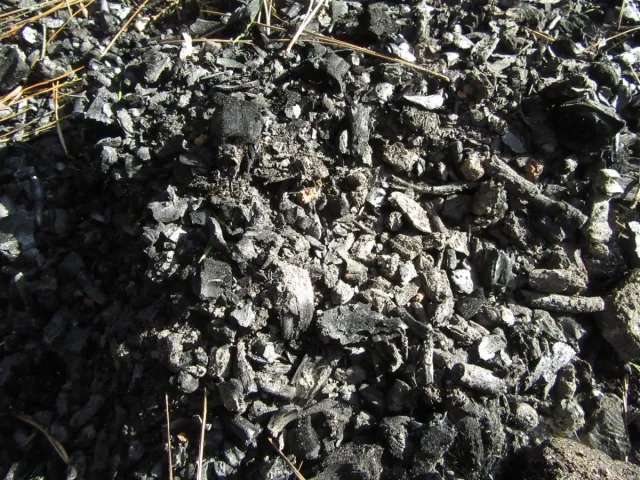
The US Forest Service, Rocky Mountain Research Station defines biochar as the end product of pyrolysis, a process in which woody biomass is exposed to high heat in the absence of oxygen. During this process, water evaporates, and volatile gases that contain carbon, hydrogen and oxygen, are released. These gases burn in a flame, providing heat. The heat turns the remaining carbon into char. The burned pile is quenched with water to prevent the char from burning into mineral ash.
Biochar is very porous yet retains water and dissolved nutrients. It is highly stable in soil and can provide an environment for soil microorganisms. Another feature of biochar is that it can absorb various toxins or contaminants. Depending on the source of woody biomass used to create the biochar, it can range from being acidic to alkaline. (See chart below)
Why should I consider making biochar one of my forest management tools?
- It can be a cost-effective alternative to pile burning for disposing of low-value woody material, including slash and trees affected by disease such as Sudden Oak Death (SOD)
- It generates a high-carbon product that can be utilized in many ways including reducing soil compaction, improving soil health and increasing soil organic matter, and supporting mine reclamation work.
- It can be blended with other materials such as manure or compost for agricultural application
- It is carbon-rich, contributing to carbon sequestration; and It can be made 'on-site' on a small scale, making it accessible for many small landowners.
Know your pH
Using woody biomass to create biochar results in a product that has a pH of approximately 7.0-8.0. However, some tree species or woody shrubs converted to biochar result in biochar with very high or very low pH- so it's important to know your biochar and your soil before application.
The table below presents examples of varying biochar pH when different feedstocks are converted to biochar using the same conditions.
EXAMPLE pH OF BIOCHAR FROM DIFFERENT FEEDSTOCKS | |
| Feedstock | Biochar pH |
| Madrone (Arbutus menziesii) | 4.9 |
| Hog fuel mixed conifer hog fuel | 7.4 |
| Mixed-conifer fire salvage | 7.5 |
| Scotch broom (Cytisus scoparius) | 7.5 |
| Oak (Quercus spp.) | 7.9 |
| Douglas-fir fire salvage | 8.1 |
| Mixed conifer | 8.1 |
| Western red cedar (Thuja plicata) | 8.7 |
Biochar pH levels based on woody material stock.
Table by the US Forest Service Rocky Mountain Research Station, SYCU Bulletin May/June 2022, Issue 54
Biochar and soil interactions
Soil quality is generally not a limiting factor for tree growth in California. However, activities and events such as mining and wildfires can have localized negative impacts on soil, reducing its productive capacity, health and stability. Biochar can mitigate some of these effects by restoring organic matter, improving water retention, and adding a protective soil cover. The effectiveness of biochar depends on several factors, including the type of woody materials used to create the biochar, the quantity applied to soil, existing soil quality and the plant species occupying the site. Amending biochar with other organic or inorganic materials can change the soil pH levels.
In July 2024, the US Forest Service released a report on GTR-439 'Mobile Biochar Production by Flame Carbonization: Reducing Wildfire Risk and Improving Forest Resilience'. The report found that biochar can:
- Stabilize soil carbon and improve microbial metabolic efficiency
- Increase water infiltration and water holding capacity making water more available to plants which improves vegetation health and growth
- Reduce soil bulk density after disturbances such as timber harvesting, reducing runoff and erosion while improving soil stability and reducing flood risk; and
- Be applied with mulch or other organic matter to increase overall available organic matter which can increase plant survival, especially in nutrient-deficient soils.
Depending on its specific properties, biochar can alter the physical, chemical and biological characteristics of soil, including the carbon-nitrogen balance. Soil microbes and bacteria favor different C:N ratios, which affect the rate at which they process carbon, and make nutrients available to plants. When the ratio of carbon to nitrogen is too high, nitrogen can become unavailable for plants to take up. According to Antonangelo et al. (2025), the C:N ratio is influenced by several factors including the quantity applied, biochar source material, the pyrolysis environment, and existing soil conditions. Landowners can mitigate these effects to some extent by mixing biochar with other nutrient rich fertilizers or compost or applying biochar well in advance of planting to allow time for nutrient release.
Biochar interactions with soil can vary greatly, and forest landowners are encouraged to consider site-specific soil conditions before applying biochar broadly.
Biochar project considerations
Project scale
Defining a project's scale includes considering several things such as:
- Acreage amount
- Complexity (e.g. topography, technical knowhow and ability, number of participants needed to accomplish the job, availability of water)
- The project's purpose (goals and objectives) which typically include a budget, duration, team size, and participant involvement.
To determine the appropriate scale and method for a biochar project, landowners should consider the following:
- How large is my forested property, what is the terrain like, and how much woody material is there?
- Is the woody material easily accessible or will it need to be moved to a central location?
- Will the material be moved mechanically or will the project rely on manual labor?
- Is there an easily available water source or will water need to be hauled to the project site?
- Are there people to help me or will I be working alone?
- How will I fund this project?
- What plans do I have for any biochar produced; and will the biochar require additional amendments before application?
Kilns and Air Curtain Burners (ACB)
Due to the lack of commercial scale biochar markets and processing infrastructure in California, we will focus on on-site methods that small forest landowners could utilize.
Kilns and ACBs operate by burning woody materials in phases. Open combustion is used first, then when char is formed, the combustion is stopped by limiting oxygen or removing heat to prevent the materials from turning to ash. In kilns, when new material is added, the alreadyformed hot char is buried and air flow is restricted. The flames from the newly added materials consume most of the oxygen, leaving little oxygen to reach the bottom of the kiln where the charcoal is located. The limited oxygen at the bottom prevents hot charcoals from continue burning and turning into ash, although it remains hot. As fuels are added, charcoal continues to accumulate at the bottom and is preserved while remaining in a low oxygen environment. When all the fuel has been added, the flame begins to die down at which point the charcoal can be obtained by halting combustion, usually by quenching with water (Cornelissen et al. 2016).
Kilns are generally smaller than ACBs, and can be loaded by hand or machinery. These kilns can be placed in the forest, on landings, skid trails or along roadsides. According to GTR-439, kilns may have a solid bottom or a dirt-sealed base to maintain combustion from above. The width of the kiln is greater than the height to facilitate air flow from the top of the kiln to the bottom, which improves combustion efficiency while reducing smoke, ember, and other emissions. Some kilns can be put together by landowners, adding side panels to reach the desired size, and some kilns come as one unit. Some larger, single unit kilns can be transported to the desired location by trailer.
ACBs are large, insulated fireboxes that are towable or trailer mounted, loaded by machinery, and generally placed on landings, skid trails, or along roadsides. ACBs generate a steady and powerful stream of air across the top of the burn box which blocks smoke, minimizes embers from escaping, and recirculates emissions from burning material which consumes smoke particulates. Compared to kilns, ACBs can handle larger feedstock. Hot charcoal is extinguished in a quench pan filled with water. Depending on the equipment model used, biochar removal can be done using hand tools, or via a conveyor belt.
Biochar productivity comparison (based on one 8-hour shift) | ||||||
|---|---|---|---|---|---|---|
Technology type | Typical scenario | Hand crew per shift | Machine operator for loader per shift | Biomass processed per shift by dry mass, tons (metric tonnes) | Biochar production per shift by volume, cubic yards (cubic meters) | Total water required per shift, gallons (liters) |
| Conservation burn pile (CBP) | Hand piles (150 piles) | 5 | N/A | 22 (20) | 11 (8) | 1,000 (3,800) |
| Machine piles (30 piles) | 4 | 1 | 99 (90) | 27 (21) | 9,000 (34,000) | |
| Flame-cap kiln (FK) | Ring of Fire Kiln (4 kilns) | 5 | N/A | 8 (7) | 12 (9) | 600 (2,300) |
| Oregon Kiln (6 kilns, 2 batches) | 5 | N/A | 8 (7) | 12 (9)` | 600 (2,300) | |
| Big Box Kiln (2 kilns) | 2 | 1 | 11 (10) | 16 (12) | 600 (2,300) | |
| Air curtain burner (ACB) | BurnBoss (1 unit, 2 batches) | 1 | 1 | 12 (11) | 6 (5) | 500 (1,900) |
| CharBoss (1 unit, continuous) | 2 | 1 | 5 (4) | 6 (5) | 300 (1,100) | |
| Tigercat 6050 (1 unit, continuous) | 2 | 2 | 56 (51) | 16 (12) | 3,000 (11,300) | |
Potential best applications for biochar produced with each technology | ||||
|---|---|---|---|---|
Technology type | Name | Rake into soil on-site | Scoop up and apply nearby | Package and transport to markets |
| Conservation burn pile (CBP) | Hand pile | x | ||
| Machine pile | x | x | ||
| Flame-cap kiln (FK) | Ring of Fire Kiln | x | x | x |
| Oregon Kiln | x | x | x | |
| Big Box Kiln | x | x | x | |
| Air curtain burner (ACB) | BurnBoss | x | x | x |
| CharBoss | x | x | ||
| Tigercat 6050 | x | x | ||
Biochar productivity comparison table and Potential best applications for biochar produced via burn piles, kilns and ACBs table.
Source: USDA Forest Service RMRS-GTR-438 (2024).
Burn piles—for a biochar bonus
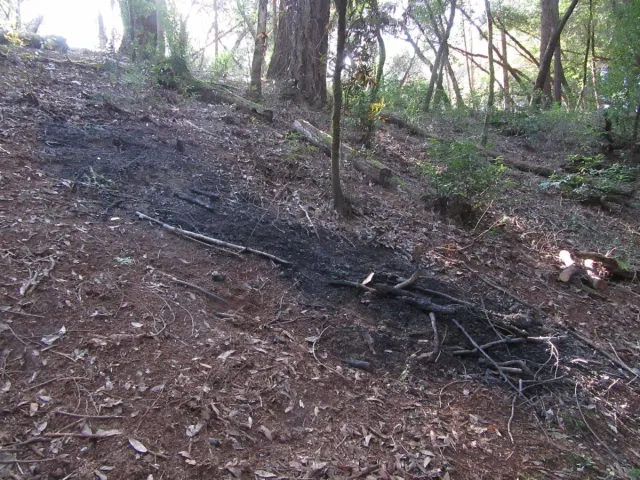
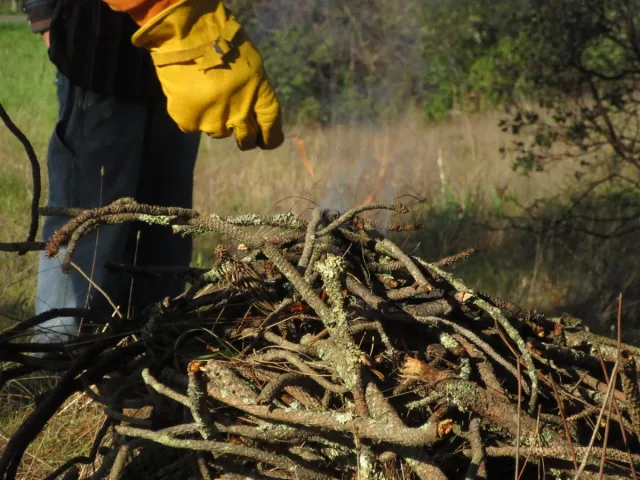
Burn piles are often seen as the easiest entry point to applying fire on your land, and can be a great way to reduce fuels and future fire risk, reintroduce fire in fire-adapted ecosystems, and make room for desirable native species. At the same time, traditional pile burning has tradeoffs—it can pose safety risks, alter soil properties due to heat, release carbon into the atmosphere, and contribute smoke and particulate matter into the air. Pile burning techniques, sometimes known as "conservation pile burning," seek to reduce these effects, and as a bonus can be used to make biochar.
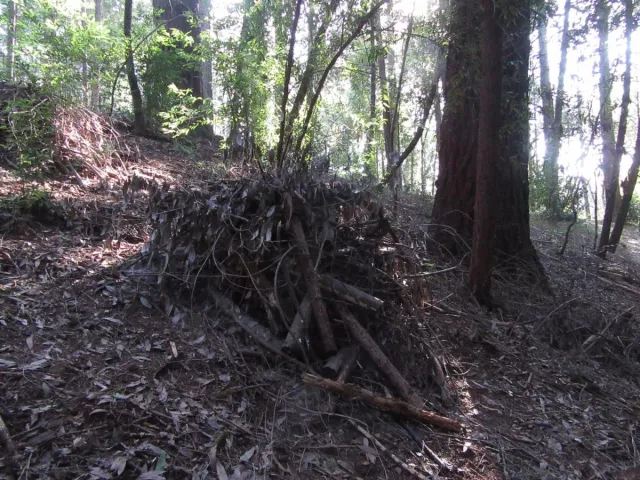
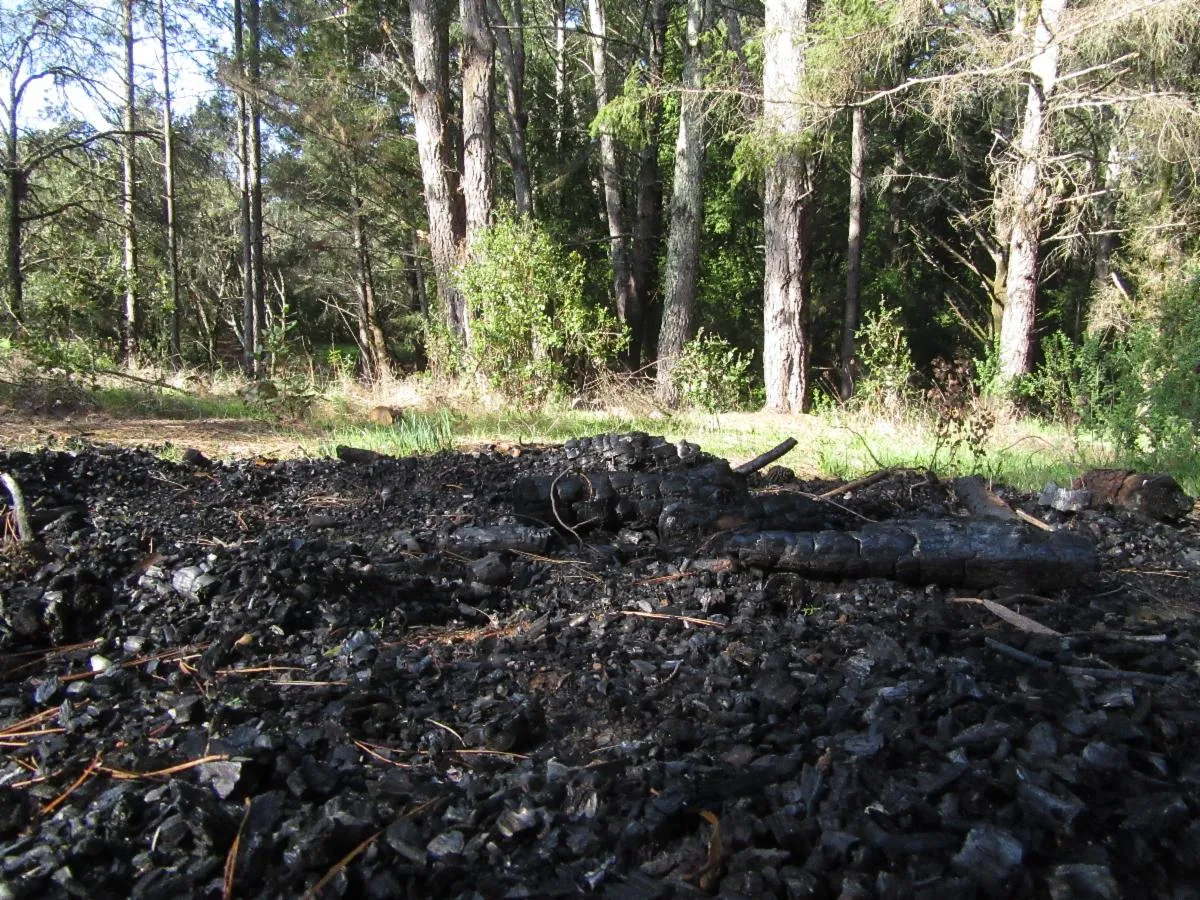
Burn piles can be stacked with large fuels at the bottom and small, kindling sized fuels at the top, so that the pile can be lit at the top and burn downwards. Compared to burn piles lit from the bottom, this top-down burning method helps consume more smoke particulates and reduces how long flames are close to the soil, minimizing heating that can lead to soil damage. When the fire has died down, extinguishing the coals with water halts combustion, which works to prevent unwanted fire spread and leaves behind charcoal. Extinguishing the burn at this stage helps retain carbon in a solid, stable form, compared to if the fire was allowed to continue burning until more carbon was released to the atmosphere and ash was created.
Next steps:
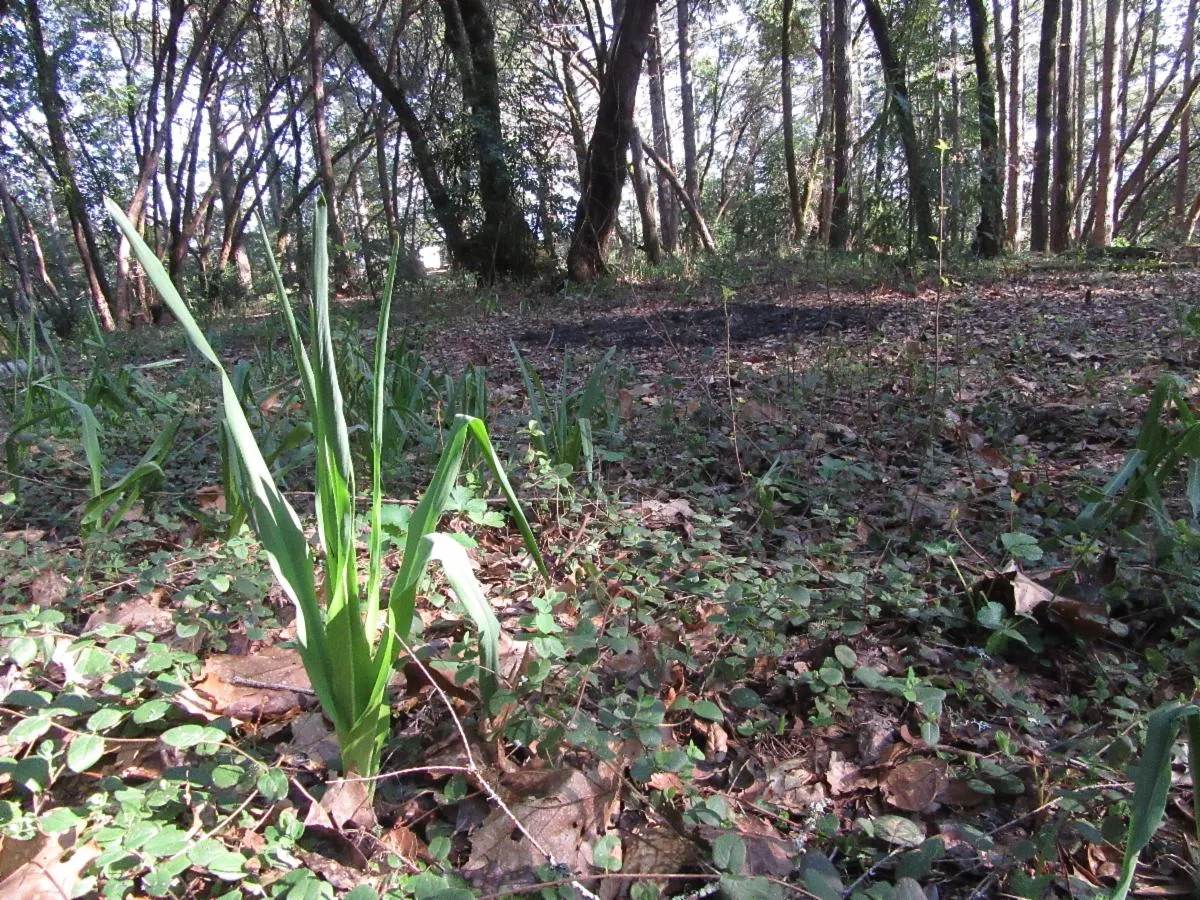
Depending on the size of your pile, you may have a large footprint filled with biochar. If you have equipment or people power, you may consider moving it to other locations that could benefit from biochar as a soil amendment. Spreading it near the pile site may be more doable, and it can even be used as mulch or to improve trail surfaces. Over time, take note of how your site responds and adapt management to obtain healthier soils. It is important to note that soil heating can destroy seeds in the seed bank even when piles are burned top down (which can be helpful for killing undesirable plants), and replanting native plants in the pile footprint can help expedite recovery. '
Check out the Rocky Mountain Research Station's 2024 two-pager on "Making biochar with hand-built piles" and the UC ANR Fire Network's YouTube page for more tips and considerations, and remember to follow the advice and permitting requirements of your local Air Quality District and CAL FIRE when burning.
Santa Rosa Junior College's Wildfire Resilience Program often creates biochar by pile burning at Shone Farm. Students and instructors pile burn to reduce fuels and create space for native species in the forested portion of the campus. Piles are burned on site to remove woody debris at the source. If a pile burn day will be followed by dry weather, coals are doused with water, which halts combustion to ensure the fire is contained. This also works as a way to retain biochar. The farm has experimented with mixing biochar into compost. However, due to access, transportation, and personnel constraints, biochar created in the forest typically stays in the forest, where it may be left in place or spread to improve trails. Creating biochar from forestry material for use on the farm would mean moving material further—either to bring it to a centralized kiln before burning or gathering the biochar from various individual and hard-to-access piles— options that can be less economical than purchasing biochar from offsite for the farm.
Read the Q&A below to to hear about a different site where biochar is produced while stewarding oak woodlands, and applied for agricultural uses.
Q&A with Fred Seavey, private forest landowner in Napa County and Forest Stewardship Workshop participant
You may have decided that you want to make biochar, but what are you going to do with it? Fred Seavey shares how he's able to make and use biochar all at one site, in a closed-loop system.
Q: Can you introduce yourself and share where you have made/ used biochar?
A: I'm one of the family owners of a 200-acre ranch in Napa County. We farm 35 acres of grapes, make wine, manage 110 acres of oak woodlands, and raise cattle, sheep, goats and chickens along with fruit and olive trees. We make biochar onsite and integrate it into our homemade compost for application to our vineyard soils in order to increase our soil's water-holding capacity, build a healthy soil microbiome, and sequester carbon.
Q: How did you get started making and using biochar?
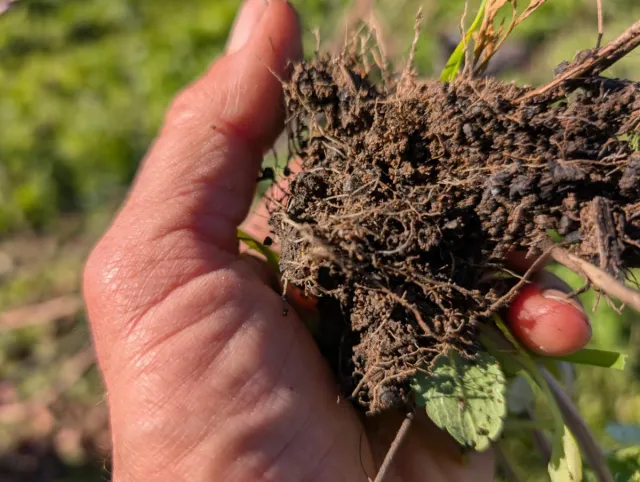
A: Several years ago, Miguel Garcia from the Napa Resource Conservation District taught us how to use the conservation burn method to make biochar. Since then, we've used it to burn vineyard material as well as dead fuels in the areas of our forest that we can't access with a chipper.
Q: Did anything surprise you about the process?
A: Yes. With some adjustments, the conservation burn method is adaptable to a variety of settings. For example, while piles of vines tend to be fairly large and are managed with equipment, the burn piles in our forest are small and we use rainfall to extinguish them after spreading the coals with shovels in order to maximize the production of biochar. In our forest, we do a lot of fuels-reduction work to improve its fire-resilience and health. One winter, one of my brothers and I built and burned 250 piles in our forest. And at the end of the winter, I carried out 75 garbage cans full of biochar to add to our compost.
Q: Have you noticed differences between areas you applied biochar compared to similar areas without biochar?
A: It's immediately noticeable in the forest, where the grass grows much taller and greener in areas with leftover biochar from burn piles.
Q: Who/where would you most recommend making and using biochar? What makes your site a good place for biochar?
A: I suggest taking a look at some of the research on biochar's effects on agriculture in different soil types and crops. We use it in our vineyard as well as in our vegetable garden after first "curing" the biochar in our compost for several months.
Q: Is there anything else you’d like to share?
A: We don't use kilns to make our biochar. Instead, we use the conservation burn method along with careful management and extinguishment.
Knowledge gaps
Much of the research done on biochar has occurred in agricultural settings. Though research associated with biochar applications on forestland has increased, there are still key areas that need extended investigation including:
- Effects on water and nutrient availability in forest soils, as well as changes to the timing of mycorrhizal colonization;
- Appropriate application rates to maximize effectiveness under different forest conditions;
- Long-term comparisons of various biochar methods that quantify burning rates and biochar characteristics under different conditions;
- The effects of biochar applications on the pervasiveness/persistence in invasive species growth, particularly in forested systems;
- The economics of biochar production at scale; and
- Environmental risks linked to toxins from poorly controlled production processes.
Economic considerations
Low-value woody residues left behind after thinning or timber harvest can increase wildfire risk and are costly to remove. An important question is: Can this excess woody material be converted into products that are useful and economically valuable?
Research (Thengane et al. 2020; Ghosh et al. 2024) has suggested that biochar production and application is the most practical when there is:
- Excess woody residue, such as slash from thinning or timber harvest
- Poor soil quality (low fertility, contaminated, and/or low organic matter soils)
- Appropriate resources available (such as plentiful water and/or kilns/air curtain burners/reactors that reduce the demand for water)
It is important to note that producing biochar at scale is challenging due to economic barriers including high production and transportation costs, lack of infrastructure and equipment, variability in product quality and uncertain market demand (Ghosh et al. 2024).
Nonetheless, producing biochar for onsite use as part of small-scale stewardship projects may be feasible and provide direct value. For example, biochar made from timber harvest residues and used onsite for remediation of contaminated soil or for restoring skid roads can reduce transportation cost and benefit the landscape directly (Neurkirch 2022).
Find the printable version of this newsletter below. Note that the pdf is for print purposes ONLY.
