
Table of Contents
- Greetings from UC ANR
- Collaboration Opportunities
- Financial Consideration to Owning Forestland
- Insurance Considerations
- Additional Forest Stewardship Resources
- Managing the expectations of multi-owner properties: Q&A with Sarah Fischbach
Greetings from UC ANR
This fall, the Forest Stewardship Team collaborated with the UC ANR Fire Network to launch a 3-part webinar series titled "Before You Buy Forestland". Our goals for this series were to provide prospective landowners with tools and resources they can use before they buy forestland, in order to help them make an informed and thoughtful purchasing decision.
We are nearing the end of this series with the final webinar on December 11th to discuss financial practicalities and resources available to forest landowners and perspective buyers of forest lands. You can find more information and resources related to this webinar on the 'Before You Buy - Financial Practicalities Resources' webpage.
In addition to these webinars we have compiled newsletters (like this one), blogs, Before You Buy checklists, and factsheets to provide additional resources to support the webinars. The resources and webinar recordings can be found at our UCANR Forest Stewardship website.
This Before You Buy webinar series has been possible via the help of our Forest Stewardship participants, panelists and speakers. We appreciate all the collaboration that it took to make this informative series.
We look forward to hosting more educational webinars and stewardship events in 2026.
Cheers,
Kim Ingram, Forest Stewardship Education Coordinator
Katie Reidy, Post-Fire Forest Resilience Education Coordinator
Collaboration Opportunities
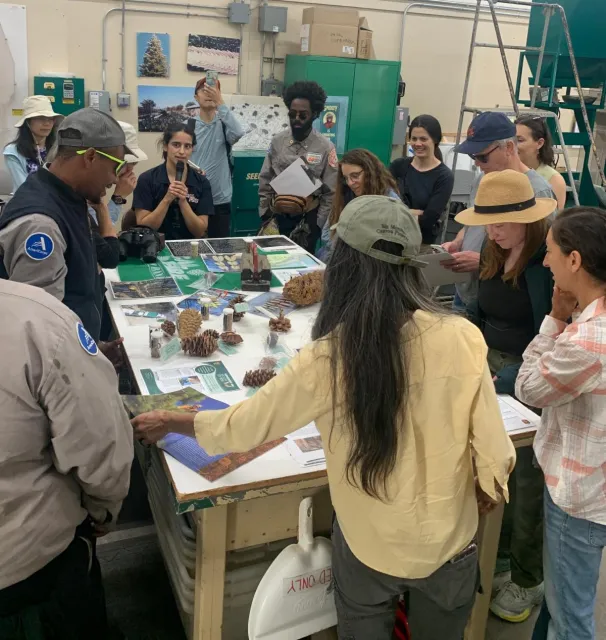
Local resource organizations including Resource Conservation Districts (RCDs), Fire Safe Councils, the Natural Resources Conservation Service (NRCS), non-profits, conservancies, and other regional partners are valuable allies for new and existing landowners.
These organizations can help you:
- Navigate cost-share programs and othe financial assistance programs for land management projects;
- Connect with a Registered Professional Forester (RPF);
- Receive guidance and technical assistance on forest health, wildfire resilience, and long-term planning; and
- Get involved in local stewardship and community projects.
Consider joining or participating in conferences hosted by groups such as UC Cooperative Extension, Society of American Foresters (SAF) or landonwer groups such as American Tree Farm or Forest Landowners of CA to learn from other landowners and professionals who can demonstrate and share business advice regarding owning forest land.
Before buying forestland or a home in the woods, it’s important to ask a few basic questions about the property, the community, and existing collaborations established by the previous owner.
- Check whether any cost-share programs and contracts, such as CAL FIRE’s CFIP or NRCS’s EQIP, are already tied to the land;
- Ask if there is a road association, which means neighbors share responsibility for maintaining a private road; and
- Inquire about whether the property is part of a Firewise community, as these neighborhoods work together to reduce wildfire risk and may offer insurance or mitigation benefits.
If you are hesitant to buy land because you are unfamiliar with forestry, do not fret! Because there are many organizations and people who want to help, educate and assist you in your journey as a forest landowner. Check out one of the listed organizations (in the paragraph above) to connect and learn more about owning forest lands.
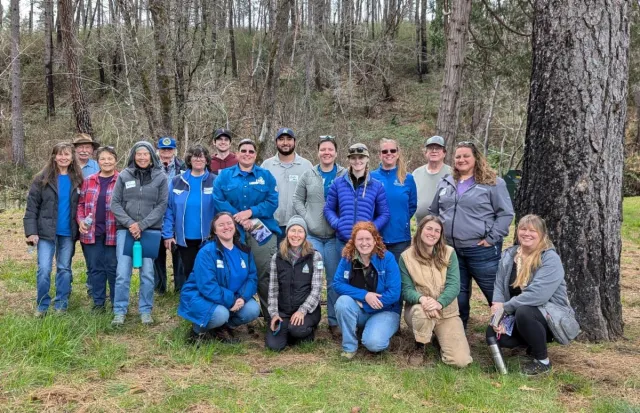
community members and fellow landowners about ways to manage post-fire lands.
Photo by Ricky Satomi, UC ANR.
Forest Landowners of California: Celebrating 50 years of assistance to forest landowners in California!
Forest Landowners of California (FLC) is a non-profit group of non-industrial forest landowners focused on the management and husbanding of all of the forest's resources including trees, wildlife, water, and recreation using research-based techniques to make our forests resilient to events such as wildfire. The group provides several educational field days each year, a quarterly newsletter for members, and expert speakers on topics pertinent to small landowners at its annual meeting. In addition, it is the only organization that represents small private forest landowners before the Legislature and state regulatory bodies in California.
For further information, go to Forestlandowners.org or contact FLC’s Executive Director at (877) 326- 3778.
The educational activities of FLC are partially supported by a separate 501(c)3 organization, the California Forest Conservation Foundation (CFCF) so that donors maybe able claim a charitable donation for tax purposes. CFCF financially supports education on the enduring issues faced by small forest landowners: how to best manage and protect our family's forestland, and how to "keep our forests in the family" over time (intergenerational succession). CFCF invites you to explore its website, caforestconservation.org, and consider donating to its work.
Financial Considerations to Owning Forestland
Please note - The information provided is for educational purposes only. Please consult with your tax professional on actions or questions related to your specific situation.
Your motivations in owning forestland will influence your financial obligations and potential tax liability. You should ask yourself, can or will you manage your forest as a business or as a non-business passion? Your response will likely lead you to different considerations and financial approaches to management of your new property.
Forest landowners will have annual expenses such as property taxes and maintenance of improvements, as well as periodic expenses, such as road maintenance, equipment purchases or timber yield taxes. You might have potential income from activities such as revenue from grazing contracts, glamping or timber harvest. Keeping good records, including receipts, will assist in tax preparation. Remember, periodic pictures of your forested property, especially after activities such as site preparation or thinning, are an important part of your record keeping.
A few key items:
- Know your cost basis – this is the cost of capital assets, such as seedlings, culverts, fencing, or equipment and when it is acquired. Basis should be allocated to various asset classes such as land, improvements, and value of timber resources as quickly after purchase as possible. Basis is important in determining tax implications for casualty loss, gain or loss from sale of timber or the property, and succession planning. The original basis allocation will likely need to be periodically adjusted when assets are purchased or sold, depreciated, depleted (timber), or lost through fire or theft and may impact legacy planning.
- Timber Production Zone (TPZ) -Parcels that are zoned TPZs enjoy substantially reduced annual property taxes, but you are committed to manage for timber. However, any harvest of timber can be at a date in the future. If not currently zoned TPZ, the forestland will require a County approved re-zoning of the property and a forest management plan.
- Understand the methodology and requirements for treating sales of timber, including delivered logs, as a capital asset to reduce tax liability (capital gains vs. ordinary income tax rates).
- Money you receive through cost-share programs, both federal and state, is reportable as income and you will receive a 1099. Depending upon circumstances, some or all of the income can be excluded or offset by expenses paid to a contractor. This may create a business loss for tax purposes. Generally, your labor (or your family's labor) is likely not deductable unless you are withholding taxes and paying social security. The tax implications are more involved, and you should consult with your tax advisor.
- Thinning and pruning expenses are often generally deductible expenses depending on the circumstances.
Additional information can be found at: Financial aspects of owning forestland: Information on various tax codes, record keeping and audits for private forest landowners by Larry Camp, RPF #1698
Insurance Considerations
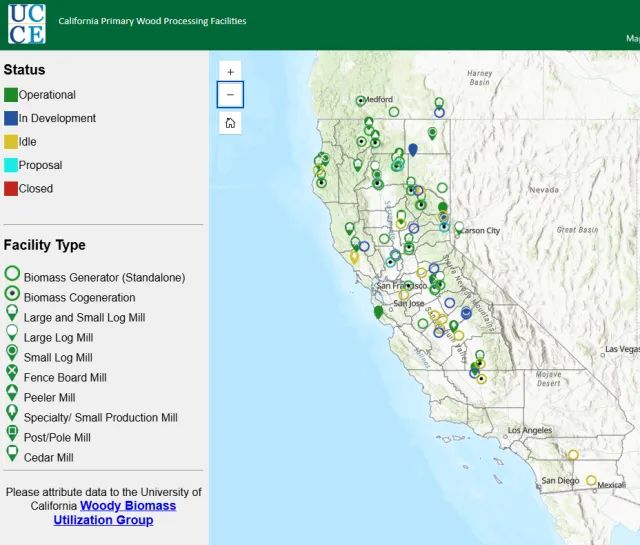
Developed by the UC Woody Biomass Utilization Group.
Before buying a home or piece of land, it’s important to think about insurance. Whether you can get coverage and how much it will cost depends on things like where the property is, how big the home is, and the risks in the area. Realtors may only have general information, so if you’re serious about buying, it’s a good idea to call a few insurance companies directly and ask questions about the area you’re looking in.
A few questions you may consider asking an insurance company include:
- Do you write new policies in this ZIP Code?
- Is this a fire prone area? Does this property/home have a wildfire risk score? What is it and how is that determined?
- What defensible space, mitigations, or home-hardening requirements does your insurance company require?
- How often do you reassess wildfire risk, and what could cause nonrenewal in the future?
- Are outbuildings, fences, driveways, or other structures on the property covered in your insurance plan?
If an insurance company explains that they do not cover fire insurance, but instead will provide a Difference in Conditions (DIC) policy, it is important to note that this type of policy is designed to fill coverage gaps that basic fire- only policies, such as the California FAIR Plan, do not include. While the FAIR Plan covers fire-related losses, a DIC policy adds important protection for risks like theft, water damage, wind, and liability. It also restores coverage for personal belongings and additional living expenses. Together, these policies provide more complete, homeowners-style protection for properties in high wildfire–risk areas.
Insurance can be complicated, so it’s important to ask thorough questions and compare responses across companies. Keep clear notes on what each insurer offers, along with any differences in coverage or requirements. It also helps to track potential improvements such as creating defensible space, hardening your home, or joining a Firewise community that may qualify you for insurance discounts. Taking these steps can make the process more manageable and improve your options.
Here are some additional resources to explore for more information:
- California Department of Insurance: Safer From Wildfires
- Insurance Institute for Business and Home Safety
- CalFire Defensible Space Score
- United Policy Holders: Roadmap to Preparedness
- UCANR Blog: Navigating change in the home insurance market
Additional Forest Stewardship Resources
- "Before You Buy" Checklist: A guide for prospective buyers
- "Succession Planning", Forestland Steward, Spring 2011
- "Benefits of Conservation Planning", NRCS (2013)
- Forest Legacy Program: A conservation easement program to protect environmentally important privately owned forests from conversion to non-forest uses
- "Small-Parcel Landowner's Guide to Woodland Management", McCreary and Nader, (2007)
- Forest Management Plans for Private Forest Landowners factsheet (2023)
- "Before you buy forestland" 3- part webinar series recordings and resources
- UC ANR Forest Research and Outreach Blog
- CA Family Forest Website
Managing the expectations of multi-owner properties: Q&A with Sarah Fischbach
Sarah Fischbach is part of a multi-generational, family forest ownership trust. Sarah and her uncle David, have taken over the active management of the 450 acre property and she has great perspective and advice for new multi-owner forest landowners.
Q: Tell me a little about the property your family owns and how long has it been in the family.
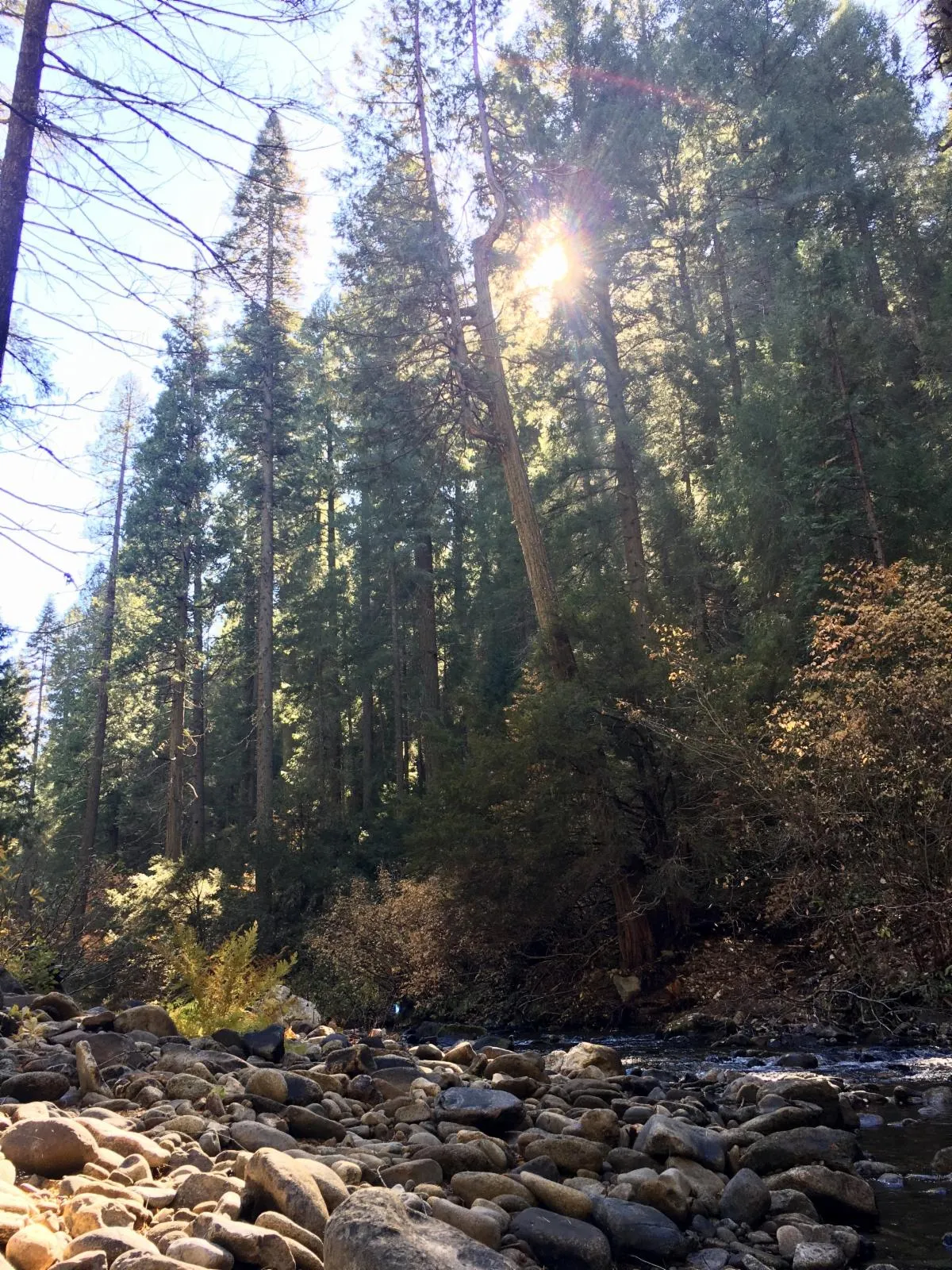
A: Our property is about 450 acres in El Dorado County. It is a mixed conifer type at 4,000ft elevation. The property has been in my family since the 1880s. It is owned by two family trusts established by my great-grandfather and his brother. Currently, there are about 40 total “owners” of the property, but there are only two trustees per trust who are empowered to make legal and financial decisions. There is one summer cabin on the property that my grandparents built in the 1970s. We are very lucky that we have not been impacted by a wildfire yet (the last one on our property was in the 1910s), but two recent fires have come within a quarter-mile of our property (King in 2014 and Mosquito in 2022). We do see a few pockets of trees killed by bark beetles, but we haven’t had any major issues.
Q: Was the forest managed differently in the past compared to now?
A: The forest has seen a lot of different management techniques. From the 1800s through the 1960s the management was focused on extraction, though we are lucky that we still have a few pockets of very old trees from the pre-colonial era. From the 1970s through the 1990s the management was more balanced. My grandmother worked with students at UC Berkeley to develop a forest management plan, got Timber Harvest Plans (THP) for the property to log where appropriate, and also got CA Forest Improvement Program (CFIP) grants for reforestation work. From the 1990s until today, my family unfortunately believed that the best management practice was to let the forest be “wild” and leave it alone, which we now know is incorrect. Currently we are trying to get back to a balanced management practice where we will harvest where necessary to maintain forest health, focus on healthy tree retention and regeneration, and re-introduce fire to the landscape as is appropriate for our fire-adapted ecosystem and which has the added benefit of making our forest more fire resilient. Over the last two years we’ve completed our first THP since the 1980s and have contracted with an Licensed Timber Operator (LTO) to begin logging.
Q: How are management decisions made? Did you have to set up some specific procedures or business operations?
A: As I said earlier, the property is owned by a large group of family members, but decision making power belongs to the trustees. However, because forest management work is very time consuming and requires at least some special knowledge and a lot of interest and attention, the current trustees aren’t the ones doing the day to day work of managing the forest. Myself and my uncle, David, have declared ourselves the “forest managers” for our property. We interact with our forester, take classes to educate ourselves, are involved with our local prescribed burn association and forest landowner community, review permits and documents, inspect operations on the property, and generally “do the work”. We also interact with our family and the trustees to give them updates and ask for their opinions and approval, where appropriate.
So overall, the decisions are made by a small committee that includes the family trustees and the “forest managers”. This work is done relatively adhoc. David and I update the trustees about our plans. For example, we needed a THP, so we explain what that is, why we need it, and get a proposal for costs and potential profit associated with the THP permit vs an exception and then get approval from the trustees before proceeding. We do something similar for every major project and then give regular updates as the project proceeds (the need to send regular invoices for payment provides structure for the timing of this). But overall, it’s fairly informal.
Q: What management goals and objectives have you all agreed on? Any hurdles you are all still working through?
A: Overall our primary objectives are to prioritize forest health and fire resilience. The main obstacle is how to do this, which will require years of maintenance and fuel reduction work beyond just logging for the THP, and also make enough money from the logging operations to accomplish that
work. We don’t need to make a profit, but we also need to make sure that we have enough money in the bank to pay for the fuel reduction work (or our
portion of a cost share grant, if we get those) and also to pay for the next THP we will need in a few more decades.
Q: What are some key things you would recommend to a family or group that is considering buying forestland together?
A: Have a legally clear decision making framework that isn’t based on just one person’s opinions or too many people’s opinions. Even though our process is quite informal, it is very clear that if the trustees don’t agree with myself or David’s recommendation, then the project will not proceed. It also helps to have more than one decision maker (i.e. 2-4 trustees) so that there is decision making by a small consensus, not one person who does whatever they want. This framework requires that we collaborate and communicate, but also isn’t subject to getting bogged down with too many deciders.
Q: What gives you and your family joy in regards to your forest?
A: We love that it provides us a place away from everything to really connect with our family and friends. There is no internet or cell service. Just a cabin,
a creek, lots of trees, a fire pit and time for quality conversation. We also love that this property holds so much history for us and is a place we feel truly connected to. Last summer we had a family reunion with over 80 attendees with seven generations of descendants and cousins. The elders shared stories from the turn of the (last) century and the kids all played and marvelled that they could have a big pack of cousins to roam the forest with.
Find the printable version of this newsletter below. Note that the pdf is for print purposes ONLY.
