
The plant world is rife with people’s names, but most of us don’t know who they were or how their names ended up defining plants. Many of our native plants are named after various plant explorers, people who had resources to travel, sometimes representing botanical gardens such as Kew Gardens in London, like Joseph Dalton Hooker, or the Royal Horticulture Society, which sponsored David Douglas’s travels to the New World.
Ever wonder who the Douglas was in Douglas fir or Douglas iris? David Douglas (1799-1834) described hundreds of plants, most of which are not named after him. Douglas was mostly self-educated, working at various estates and at the botanic garden at Glasgow University. Around 1820 he met William Jackson Hooker, father of Joseph Hooker, who recommended him to the Royal Horticulture Society, which sent him to explore the young United States for plants amenable to English gardens. He set off to the United States in 1823, the first of many trips to the eastern cities, north into Canada all the way to Hudson Bay, the Pacific Northwest, California as far south as Monterey, and Hawaii.
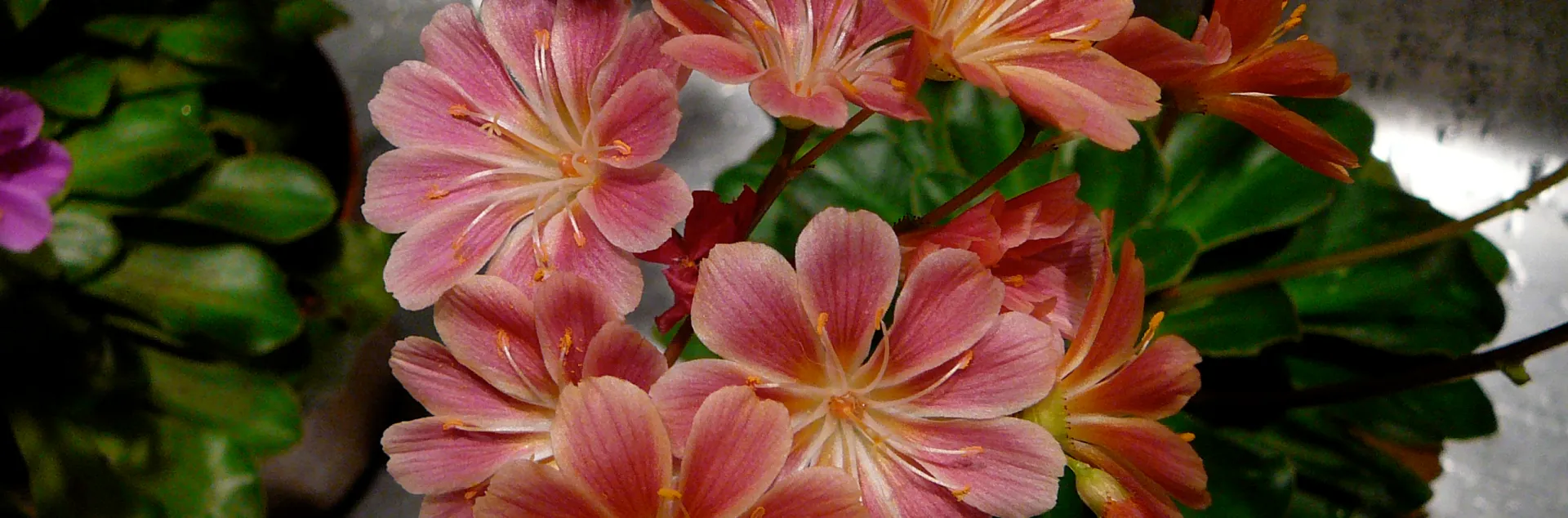
Douglas was hyper-aware of the travels of Meriwether Lewis (think Lewisia, a delightful little flower, sometimes available in nurseries) and William Clark (Clarkia, a pink beauty that blooms profusely in wild Marin and beyond). He eclipsed the work of Lewis and Clark by spending more time in the field than they did. He endured many mishaps in his travels: altitude sickness, thievery, almost drowning in Hudson’s Bay…before dying in an unfortunate run-in with a bull in Hawaii.
Limnanthes douglasii, delightfully nicknamed poached egg flower, is one of many plants named after Douglas…alas, it grows in vernal pools and other wet habitats.
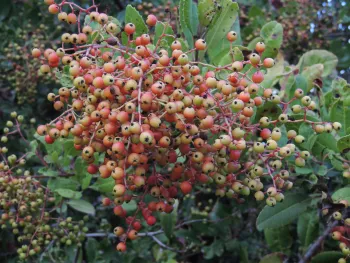
Quercus douglasii is our native and endemic blue oak, which occurs surrounding the Central Valley in the coastal hills and the Sierra. It has a beautiful lobed leaf and is considered the most drought tolerant of our deciduous oaks.
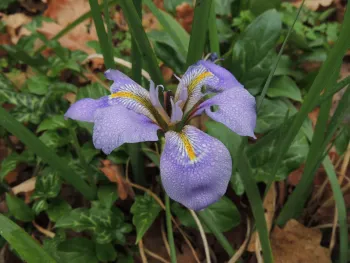
One of our most beautiful wildflowers, the Douglas iris, blooms in many colors around Marin and beyond. Iris translates to rainbow in Greek.
Some plants are named after where they were developed, such as Herteromeles arbutifolia 'Davis Gold' a Toyon developed at U.C. Davis from seed gathered on Catalina Island.
Arctostaphylos bakerii Louis Edmunds is a manzanita developed by nurseryman Louis Edmunds to thrive in smaller garden settings. Howard McMinn, native plant author and professor of botany at Mills College, grew seedlings received from Louis Edmunds in 1949 and both have manzanitas named for them. There’s even a manzanita named for Sir William Jackson Hooker, father of Joseph Dalton Hooker, who became Director of Kew after his father.
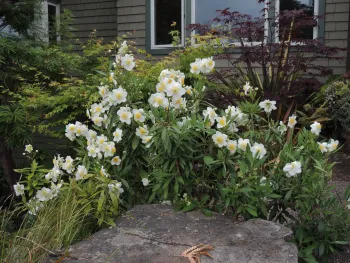
One of our most beautiful natives, Carpenteria californica ‘Elizabeth’ was named for Elizabeth McClintock, longtime curator at the California Academy of Sciences botany department.
Mimulus ‘Eleanor’ is a stunning yellow and white monkeyflower named after an employee at Yerba Buena Nursery in Half Moon Bay.
Salvia clevelandii, named after Daniel Cleveland, a nineteenth lawyer, amateur plant collector and botanist from San Diego, part of its natural range.
Rhamnus (now Frangula) californica ‘Eve Case’ is a slightly smaller version of coffeeberry, still about 5 feet tall and wide. The large red berries ripen to black and attract birds, making it an excellent habitat plant.
Back to Joseph Dalton Hooker (1817-1911), a highly respected botanist, he moved Kew into the realm of excellent scientific institutions it is today. He started traveling at 22, collecting plant specimens and named heretofore unknown cultivars after friends and colleagues as he traveled the Himalayas, Nepal, Morocco, Palestine, Syria and the American west. Arctostaphylos hookeri has several cultivars such as Monterey Carpet, Wayside, Buena Vista.
This short article barely scratches the surface of the amazing world of plant collectors/explorers historically and even today…such as Daniel Hinkley (see his book The Explorer’s Garden) who founded Heronswood in Washington.
By Diane Lynch, September 5, 2026