

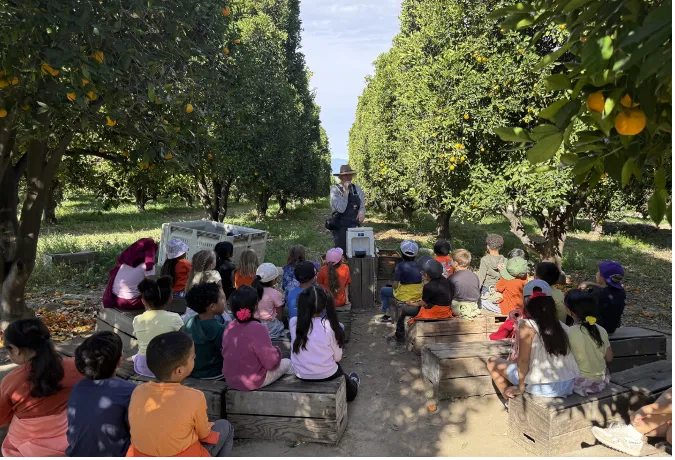
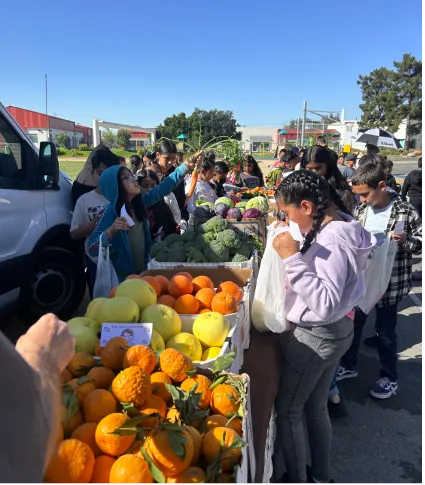
California’s Farm to School Investment helps farmers expand production and access new markets while strengthening the state’s food economy
By Jessica Christopher, Curator PR
California’s investment in locally sourced school meals is delivering substantial economic returns. A new report reveals that every $1 granted to farmers through the California Farm to School Incubator Grant Program generates approximately $2.10 in total economic activity statewide—effectively doubling the state's investment while putting fresh, local and sustainably grown food on students' plates.
Participating farms report increases in both sales and expansion of land acreage associated with school market opportunities. The report found that rather than replacing existing markets, farm to school supported the expansion of sales, presenting a growth opportunity for farmers.
California has made the largest investment of any state in farm to school programs. By 2027, California will have awarded approximately $126 million in Farm to School Incubator Grants.
The report – authored by an independent group of researchers from UC Berkeley, UC Agriculture and Natural Resources, Berkeley Food Institute, and Food Insight Group, with contributions by Cornell University – examines the broader impacts of California’s investment, including on school purchasing, regional food supply chains, equity, climate resilience, student engagement, and the long-term sustainability and scalability of California’s Farm to School Program.
Additional key findings include:
● Farm to School is generating economic returns and new markets for California farmers – 76% of surveyed participating farms expanded production to accommodate school sales.
● Schools are directing millions toward California-grown, whole and minimally processed foods. Between 2021 and 2025, 92 school grantees spent nearly $6.4 million in grant funds on whole or minimally processed foods.
● Farm to School is strengthening connections across the food supply chain. Food hubs and other intermediaries play a key role in connecting California farmers with schools, with 74% of grant-funded food purchases by TK-12 grantees flowing through intermediaries.
● Sustaining progress requires investment beyond food purchasing. The evaluation points to staffing, infrastructure, relationships and institutional capacity as important to building farm to school systems that can last beyond an individual grant.
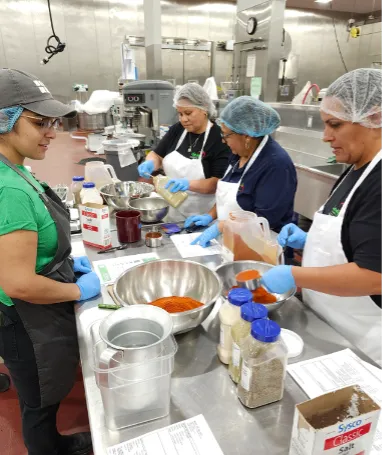
Despite their importance, school nutrition programs are not adequately funded, and many lack kitchens equipped for cooking meals from scratch with fresh ingredients. Decades of underinvestment in training and limited career opportunities for the school food workforce has led to high vacancy and turnover rates, meaning California’s school meals often consist of highly processed, pre-packaged foods.
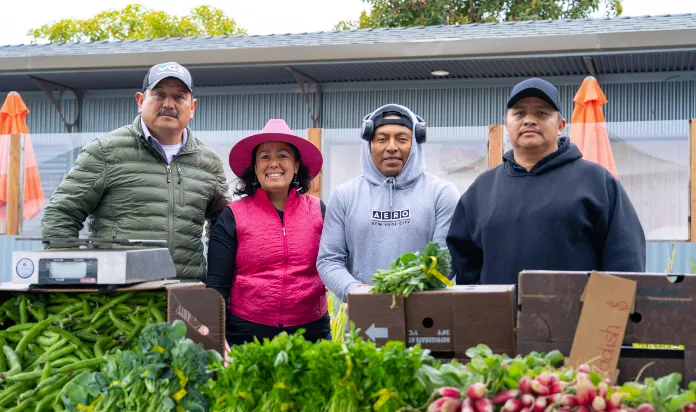
California's agricultural sector faces its own crisis. Between 2017 and 2022, over 7,000 small farms went out of business as production costs soared and markets disappeared. Farmers are searching for stable buyers to keep their operations viable.
“Farm to school programs address these interconnected problems and are synergistic with California’s other school food transformation initiatives, including first in the nation legislation to reduce ultra-processed foods in school meals,” said Beth Katz, PhD, executive director at Food Insight Group and lead researcher for the farm to school evaluation. “By connecting schools with local farmers, supporting kitchen infrastructure and the school food workforce, and investing in food and garden education, the Farm to School Grant Program increases student access to fresh, minimally processed foods while creating new market opportunities for California farmers.”
“Farm to school markets appear to provide growth opportunities for participating farms. We also find evidence that these investments result in substantial economic activity across California, in large part because more food dollars stay within the state,” added Becca Jablonski, visiting associate professor in the Dyson School of Applied Economics and Management at Cornell University.
About the California Farm to School Incubator Grant Program Evaluation
The Farm to School Incubator Grant Program is being evaluated by an independent team of researchers with expertise in food systems, policy analysis, sociology, spatial data collection and analysis, environmental science, and agricultural economics, and is funded by the state of California. The research team is tasked with providing a comprehensive analysis of the economic, environmental, and social impacts of the Farm to School grant program, including a final report in early 2027. The research team includes researchers and policy experts from UC Agriculture and Natural Resources, UC Berkeley, Food Insight Group, Berkeley Food Institute, Cornell University and U.S. Department of Agriculture.
The full report is available at https://californiafarmtoschooleval.org/reports/2026-progress-reports.
The California Farm to School Incubator Grant Program Dashboard is available at https://ucanr.maps.arcgis.com/apps/dashboards/bf36958792174c938011dd74edc48293.