
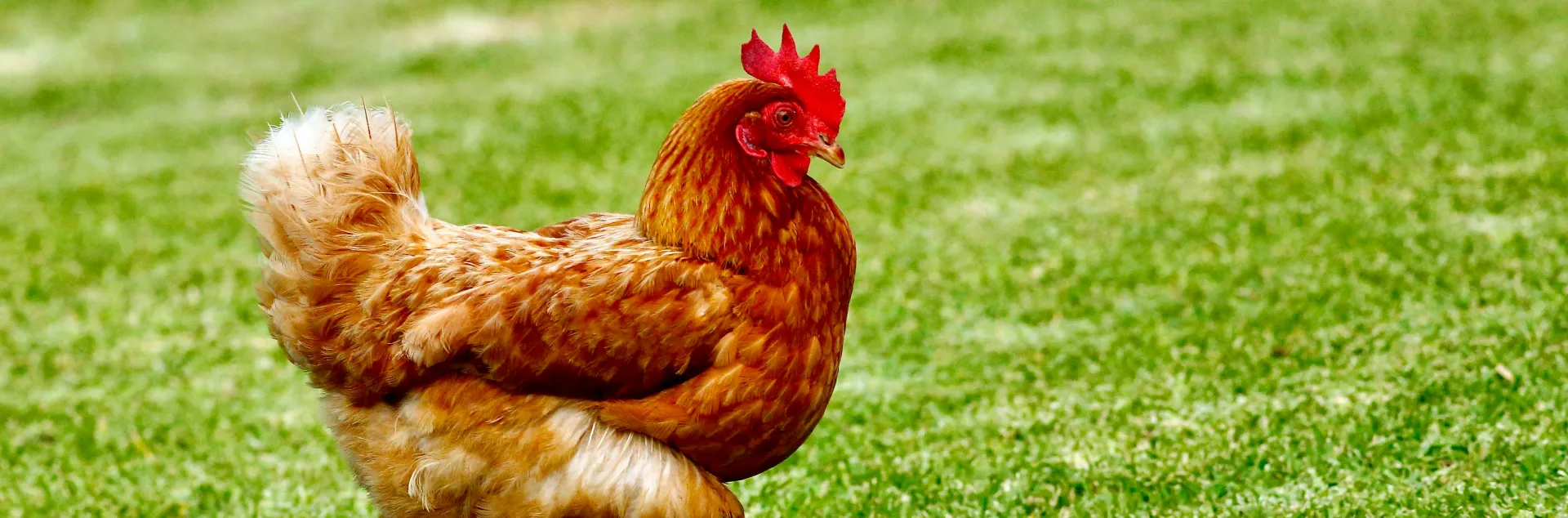
Backyard chickens are increasingly being raised as pets, for egg production, and for youth development and science projects. While raising chickens can be an interesting and economically beneficial activity, chickens and other fowl may also have pest problems. Chickens are natural hosts to a variety of arthropod pests (called ectoparasites), including mites, lice, and fleas which feed on chickens and use chicken coops as habitats. These pests may cause discomfort to birds and decrease their egg production. This article aims to help people who keep chickens understand and learn treatment options for the common ectoparasites that can affect their animals.
Lice
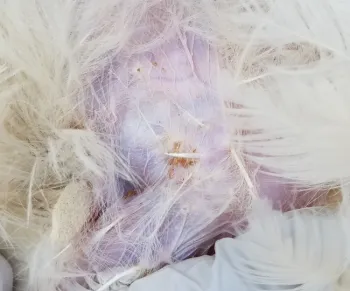
The most common pests found on backyard chickens include several species of lice (singularly called a louse), including the chicken body louse and fluff louse. Lice live full-time on chickens and feed primarily on feather material. Lice are generally chicken specific but may infest related poultry species (such as turkeys or pheasants). Adult and immature lice are pale yellow in color, and eggs are found in white clusters, usually at the base of feathers. Lice may be found on any or all parts of the chicken, depending on the louse species (Figure 1). Lice can irritate birds, causing increased preening and decreased egg production.
Mites
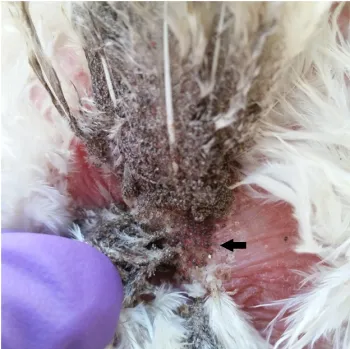
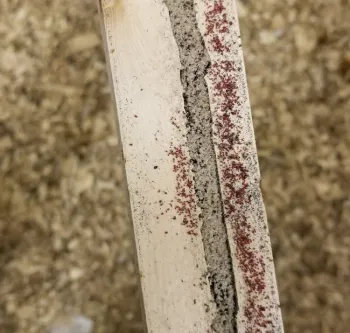
There are two main species of mite found in backyard chicken flocks: the northern fowl mite (NFM; Ornithonyssus sylviarum) and poultry red mite (PRM; Dermanyssus gallinae). Both mite species feed on blood. NFM live on chickens in the fluffy feathers of the vent region (Figure 2). PRM live off the animal in cracks and crevices near the birds, such as on perches, in nestboxes, or in coops (Figure 3). Mites can bite people but cannot survive or reproduce on human blood and will not infest human bodies. Learn more about biting mites in homes and other structures.
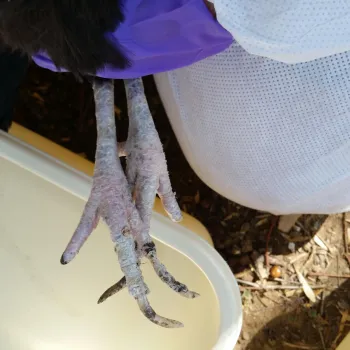
Scaly leg mites (Knemidocoptes mutans) may also affect chickens. These mites are microscopic, and identification must be confirmed by an expert. However, the signs of a scaly leg mite infestation are obvious and include scabby or crusty legs or feet (Figure 4). Scaly leg mites spread by direct contact between animals, so quarantining infested birds can limit infestations within a flock.
Fleas
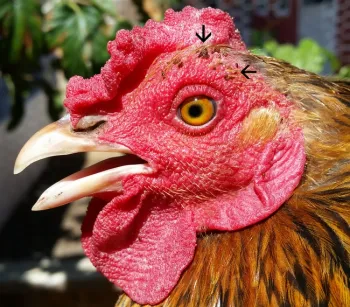
The sticktight flea (Echidnophaga gallinacea) can also be found on backyard chickens. This flea is not bird specific and is often introduced to flocks by rodents, cats, or other mammals. Adult fleas embed themselves in the skin of chickens while they feed on their blood (Figure 5). Females drop eggs without detaching, and immature fleas develop in the environment, feeding on detritus and adult flea feces. It can take a month or longer for fleas to complete development to the adult stage, resulting in newly emerging adults even after treatment of birds.
Management
Lice, mites, and fleas also parasitize wild birds and rodents and could be introduced to flocks by wild animals or even by contaminated equipment or people. To reduce pests in backyard flocks, focus on good biosecurity, which includes all practices that help to prevent or reduce disease in your flock. New chickens should be quarantined for at least two weeks to avoid introducing parasites (or other diseases) to the flock, washing hands and boots should occur before visiting the flock, and chickens should be separated from other animals. Birds should also be examined for signs of pests regularly to catch infestations early, which are easier to deal with than a large outbreak.
Insects and mites are very susceptible to water loss, so using natural materials that cause desiccation can be highly effective for general control. One such compound is diatomaceous earth (DE). Food-grade DE can be mixed with clean play sand in containers to create dustbathing areas for birds. Dustbathing is a natural behavior chickens perform to keep their feathers clean. The addition of DE helps to suppress pest populations.
Insecticides can be an effective tool for pest control. Farm stores often sell sprays or dusts that can be applied directly to birds or to coops for insect control. It is important to always read and follow the label instructions to avoid poisoning birds, people, or other animals. Pests that live in the environment, such as poultry red mites and sticktight fleas, are trickier to control since they may not be visible on chickens.
References
Murillo AC, Mullens BA. 2016. Diversity and prevalence of ectoparasites on backyard chicken flocks in California. Journal of Medical Entomology. 53: 707-711.
Veterinary Entomology website: pest resources for professionals and the public
For more backyard poultry resources, check out:
Backyard Poultry, a UC ANR website
[Originally featured in the Summer 2026 edition of the Home and Garden Pest Newsletter.]