

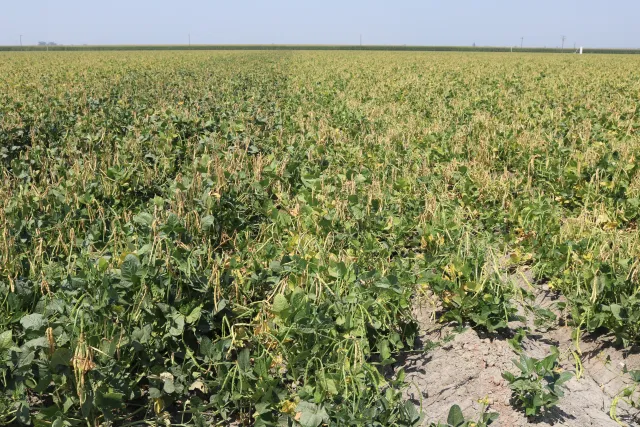
A new blackeye bean costs and returns study has been published. The study outlines the typical costs and returns for growing blackeye beans in the southern San Joaquin Valley of California under current conditions. The study was authored by Farm Advisors Nick Clark, Michelle Leinfelder-Miles and Sarah Light, and Professor Daniel Sumner and technical writers Paul Long and Jeremy Murdock of the UC Davis Agricultural and Resource Economics Department.
The study can be downloaded from the file attached in this blog post. It can also be located on the web by following this link.
The publication starts with a hypothetical case – called “Assumptions” in the study – of blackeye beans produced on 80 acres immediately following winter wheat in a double crop rotation. Farming practices, supplies, equipment, labor, custom contract operations and other costs described in the Assumptions section mimic what a southern San Joaquin Valley farmer is likely to experience when growing blackeye beans today. The publication concludes with a series of tables that organize the details of each cost described in the Assumptions section. Some tables also present a ranging analysis of returns above costs under various yield and crop price levels.
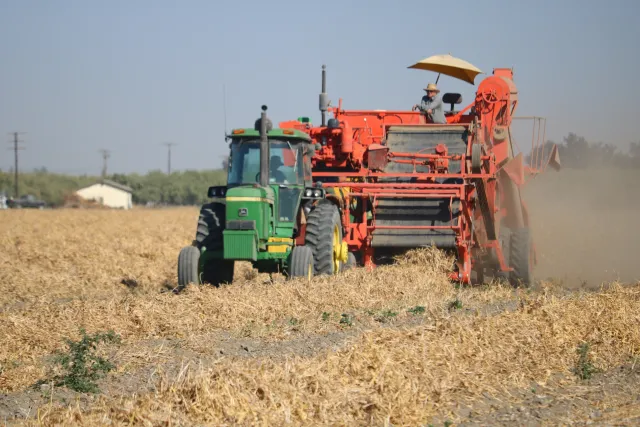
It is important to note that not all operations and their costs described in this study will occur in every operation. Therefore, farmers estimating costs and returns for growing blackeye beans are encouraged to adjust prices where suitable and remove or add practices when applicable to create a more accurate estimate of their own individual circumstances. Some may use this study to better understand the production practices or estimate financial risks associated with growing blackeye beans in the southern San Joaquin Valley. For those, it is critical to remember that the Assumptions section is a hypothetical scenario that the authors have deemed typical, but individual producers may actually act much differently on their real farms.
Readers will notice that the study presents data suggesting that even under the highest assumed price and yield scenario, blackeye beans are produced at a financial loss over total costs. In 2026, the bean industry in California was hit hard by high costs of production and strong com

petition from out-of-state producers. Some growers in California who had grown beans annually for many years suddenly were growing none. Despite the current economic challenges with growing blackeyes, some farmers continue to grow them for the gains they bring to their overall farming operation.
Blackeye beans are a legume which fix their own nitrogen from the atmosphere in a symbiotic relationship with soil bacteria called Rhizobia. This naturally adds nitrogen to the soil and can reduce the nitrogen fertilizer budget for the following crop. Blackeye beans also have a relatively low harvest index – the amount of plant material harvested versus what is left in the field. That means that after harvesting the beans, the remaining plant biomass gets incorporated back into the soil, contributing to soil health and benefiting soil quality by adding organic matter. This addition of organic matter to the soil helps retain essential plant nutrients as well as water in the soil for subsequent crops, presenting the opportunity to further reduce fertilizer and irrigation inputs. Many farmers also understand the importance of and practice crop rotation for the maintenance of weed, insect and disease pests.
We’re hoping for more lucrative times to come in the California bean industry. Blackeye beans contribute to the overall health of the farming system simply by growing in the soil. Any questions, comments or concerns with the study should be addressed to the authors.
