
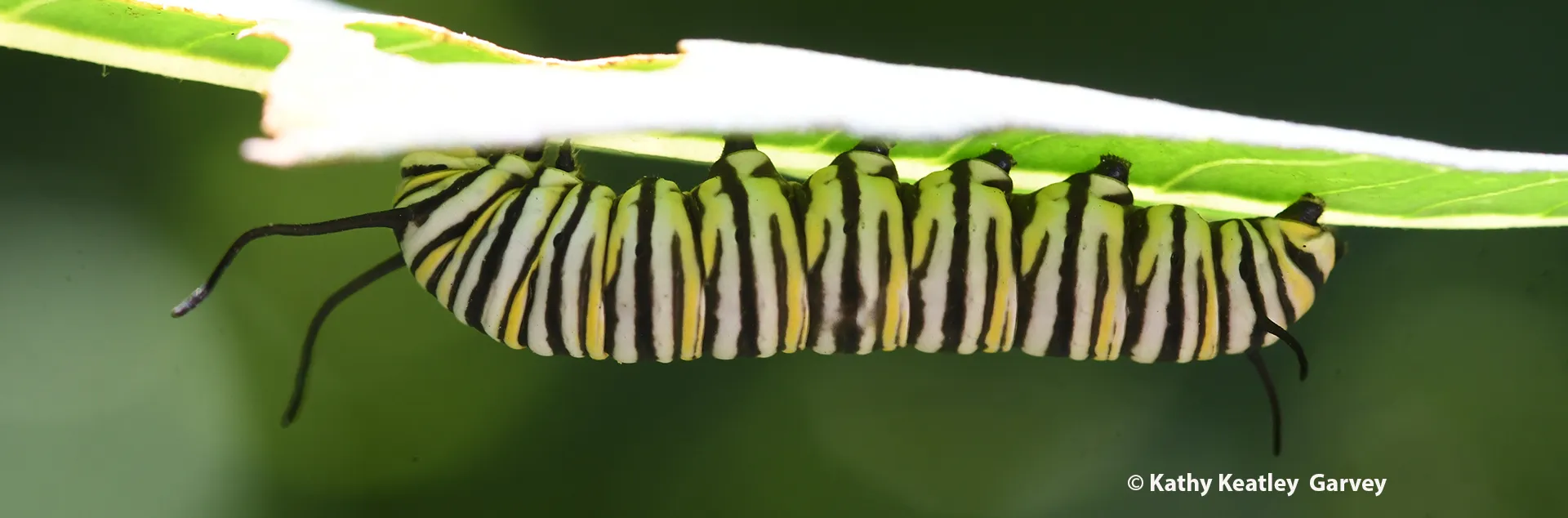
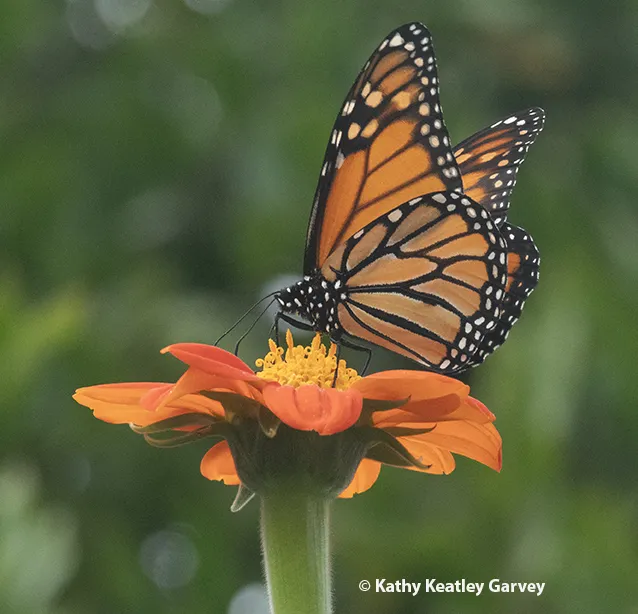
It all began when UC Davis Distinguished Professor Bruce Hammock, then a UC Berkeley graduate student, wondered how a caterpillar could turn into a butterfly.
His research led to the co-discovery of soluble epoxide hydrolase (sEH)--an enzyme in the human body that breaks down regulatory fatty acids--and 50 years of research on sEH inhibitors that led to therapeutic drug discoveries targeting such diseases as pain, eye and kidney disease, traumatic brain injury and stroke, Parkinson’s and Alzheimer's disease.
"Life is full of surprises," he often commented.
Hammock, an internationally renowned scientist, died Jan. 5, 2026 at age 78.
But his research that he began half-a-century ago continues.
The Nature Neuroscience journal published Hammock-linked research led by his collaborator, Feixiong Cheng, director of the Genome Center at the Cleveland Clinic, that tackles Alzheimer’s disease.
"Bruce Hammock spent decades uncovering the biology of soluble epoxide hydrolase and demonstrating its potential as a therapeutic target,” said Cindy McReynolds Brown, chief executive officer of EicOsis Human Health LLC, the company that the two co-founded in 2011 to fulfill Hammock’s commitment to find safer and more effective ways to treat chronic pain.. “He is remembered not only for his scientific accomplishments, but also for the strong collaborations he built and the many scientists he brought together throughout his career.”

The article, “Combining Genetics with Real-World Patient Data enables Ancestry-Specific Target Identification and Drug Discovery in Alzheimer’s Disease,” is online at https://www.nature.com/articles/s41593-026-02472-0. The Digital Object Identifier (DOI): 10.1038/s41593-026-02472-0.
“Although high-throughput DNA/RNA sequencing technologies have generated massive genetic and genomic data in human disease, these findings have not been translated into new patient treatments,” the authors wrote in their abstract. “To address this problem, we utilized Mendelian randomization (MR) and large patient-level genetic and functional genomic data to evaluate druggable targets using Alzheimer’s disease (AD) as a prototypical example.”
“In summary, combining genetics and real-world patient data identifies ancestry-specific therapeutic targets and medicines for Alzheimer’s disease and other neurodegenerative diseases if broadly applied.”
In addition, Hammock’s legacy extends to more clinical trials. EicOsis recently received notice that the Alzheimer’s Association will fund its clinical trial to investigate drug candidate therapy for Alzheimer’s disease patients. “Part the Cloud,” a global research funding initiative for Alzheimer’s Association, announced the latest funding, a $7 million investment for worldwide researchers. To date, Part the Cloud has funded 88 clinical trials of innovative potential treatments.
Advance the Field Forward
“These two announcements highlight both his impact on science and the collaborators that continue to advance the field forward,” said Brown, who holds a doctorate in pharmacology and toxicology from UC Davis.
Brown said that the new clinical trial funding "represents an important expansion of the clinical development program for EC5026 into Alzheimer’s disease and will investigate the ability of sEH inhibition to improve key pathways associated with neuroinflammation and early Alzheimer’s disease." The study is expected to start in early 2027 and enroll 50 participants with Alzheimer’s in Toronto, Canada.
Hammock, who joined the UC Davis faculty in 1980, held a joint appointment with the Department of Entomology and Nematology and the UC Davis Comprehensive Cancer Center. His chemistry, toxicology, biochemistry, entomology and human health research led to elected membership in the National Academy of Sciences and the National Academy of Inventors; scores of professional honors and awards; and accolades from administrators, colleagues, researchers, alumni and students.
A Horse Named Hulahalla
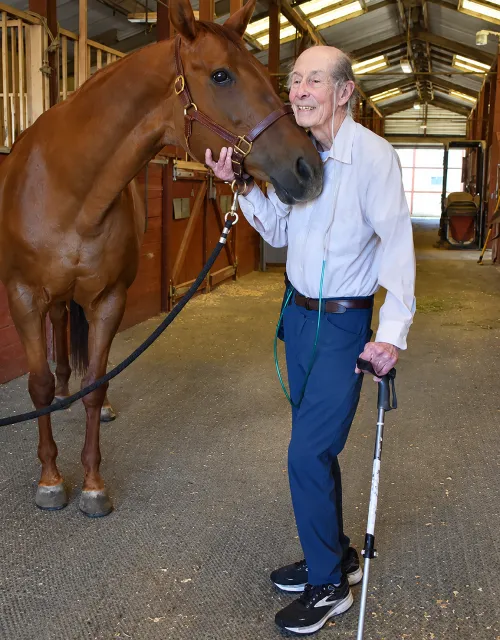
One of his first success stories occurred in 2011 with a horse named Hulahalla, part of the UC Davis Center for Equine Health, UC Davis School of Veterinary Medicine (now the UC Davis Weill School of Veterinary Medicine). Hulahalla, a descendant of Triple Crown Winner Seattle Slew, “developed severe laminitis in both of her front feet that did not respond to traditional treatment,” according to an article in the August 2025 issue of The Northwest Horse Source. “The prognosis was grim. As a last chance option…Hammock and veterinary anesthesiologist Dr. Alonso Guedes treated her with a compound that Dr. Hammock had developed to regulate inflammation and pain. Miraculously, she made a complete recovery just a few days after the first dose and has remained happy and healthy for more than a decade.”
Celebration of Life and Legacy of Bruce Hammock
UC Davis Distinguished Professor Walter Leal is organizing a public memorial, "Celebration of the Life and Legacy of Bruce Hammock" at 1 p.m., Saturday, Oct. 10 in the California Hall, UC Davis campus. Colleagues from all over the world will be attending.
It would indeed be appropriate to wear a butterfly pin.