

UC Master Gardener Tim Sullivan says the secret to healthy garden soil can be found in nature.
“Copy Mother Nature,” he said. “She seems to do a pretty good job.”
In the United States, this became clear when high demand for wheat during World War 1 led farmers to use deep tillage and mechanization on significantly increased acreage. Demand fell suddenly after the war, and then drought and high winds over the heavily tilled, barren land resulted in the devasting “Dust Bowl.”
“Desertification is now happening in California.” Sullivan said. “If you neglect the soil, it is a huge time bomb.”
Sullivan shares USDA’s 5 principles for maintaining healthy soil:
Living roots – Keep living roots in the ground at all times. Roots exude sugars that feed bacteria and fungi in the soil. This natural glue binds soil particles together creating openings for oxygen, water and nutrients.
Minimize disturbance – A web of life forms in the soil. Tillage breaks the soil web, leading to deterioration. Healthy soil has a sponge-like quality that doesn’t need to be tilled.
Maximize diversity – Mother Nature abhors monoculture. In nature, a wide variety of plants grow together. Growing many species creates symbiotic relationships between the different plants, which supports soil health.
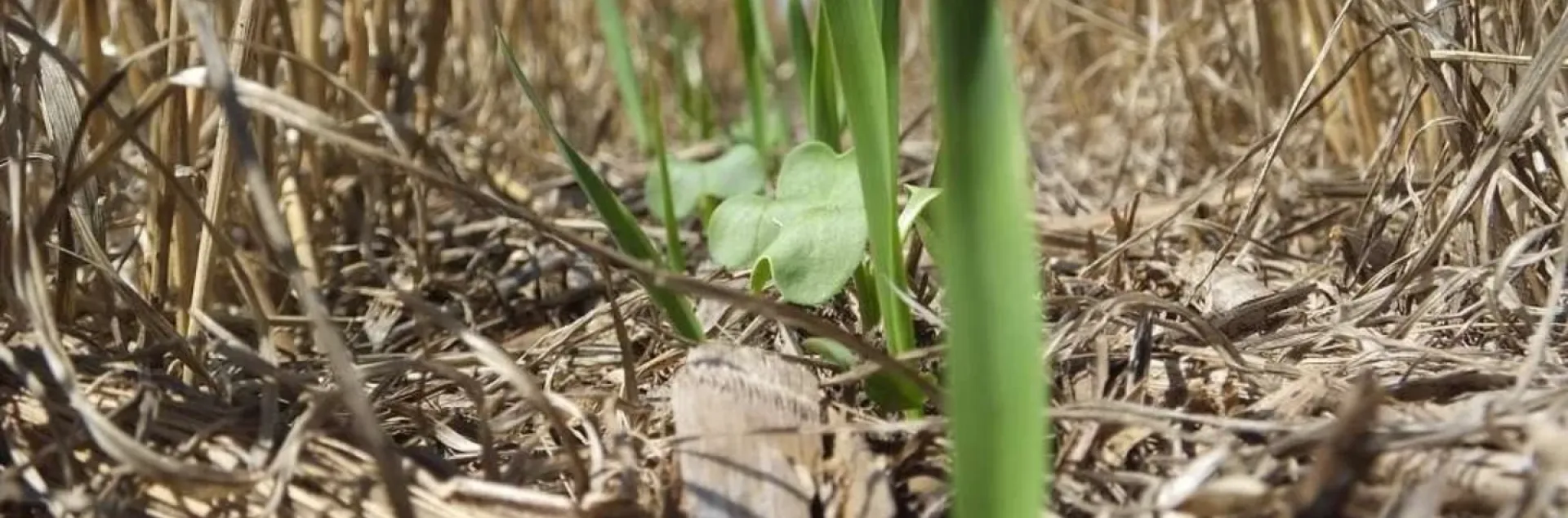
Maximize soil cover – A cover on the soil – such as cover crops, mulch, plant residue and turf – are like armor against the elements. The beating sun and pounding rain work to compact the soil. The vegetation on the soil surface slowly breaks down, leaving organic matter and nutrients in the soil.
Sullivan noted that cover crops are a particularly innovative way to improve soil health. The process involves planting seeds in the fall with a mixture of species – legumes for nitrogen (such as crimson clover and hairy vetch) and cereals for organic matter (such as barley). The roots are growing and working the soil all winter. When spring approaches, do not remove the cover crop or dig it in. Simply mow it or cut it down, leaving the residue on the soil surface. Make spaces in the residue for your spring planting.
Learn more: Boost soil health with tips from Master Gardeners
_________________________
Written by UC Master Gardener Jeannette Warnert