F3 Local has conducted a consumer study to better understand purchase behavior, drivers and barriers impacting purchases, usage of label information and perception of local and organic foods across Fresno, Kings, Madera, Merced, and Tulare counties. The goal is to identify opportunities and help create differentiation for farmers and food entrepreneurs while supporting an economically viable local food system in the Central San Joaquin Valley.
Who It Serves
Farmers and food entrepreneurs across Fresno, Kings, Madera, Merced, and Tulare counties, supporting an economically viable local food system in the Central San Joaquin Valley.
Key Features
Implications for local food system:
- Make affordability the central priority. Develop pricing strategies, promotions, incentives, aggregation, and distribution efficiencies that can improve consumer value while maintaining economic viability for farmers and food businesses.
- Bring local food into consumer's everyday shopping channels. Expand local products through grocery stores, large retailers, convenience stores rather than relying primarily on farmer's markets.
- Position products around freshness, quality, health, and value. These are the strongest consumer interests across the study.
- Make product information simple and visible. Use clear labels and in-store signage to communicate ingredients, nutrition, local origin, and relevant production information.
- Strengthen local food system infrastructure and market access. Support distribution, aggregation, retail partnerships, farmers’ market accessibility, and producer-to-market connections that make local products easier to find and purchase throughout the Central Valley.
Image
What Can We Learn
- Central Valley consumers are practical, value-conscious food shoppers who prioritize freshness, affordability, quality, ingredients, and nutrition. Fresh foods and staples are central to household diets, grocery stores are the most frequently used mainstream shopping channel, and most households spend between $51 and $200 per week on groceries.
- Consumers are generally satisfied with the food options available to them, particularly freshness, but affordability is the clearest unmet need: price is important to 94% of consumers, while only 46% are satisfied with prices.
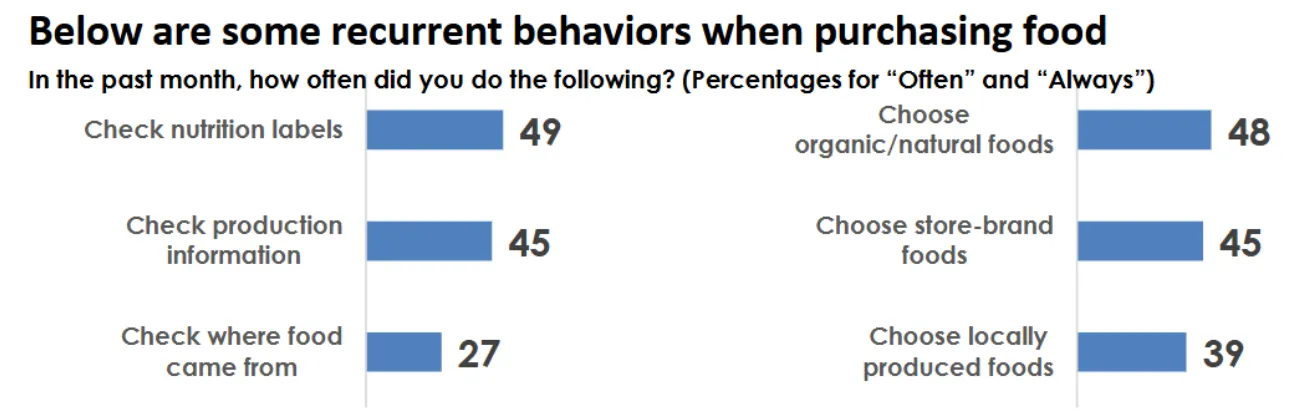
- Consumers use information available on packaging but selectively. Price, ingredients, and nutritional information have greater influence than brand, origin, or certifications, suggesting that practical product benefits should remain at the center of communication.
- Interest in local and organic foods is present, with clear potential for further development. Most consumers purchase these foods at least monthly, but price, availability, convenience, and clear identification limit more frequent purchasing. Organic products are purchased more frequently than local products: 31% of respondents buy organic food several times a month or more vs 20% for local food.
Project Lead and Contact
Gaëlle Chanlot
Food and Consumer Scientist
gchanlot@ucanr.edu