
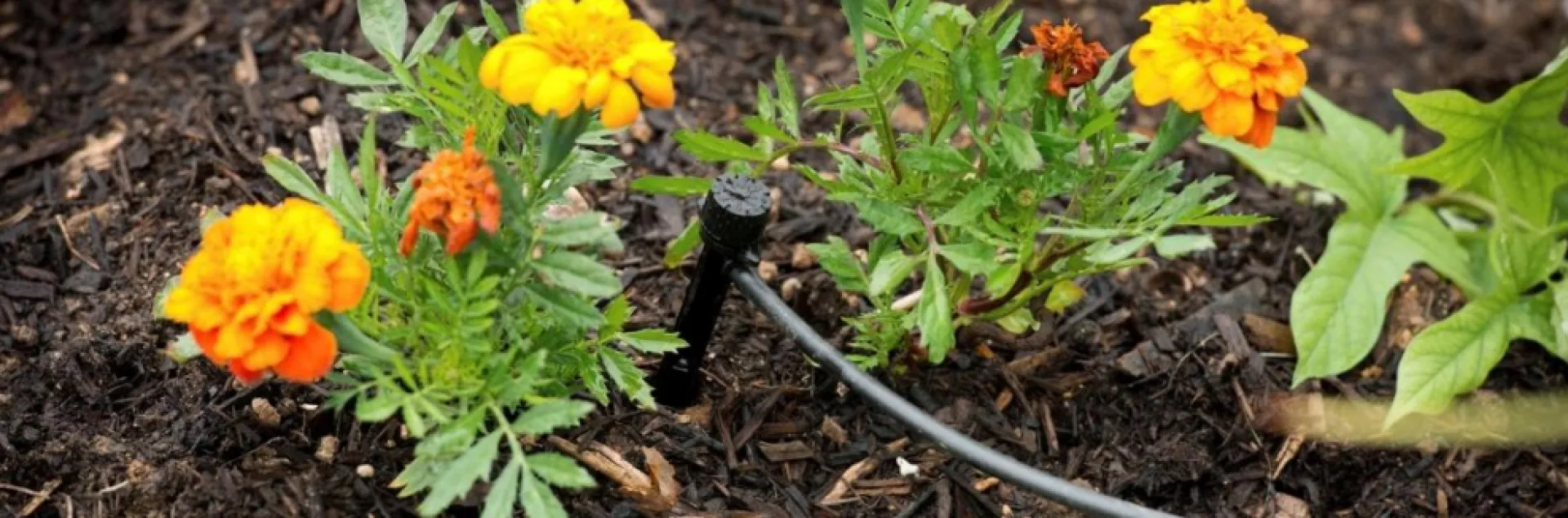

Question: Sometimes I buy a beautiful plant for my yard, only to have it fail sometime later. I always try to plant it in a spot that provides the right amount of sunlight and connect it to my drip irrigation. What might I be doing wrong?
Answer: Your situation is not uncommon for many gardeners. One possible cause for an occasional plant failure is neglecting to consider the new plant’s water needs in relation to the water needs of other plants on the same irrigation valve.
Most people set up their drip irrigation geographically with the left side of the yard watered with one valve, while the right side of the yard is irrigated with another. This setup is fine if all the plants receiving water from the same valve have similar water needs and receive the same amount of sunlight. It’s likely your landscape is a bit more complicated.
Hydrozoning is the practice of grouping plants that have similar water needs on the same irrigation line. You use your irrigation controller to schedule how often and how long each valve operates so each hydrozone receives the appropriate amount of water. This ensures that low-water use plants don’t drown from overwatering and plants that require more water don’t droop from underwatering. Hydrozoning is efficient, improves plant health and saves water.
How do you decide which plants to include in a hydrozone? Low-water Mediterranean plants such as lavender, rosemary, or yarrow, all go in one hydrozone. Vegetables require a separate zone because they are high-water use plants and need to be irrigated often. Trees need yet another hydrozone because they are watered less frequently but more deeply than perennials and many shrubs.
The University of California Division of Agriculture and Natural Resources has an ever-expanding database called the Water Use Classification of Landscape Species (WUCOLS). You can search WUCOLS for a plant’s water requirements: very low, low, moderate, high, not categorized yet (unknown) or it may be inappropriate for your region. The ratings are based on the observations and extensive field experience of landscape horticulturists. With this tool, you can confidently group your plants into hydrozones and irrigate more efficiently.
If you use hydrozoning in your garden, do you have to move your plants? Not necessarily.
Traditional basic black irrigation tubing — known as distribution tubing — can transport water over long distances from one place to another in your yard. After the distribution tubing is in place, insert drip emitters or attach inline drip tubing to irrigate the plants in that area of the hydrozone. Connect more black distribution tubing and continue running the tubing to the next area in the same hydrozone. With this method you can transport water from one valve to several islands of planted areas connected by black distribution tubing. Drip tubing is easily hidden with a layer of arbor mulch.
Inline drip tubing is available in either ¼ inch or ½ inch diameters. The ¼ inch tubing comes with pre-installed emitters every 6 inches and is perfect for irrigating pots or spiraling around individual plants. The ½ inch tubing, which typically has pre-installed emitters every 12 or 18 inches, works well for more densely landscaped areas and around shrubs and trees.
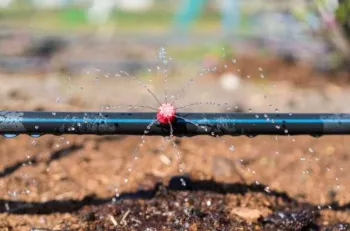
To assure consistent pressure throughout the system, all the emitters on the same irrigation line should have the same flow rate. Flow rate is measured in gallons per hour (GPH) of water. Inline drip tubing usually has a flow rate of 0.5 GPH or 1 GPH, while emitters come in 1 GPH and 2 GPH. Avoid using emitters with varying flow rates on the same valve to assure each plant receives the right amount of water.
If one plant needs more water than others and a separate hydrozone for that one plant is impractical, you can add more drip emitters or spiral ¼ inch inline drip tubing two or three times around the plant.
Keep emitters 6 to 12 inches away from the base of each plant to prevent fungal diseases. Instead, place tubing emitters at the plant’s dripline, the circular area on the ground directly beneath the outermost branches or leaves of the plant.
Remember to factor in the amount of sun, the soil type and your microclimate when planting and irrigating. It’s a lot to consider, but once in place, you’ll spend more time enjoying your garden and less time watering it.
You can find more tips on drip irrigation in the links below and at local irrigation stores:
- Drip Irrigation article
- Drip Irrigation Basics video
- WUCOLS Plant Search Database
- Garden Sense
- Irrigation Scheduling Tool
Contributors to this week’s column were Kim Neilsen-Glynn, Karen Felker and Lisa Howard.