
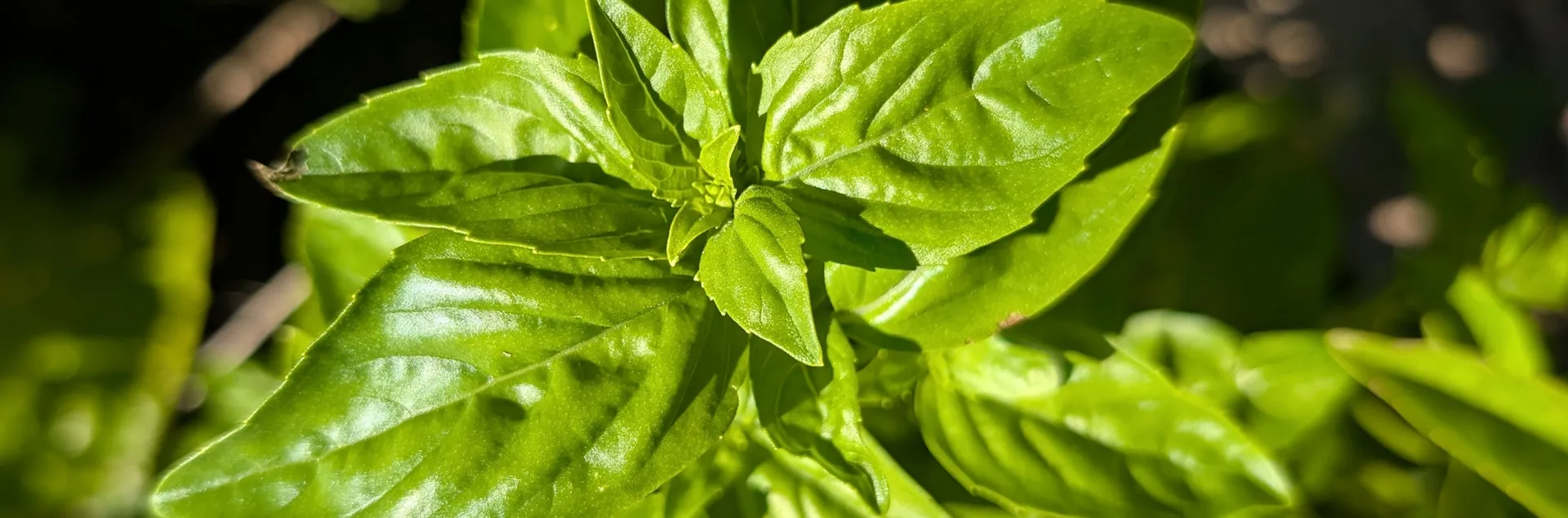

Pungent basil leaves fresh from the summer herb garden offer aroma and taste in a myriad of dishes. Normally thought of as Italian or Mediterranean, basil originated in Africa and southern Asia—India, Thailand, and Vietnam. Among the many different varieties and flavors, there is a slight difference in levels of essential oils. Numerous varieties are easy to grow in pots or in the ground.
Varieties
- Sweet basil is a large-leafed, Mediterranean variety, the primary culinary basil used in Italian cuisine. It grows to a height of 2-2½ ft.
- Purple or opal basil is similar to sweet basil, but with dark bronze-purple leaves and pink flowers, a welcome color contrast in the garden and in dishes, though not visually suitable for pesto. A somewhat more tender variety, it grows to about the same height as sweet basil.
- Lemon or lime basil is a smaller plant to 12 in. with white flowers and a mild citrus aroma paired with many types of foods.
- Greek or globe basil is another smaller 6-12 in. plant with tiny, compact leaves , soft stems, and a spicy character useful in salads. Its compact size makes it a good container plant, and its hardiness allows it to thrive in poor conditions.
- Cinnamon basil is another spicy variety with a pronounced flavor. It grows to 18-30 in.
- Thai basil can be recognized by its unusual serrated leaf and spiciness with licorice overtones. Used in Thai and Indian cooking, it grows to 2-3 ft.
- A few types of perennial basils exist, but all types for culinary use are annuals.
Cultivation and Care
- Basil is quite sensitive to cold and is best grown in hot, summer sun.
- Germination depends on warm soil and air above 75 degrees.
- Basil seed can be sown indoors or in a greenhouse in May and planted out in June in Sonoma County after days are warm. Plant-to-harvest is about 10 weeks.
- Basil cuttings may be rooted in a glass of water and then transplanted into pots or the garden.
- Grow basil in well-drained soil enriched with compost in full sun. Frequent harvesting of the outer leaves prolongs life of the plant and makes it bushier.
- Cover warm soil with mulch to keep weeds at bay and preserve moisture.
- Maintain even moisture but avoid overwatering , especially on seedlings.
- Once basil flower stalks appear, leaf production slows and essential oil production declines. Unless you are looking for seeds or a few flowers for decoration, pinch off any flower stems before they mature.
Pest Control
- Some pests can be deterred by covering plants with woven row covers. (See links below.)
- Whiteflies and aphids can be controlled by dislodging them with a strong stream of water or spraying with a natural insecticidal soap.
- Slugs can be controlled with bait or by removing by hand.
Additional Information
July 2026