
We all enjoy having beautiful plants indoors and outdoors, but with our busy schedules, plants can be the last things on our minds. We buy them, forget to water them, and then replace them when they die, or we may give up growing plants completely. Sound familiar? Then, succulents and cacti might be the solution for you.
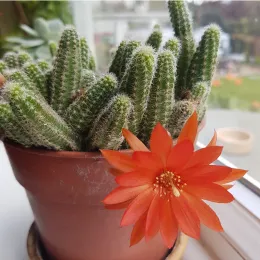
Cactus is a succulent plant, but not all succulents are cacti. Succulents do not belong to any one plant family, but are represented in nearly thirty different ones. Cacti can be easily identified. With rare exceptions, they do not have leaves. Most, but not all, cacti have spines and bristles. They may have long hair or a woolly covering instead. Since nature has provided them with built-in "storage tanks", they can be underwater for weeks at a time.
Don't think cacti are dull and uninteresting plants. Succulents and cacti offer the most variety in shapes and leaves, colors, designs, patterns, and growth habits in the plant world! Succulents are natives of deserts, rainforests, and semi-arid regions of North and South America. Some plants have common names like crown of thorns or golden barrel, but many do not, so it's not unusual to see them sold by their botanical name.
Succulents are noted for their unusual foliage, like the Haworthias and Gasterias, or the popular "jade plant", Crassula argentea. The Echeverias and Dudleya pulverulenta are exquisite, with their chalk-white foliage and leaves lined with red edges.
Succulents can have beautiful flowers like Kalanchoe blossfeldiana, a popular Christmas plant with striking red flowers, and Hoya, known as "wax plant," which has clusters of fragrant, waxy white flowers. Colorful Rebutias are crowned with bright red flowers in the fall.
How to grow indoors.
Place plants where they get the best light. To get flowers from your plants, like the Parodias and Lobivias, use the east and south exposures. West window plants are jade plant, echeveria hybrids, and Hoya carnosa. North windows are best for Gasterias, Haworthias, Rebutias, and Sansevieria hahnii.
In nature, cacti and succulents are drought-resistant because they can store water, but remember that indoor conditions are quite unlike those outside. For one thing, roots cannot stretch far for moisture; thus, proper watering is vital.
Small pots and clay pots dry faster. When the soil is dry at least an inch down, water until it runs out the drainage hole, then don't water again until the top is dry. You'll probably water more in the summer when the plant is in active growth and then taper off in the fall, to occasionally watering in winter. Plants need a rest from watering. If you water too much in winter, your plants will bear abnormal growth and not bloom in summer. Fertilize succulents and cacti very sparingly. Overfeeding can kill these slow-growing plants or force them to grow at an unnatural rate.
the
Some of the best to try.
Indoor Plants: Peperomia gandis has thick, shiny leaves, similar to a watermelon plant. Primulina dryas is related to the African violet. Slow growing, its striking leaves form a rosette of green leaves with white designs. Jade plant is an ideal container plant with shiny, thick, rubbery leaves and a bonsai appearance.
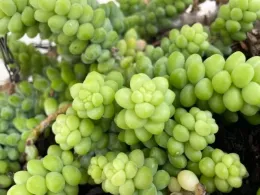
Hanging Plants: Graptopetalum 'Aphrodite' has fleshy leaves that form rosettes and small yellow flowers. It can also be used as a ground cover. "Burro's
tail" is formed by trailing stems that look similar to columns of big grains of rice. Crassula perforata variegata, also called "variegated string of buttons," because the opposing pairs of trailing leaves appear threaded on the stems. Sedum sieboldi is winter hardy, yet graceful with dainty notched leaves, pink flowers in autumn, and a trailing habit that makes it one of the most popular of all succulents for hanging baskets.
The most common mistake made with caring for cacti and succulents is overwatering, so be sure to shower yours with more love than water! Happy Gardening!