
Although far from being handicapped, some of us do fall into the ranks of being considered a "Senior Citizen." When deciding that we want to garden for as long as physically possible, we can plan an outdoor space accordingly. Here are some suggestions, if you are thinking of making life in the garden easier for you.
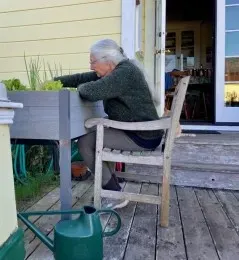
Raised beds are so much easier on a person's back than gardening in the ground. We love them for several reasons. They look neat, but the garden soil doesn't get as compacted as in regular gardens, and water and fertilizer are only applied to actual plants and not the aisles between the rows. Boxes can even be table height to accommodate wheelchairs. A good size for a raised bed is four feet by twelve feet. If needed, the space between the boxes should accommodate a lawn mower or a wheelbarrow. Also, be sure to include enough space to walk in between.
It is important that these raised boxes are only wide enough so that you are able to reach halfway across on each side with ease. The length can be whatever fits your space the best. It's helpful to cap the sides with a ledge for sitting, to make weeding and planting easier on your back and knees.
For weed control around the raised beds, flatten some cardboard boxes, lay them out around the beds, and then cover with mulch, paving stones, or gravel for easier upkeep and a smoother walking (or rolling) experience.
For irrigation, drip is always best for vegetable gardening, as overhead spraying can often result in fungal diseases. A soaker hose wound down the row and around individual plants works well, also. Of course, some people still love to water by hand, letting it drip slowly and deeply while checking for pests or diseases, weeding, picking ripe produce, or just taking the time to enjoy the fresh air. It's also an opportunity to be on the lookout for areas where the water doesn't drain well or drains unevenly.
For fruit growing, you can keep your trees, berries, and grapevines smaller by judicious pruning and picking smaller varieties to begin with. With smaller plants, pruning is easier, as is picking the fruit. Having several varieties that will ripen at different times will keep you from being inundated with excess fruit and keep you in fruit for a longer period. Keep things small and in a defined area for easier access.
If you use stakes to secure plants or shelters in strong winds, a tip is to invert a flowerpot over the top of them, so they are not so sharp and dangerous. Keep rakes, shovels, and other tools picked up and put away to prevent tripping and falls. Make sure chemicals, even organic ones, are stored safely.
One final point is to have your garden close to your actual house. This makes it more convenient to gather herbs and vegetables for a quick meal. If you have pets, it might be helpful to separate your food-growing area by a fence to keep them out. Dog and cat waste is very dangerous around food. Never use it for compost, even if it is years old.
If you plan on working in your garden for a few more decades, give some of these tips a try. With all the fresh produce, the gardening exercise, and the joy of living that gardening can give, you should be around for a while, and your aches may even be a little less!
Happy Gardening, Friends!