
I've been walking around the neighborhood for exercise, and I really enjoy looking at my neighbors' yards—but it inevitably leads to brainstorming, and I start thinking about making changes in my own garden.
Fall is the best time to plant, but before you do, take time to make a plan. Planning may not sound as exciting as seeing the finished product, but it can make the changes even nicer, and extra thought can save a lot of money.
Look for garden ideas in your neighborhood
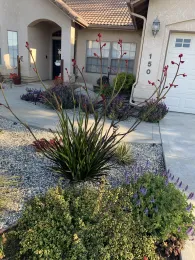
The Central Valley generally has a Mediterranean climate, but locally we have many different microclimates and soil types. For success with your new plantings, look at which plants and trees are thriving in your neighborhood and surrounding areas.
If you are attracted to a particular plant unfamiliar to you that you haven’t seen in other yards, start with a small protected spot or potted plant before investing heavily in that plant. If you see a garden that particularly appeals to you, compliment the owner and ask where they got their plants and who did the work.
Visit garden centers and nurseries
Spend time walking through local nurseries for ideas, advice, and recommendations for landscapers and landscape designers. Homeowners or gardeners can often handle small garden changes. If you are thinking about adding trees, large shrubs, patios, or pathways, a landscape designer can save you money in the long run by aiding in plant selection, placement, and function. Trees are a big investment, and choosing the right tree for the right location can prevent root or limb damage, constant leaf litter on the path, or a tree that doesn't survive.
Important details prior to the fun part of plant selection
Does your yard drain well currently? This would be the time to prevent standing water issues and mosquito breeding areas. Do you know the location of your property lines, utility easements, electric, gas, sewer, and water lines into your home? If you have a septic tank, do you know where the tank and leach field are located?
More details to consider:
- Where are the main water and gas lines connected to the home, and where are the shut-off valves?
- If you have an existing irrigation system, where are the valves and shut-off valves?
- How well does it water the existing garden, or does it need updating?
- Are there restrictions on planting near the street or sidewalk to maintain sight lines near an intersection or near a utility pole or streetlight?
- If you plan to contract the work, get references and prices from more than one company, and confirm the company is licensed, insured, and bonded.
- If equipment will be used, check the size and type of vehicles to ensure they can access the property and avoid damaging underground utility lines and paved surfaces.
All of this sounds a bit tedious, but rupturing a gas line or crushing a water line with heavy equipment and the resulting huge expense is not the memory you want to have of your garden renovation. Plan ahead and plant smart!