
Benefits of incorporating native plants in landscapes include supporting local ecosystems and conserving water. We should not think of native plants as only for when there is a drought. Choosing plants adapted to our microclimates means less reliance on pesticides and dramatic improvements in the beneficial wildlife, including pollinating insects and birds, in your garden and beyond. By choosing native plants, individuals can contribute to the preservation of California's unique biodiversity and create beautiful, sustainable landscapes.
If you feel you are lacking some pizzazz in the garden in autumn, and are willing to add to the diversity of your garden, try adding these native plants:
Cleveland Sage – Salvia clevelandii
This lovely, low-water, evergreen shrub for sun and part sun sites works in all but the heaviest clay soils. It naturally retains a compact, rounded form to
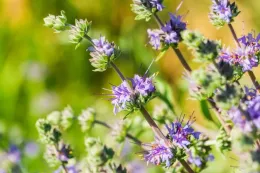
about four feet. Blue flowers from mid-spring to early-summer, in that oh-so-sage-like whirl shape. Blooms hold color for a few months and attract a variety of birds and pollinators. About the only care is an annual shearing of old flowers if keeping it tidy-looking is important, as in front yards. If you water it too much to keep it green all summer, it may be short-lived. If you can tolerate a bit of summer dryness, once-a-month watering should do, and the shrub will live a decade or more. There are many cultivars and hybrids of the species: "Pozo Blue," "Celestial Blue," "Allen Chickering," "Aromas," and "Winifred Gilman" are a few.
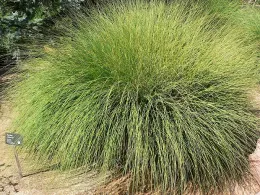
Deer Grass – Muhlenbergia rigens
Still the go-to plant for a nice, compact, large California native bunch grass. Use it to add structure to a planting bed, mark a boundary or pathway, or for a modern or formal effect. Grows to about four feet wide, three or more feet tall, with tall wand-like seed stalks in spring through fall that blow in the breeze and add interest and calmness to a garden. Trim about 50 percent or more off every year or so to keep it looking greener as it ages. Water low-moderately, or very little on heavy soils. As they mature, water less on everything except quite sandy soils. A traditional basket-making plant that provides nesting space for quail and some bumblebee species.
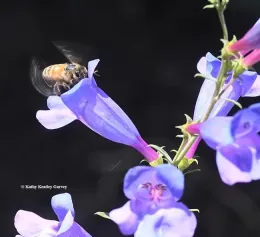
Margarita BOP Penstemon – Penstemon heterophyllus X' Margarita BOP'
A wild hybrid, according to Las Pilitas Nursery founder Bert Evans, who discovered the original seedling and named it for where he found it: "Bottom of the Porch." Penstemons, like sage, hybridize freely. The blue-to-purple flowers in spring rise above an evergreen perennial that grows 1-3 feet tall, depending on how much sun it gets. Welcome to all gardens, it tolerates neglect, but keep it watered the first year or so, then back off as it gets established. Slopes, cottage gardens, pollinator gardens, container gardens, walkway borders…the uses seem endless.
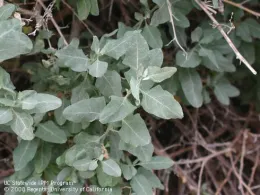
Quail Bush – Atriplex lentiformis brewerii
I wish more of us with large yards would find a spot for this hearty, soil-improving shrub. Grow it where you need a quick privacy screen, where you want to give quail a happy home, or behind darker green plants to pop the "wow" contrast in your yard. Plant it where you don't want or can't regularly water. About the only conditions it doesn't like are nice, deep, loamy, rich soil. This is a tough plant that once covered more of the valley floor along with its salt bush cousins. Quail and other birds like the seeds and the cover. Lizards like Quail bush too. Hardly water it unless you want a real giant, as it naturally grows to 12 feet or so. Just don't baby it, and it will be very happy.
Dwarf Coyote Brush – Baccharis pilularis' Twin Peaks' or 'Pigeon Point'
Dwarf Coyote Brush (or Coyote Bush; it is known by both) is called a ground cover, but even the dwarf forms can grow up to four feet tall. Its main use is on slopes for erosion control and to cover large areas. Evergreen, dark green foliage that looks good all year, hardy, low water once established, with attractive cream flowers in late fall into winter. This is one of those plants, like Quail Bush, that should be used to solve problems; it doesn't require a lot of maintenance, water, or any fertilizer. Coyote Brush is tolerant of a wide range of soils and thrives in full sun to part sun. Don't crowd it when planting, plant them eight feet or more apart and water them very well for the first few weeks at least, then reduce the water over time.
Bees' Bliss Sage – Salvia' Bees' Bliss'
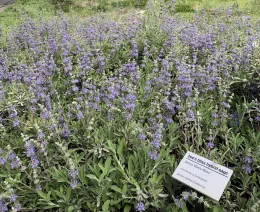
Another large, evergreen ground cover, this one with the typical sage-green, almost blue-green, leaves. Light blue to lavender flowers in early spring. Plant on a slope for erosion control or in a large area where it won't need to be over-pruned. Bees love it as a food source as they are emerging from hibernation. Hummingbirds use it the same way. Plant in full sun to part shade and let it ramble. These ground cover sages are low-water but can tolerate moderate watering. Keep the center of the plant, the crown, dry in the summer, so if you use drip emitters, plan on moving it out towards the plant edge after the first year. Older plants can look quite woody and gnarled; use this to your advantage to create a natural-looking California garden. Trimming back old flower heads is about the only maintenance. Related to Bees' Bliss are Shirley's Creeper Sage, Tera Seca, and Dara's Choice Sage. They require the same care but vary slightly in foliage color and flower color.
Monardella villosa – Coyote Mint
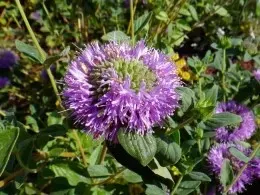
A small perennial for tidy planting beds or woodland gardens, Coyote Mint has a great fragrance and pretty purple flowers in spring and early summer that pollinators and people like. It only grows a foot or two tall and spreads and fills, but is easy to keep compact by occasional trimming. Low to moderate water and shade to sun make this an easy California native plant to start with. In higher elevation gardens, plant the local native Monardella odorissima if you can find it. "Russian River" is a common cultivar of coyote mint in California and works fine in most situations.
This list is only a fraction of the hundreds of plants native to California that we can grow in our Tulare and Kings Counties gardens. Autumn is the best season to plant natives (and most other plants) in your garden. You can create a natural garden, and still have tremendous habitat value for humans and other living things in addition to beautiful and interesting plants. Calscape.org has plant lists, photographs, and more information designed to help you begin or improve your native plant garden.