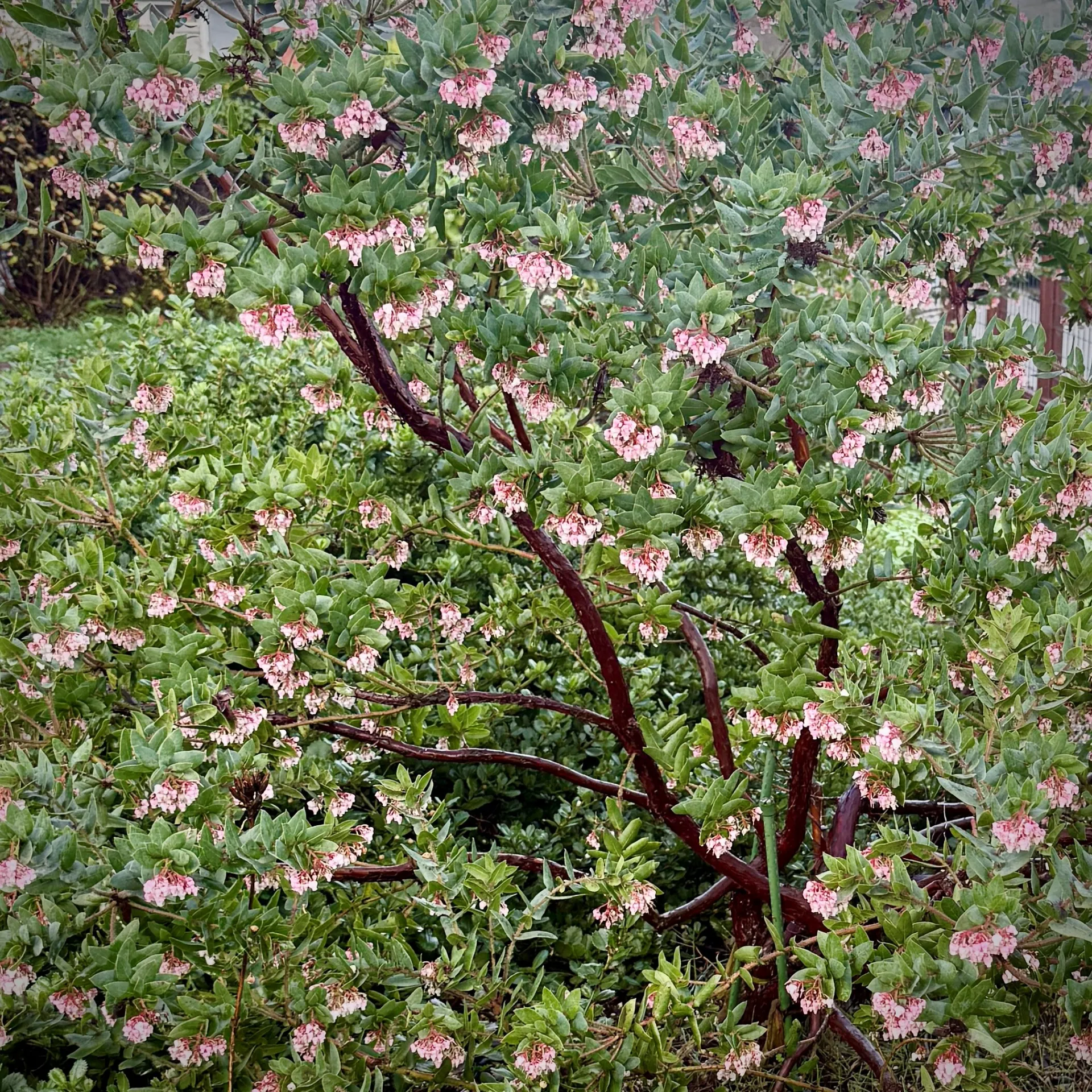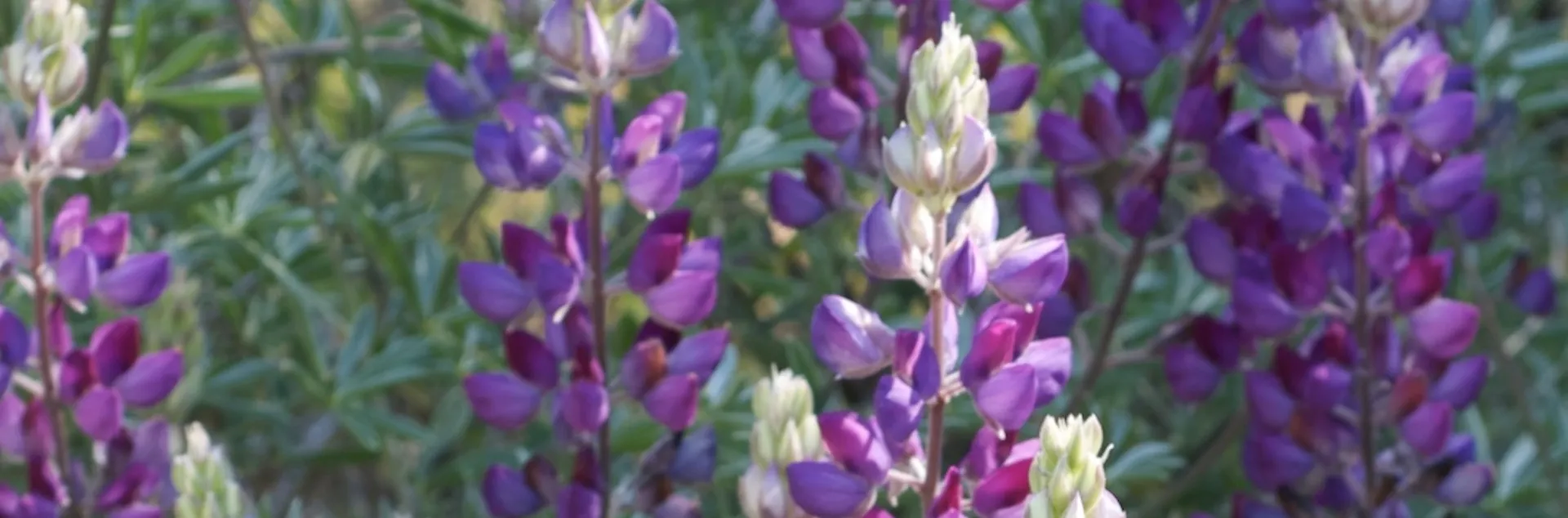
Five years ago, I began to fill much of my front yard with native plants. I bought and carefully placed five Silver Bush Lupines (Lupinus albifrons), three varieties of low-growing Ceanothus, two Manzanita (Arctostaphylos pajaroensis “Paradise”) shrubs, and a couple of Sticky Monkey Flowers (Diplacus aurantiacus). I also added a Ribes malvaceum “Dancing Tassels” to my woodsy backyard. The front yard plants are evergreen perennials; the Ribes is summer dormant. All but the Sticky Monkey Flower are keystone plants especially favored by native bees and butterflies. Indeed, the Silver Bush Lupine is a host for endangered Mission Blue Butterflies.
The results are mixed. The Ceanothus, Paradise Manzanita, and Ribes have more than tripled in size and their flowers attract pollinators. But, only one sad-looking Silver Bush Lupine has survived, and it’s struggling mightily. Why? I can hike into the Marin Headlands near my home and see dozens of healthy Silver Bush Lupine bushes. In spring, spikes of purple flowers shoot up from starry whorls of silver-blue leaves. What went wrong?
The plant’s description on the California Native Plant Society website provided a clue: Silver Bush Lupine does best in sandy, well-drained, nutrient-poor soil and little summer water. I had watered carefully. Was the soil in my former sheet-mulched lawn too rich for the Lupine? Maybe. But, the last line in the Calscape description was the killer: “This plant can be short-lived. . . .” Short-lived.
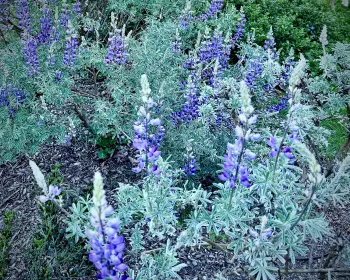
It didn’t occur to me that my pretty Silver Bush Lupine might die of old age at age three. Other than trees, I don’t usually consider the longevity of perennial plants for my garden – native or non-native. It was time to begin.
When a Native Plant Guild friend and I looked for information about the longevity of native plants, we became startled by the short life span of some. And we began to see a pattern: The degree to which the ecosystem for a garden plant matches that species’ original native conditions matters.
For example, although Silver Bush Lupine can live 10 years in the wild, in the garden it’s likely to give up in three to six years. It’s known to self-seed, which is why I see so many in the wild, but that didn’t happen in my garden. I can’t exactly duplicate the ecosystem in the Marin Headlands, so if I want this fussy Lupine brightening my front yard, I need to add new ones every two or three years.
Discovering the Lupine’s short life span was a surprise. The first, it turned out. Sticky Monkey Flower is another likely short-lived plant. It can survive 10 to 12 years in cultivation with the right conditions; otherwise, it gives up in three to five years.
As for Ceanothus, I learned that even in the wild, most species have an average life span of only 10 to 15 years. Moreover, they become more short-lived if given excessive summer water and unneeded soil amendments. In other words, those luxuries cause them to “live fast and die young.” I fear my Ceanothus might fall in that category.
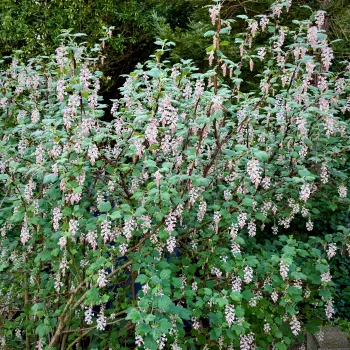
However, thankfully, with a predicted lifespan of 10 to 20 years or more in cultivated garden settings, my Ribes’ long pendants of pink flowers will continue to feed hummingbirds in December for a while.
Even better, the adaptable Paradise Manzanita is likely to outlive them all. The average life span of Manzanita shrubs is 25 to 50 years, and some of the ninety species, live to 100. “Paradise” is not only a keystone plant, but in my garden, also a foundation plant.
Gardening is always a learning experience and especially so, it sometimes seems, with native plant gardening. We need to choose the right plant for the right place, but often limit that consideration to sun, shade, water, and soil. We could also factor in the expected longevity of
particular species. I will now. And not worry if a plant predicted to die does so.
By Barbara Robertson, September 12, 2026