
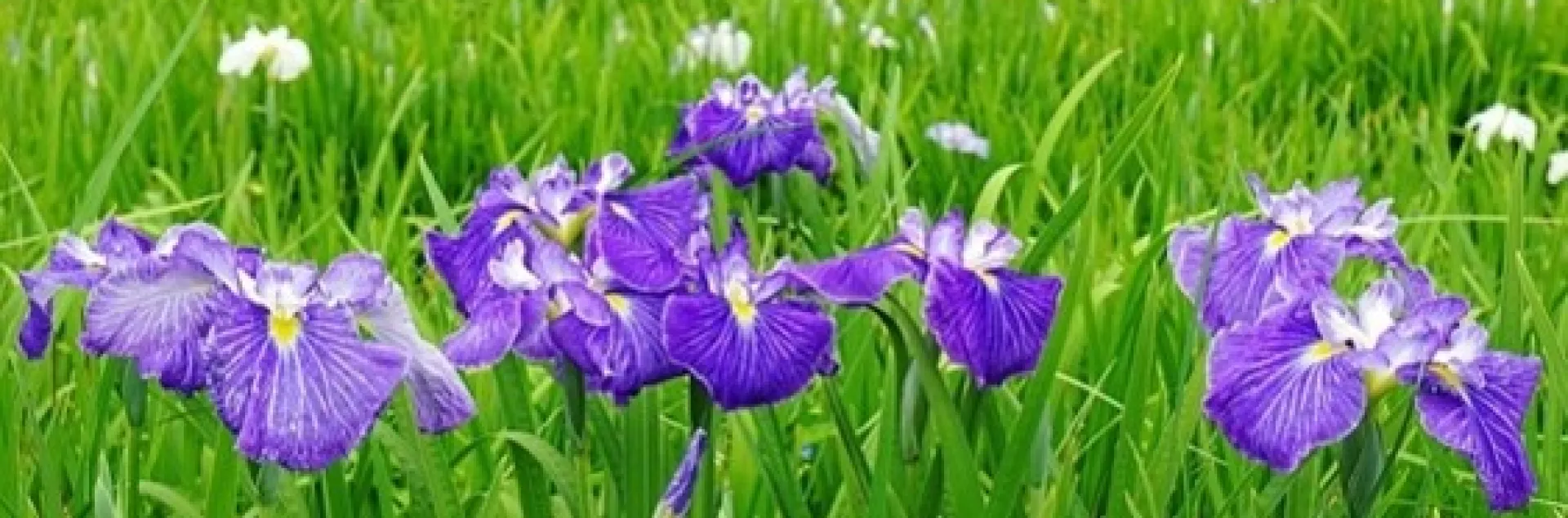
Iris are among the most beloved perennial garden plants because they have striking flowers and are long lived, easy to grow, and attract pollinators. As a bonus, they are also deer resistant. The name iris is taken from Greek mythology meaning “rainbow.” They bloom in a wide range of colors from pure white to the darkest purple with pinks, yellows, and blues in between. The majority bloom in spring or early summer.
Iris have thrived in the wild for thousands of years and have been part of various cultures throughout the world. Egyptian and Indian cultures used iris rhizomes for healing and making perfume. Whether you’re drawn to the delicate California native species that grace Marin’s trails and hillsides or to the bold, showy exotic hybrids that brighten home gardens, iris offer an enduring charm that rewards both new and seasoned gardeners. Their resilience, diversity, and history make them more than just ornamental plants—they are living threads connecting landscapes, cultures, and generations. By choosing the right varieties and giving them thoughtful care, you can enjoy a vibrant rainbow of blooms year after year, each one a reminder of how beautifully nature thrives when we nurture it.
What’s a rhizome?
Most iris grow from rhizomes; some grow from bulbs. Rhizomes are modified stems that have knobs and nodes that spread horizontally at or just below the soil surface. Rhizomatous plants send shoots upward from the nodes and grow in clumps that extend from the same rhizome.
Three types of iris
There are around 280 species of iris in the world, with most native to Europe and Asia. However, there are 28 species native to the US and 10 species native to California. Regardless of where they grow naturally, the American Iris Society puts all Iris into three categories:
Bearded
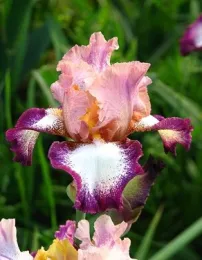
These long-lived perennials, available in a multitude of colors, are native to central and southern Europe. They range from 8-inch dwarf varieties to stately 4-foot specimens. They have strappy, sword-shaped, bluish-green leaves. Bearded iris need full sun, well-draining soil, and regular water after planting. For best results, leave the top half of the rhizome exposed to sun and air. See common bearded iris.
Aril
These iris are famous for their heavily veined flowers and dark spots. Aril iris grow naturally in desert areas, so they’re trickier to grow than bearded or beardless iris. They need super-dry soil and baking-hot sun in summer. Moisture is the enemy! It is critical to keep the rhizomes from being submerged in water during the rainy season. Subsequently, raised beds or hillside settings often work well. Fortunately, there are many hybrids -- called “arilbreds” -- made from crossing arils with bearded iris. They are easy to grow and still have the features of the arils.
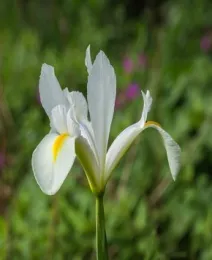
Beardless
Like this Dutch iris, the beardless iris have less dramatic but nonetheless beautiful flowers. Most are native to Asia, such as the Siberian and Japanese iris. This category also includes our beloved Pacific Coast native iris, which bloom throughout California and in western regions of the US. These are the lovely iris that pop up alongside our treasured wildflowers – a delight to see on a springtime walk. Learn more about beardless iris. See below for more about growing California native iris.
Growing bearded and other non-native iris
Iris can be planted year-round in the Bay Area. Shop for iris in the fall for the best selection. They grow in almost any soil so long as there is good drainage. Keep the rhizomes visible after planting. Water deeply but infrequently. Rhizomatous iris bloom shortly after planting, and flowers can appear even at unusual times of the year. To encourage more blooms, cut back the flower stalks to their base once the flowers have withered.
When iris have been in the ground three to five years and have fewer blooms, it’s time to divide and replant. Autumn is the best time to do this Simply divide existing iris plants by digging the rhizomes out of the soil in a clump. Look for smaller, young offshoots to replant, as they will be most likely to bloom. Cut back the leaves to about 5 inches and replant the rhizome with the leaves up and the rhizome just covered by the earth. Leave a foot or so of space around the rhizome, as it will continue to spread.
Growing California native iris
Our native iris species are dependable harbingers of spring, blooming their hearts out on hillsides, coastlines, and in the dappled light of oaks and other towering trees. Fortunately, most iris are easy to grow at home.
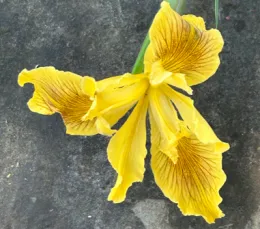
Douglas or Pacific coast iris (Iris douglasiana):
This iris is seen on Marin’s open hills, grassy slopes, and in many open and wooded areas. The colors are variable, ranging from deep violet to ivory, blue, yellow, or white.
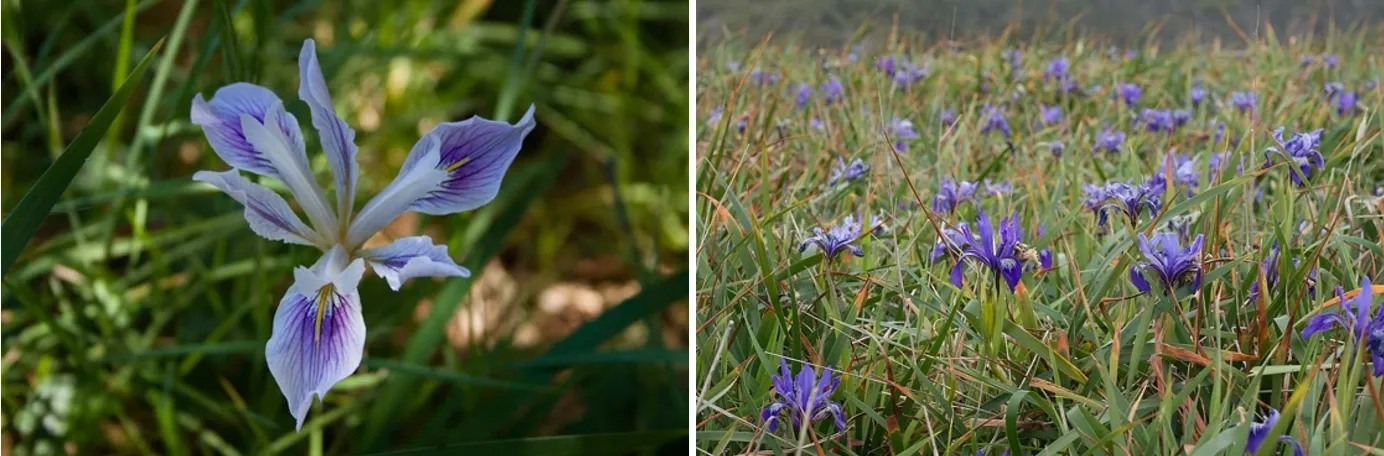
Features
- Bloom time: February to June
- Flowers: One to three flowers per stem, each flower 2.5 inches wide
- Foliage: 1 to 2-foot strappy green leaves with lighter green undersides
- Size: 1 to 2.5 feet tall and 2 to 4 feet wide
- Uses: along pathways, as groundcover, in rock gardens. If under oaks plant in the fall 4 to 6 feet away from the trunk; water during the first dry season, then withhold summer irrigation.
- Bonus: deer dislike it, but hummingbirds adore it
Growing tips
- Water: regular water for the first season or two; drought tolerant once established, but will benefit from occasional deep watering (every 2 to 4 weeks)
- Soil: prefer rich soil; amend clay soil with organic material before planting; good soil amendments include oak leaves and pine leaves
- Exposure: morning sun or dappled light or bright shade for most of the day; more shade for hotter locations
- Maintenance: They will spread slowly, but unlike bearded iris, they do not need frequent dividing.
Ground or long-tubed iris (Iris macrosiphon):
The ground iris is less common but still widespread. It is endemic to California, meaning it only grows in a specific location and nowhere else on Earth. It grows in the San Francisco Bay Area as well as the foothills of the Cascade, Sierra Nevada, and North Coast ranges. It is seen in sunny grasslands, meadows, and open woodlands.
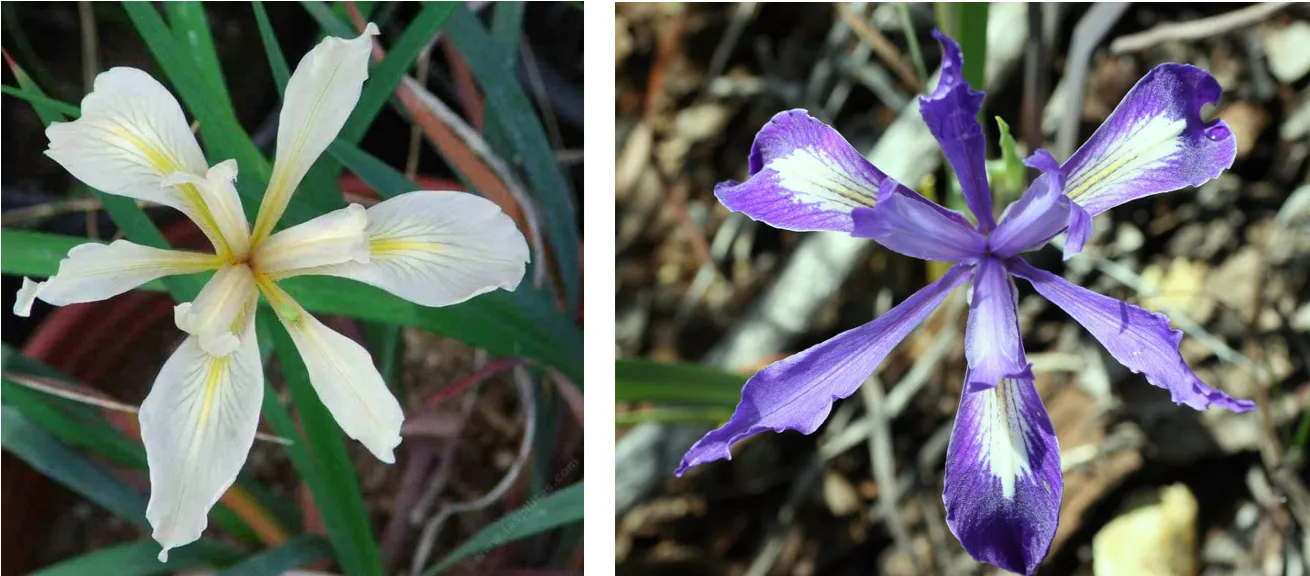
Features
- Bloom time: March to May
- Flowers: variable, from yellow ivory to lavender to deep blue or purple; flowers bloom close to the ground in clumps of the same color
- Foliage: slender, strappy, blue-green; semi-deciduous in summer
- Size: 6 inches to 1-foot tall; 1-foot wide
- Uses: rock gardens, containers, shady borders
- History: Native Californian tribes harvested the tough leaf fibers to make durable cords. The fibrous leaves can also be cooked to make paper.
- Bonus: It’s the only Marin iris with a fragrance.
Growing tips
- Water: low; maximum twice per month once established
- Soil: well-draining, amended with compost, oak leaves, or pine needles
- Exposure: full sun or part shade
Central Coast iris (Iris longipetala):
This rare native perennial only grows in the counties surrounding the Bay Area: from Mendocino County down through San Francisco to Monterey County. It is found in open hills and low, wet fields at elevations from 0 to 1,500 feet. In Marin County, look for it near the Nicasio Reservoir and on Angel Island. This iris performs well in gardens and has a pleasant fragrance.
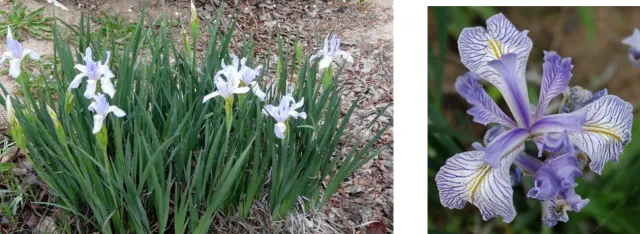
Features
- Bloom time: March to May
- Flowers:large, fragrant, creamy white to pale lavender-blue with purple venation
- Foliage: semi-evergreen, upright clumps of bluish-green blades; summer semi-deciduous
- Size: 2 feet tall and wide
- Uses: nice near water features or wet habitats
- Bonus: deer resistant!
Growing tips
- Water: low to moderate
- Soil: moist, heavy clay, or clay-loam soils
- Exposure: deep or partial shade
Where to see native iris
Our native iris are welcome visitors every spring throughout Marin. Here are some places you can count on seeing them:
- Mount Tamalpais – Visit the shadier areas such as the Pumpkin Ridge and Yolanda Trails.
- Lucas Valley Road – Look for large swaths along the roadside.
- Bolinas Ridge – Access this area via the southern or northern trailheads.
- Point Reyes National Seashore – Take a walk along the Chimney Rock Trail or the southern edge of the Ridge Trail near Bolinas to see iris in a wide array of colors.
- Indian Tree Open Space Preserve – Located within old-growth redwood and oak woodlands in Novato, this area is known for a huge diversity of iris hybrids.
- Ring Mountain Preserve – The rocky slopes of the Phyllis Ellman Trail in Tiburon is home to many blooming irises every spring.