
Manzanitas take a bow in winter and early spring
Like people, some plants demand center stage. California poppies and lupine are springtime darlings, followed by fragrant sage in summer and crimson maples in fall. But what about the supporting players who work hard but never seem to get the limelight? Cue the manzanitas.
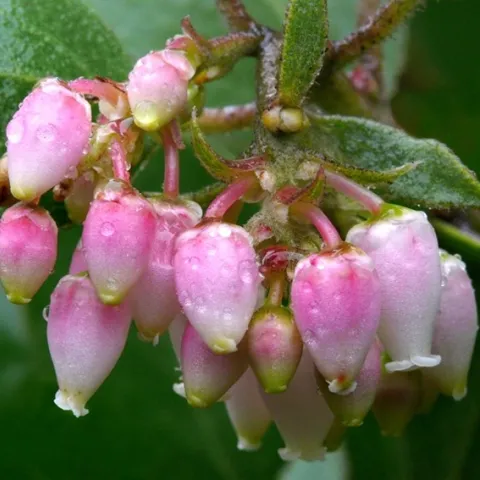
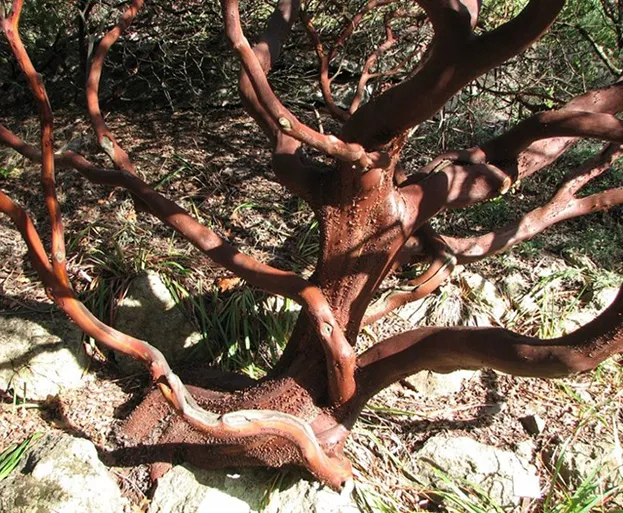
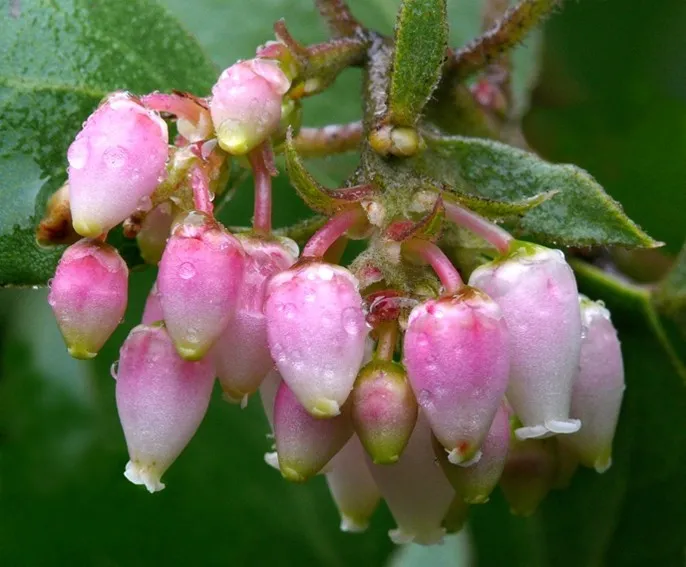
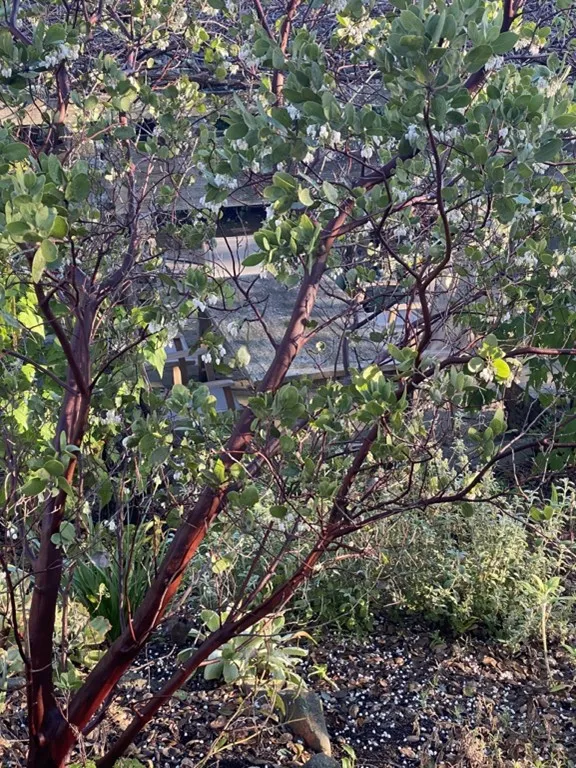
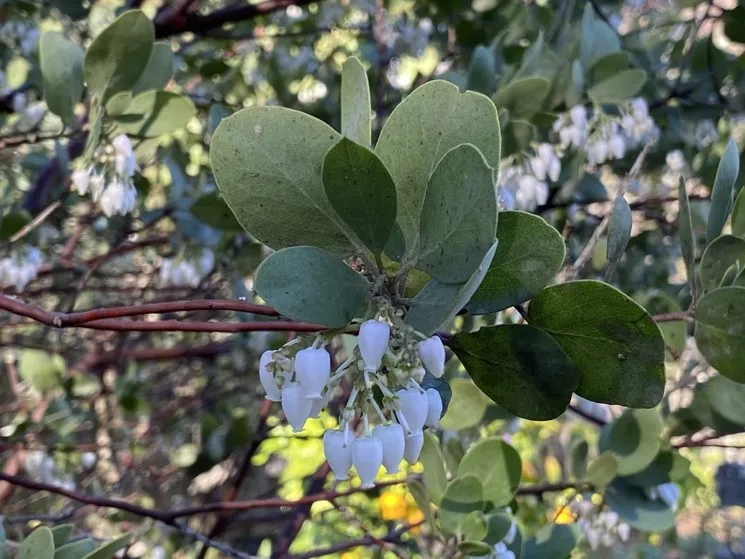
Manzanitas, aka Arctostaphylos, are rugged California native evergreen shrubs and trees with white or pink mini-bell flowers that dangle in delicate panicles in winter and spring and turn into “mini-apples” in summer and fall. Manzanita bark is stunning and variable -- sinewy and smooth, peeling and revealing, old and gnarled – in colors spanning cinnamon, burnt mahogany, chocolate brown, and driftwood gray. Like cracks of lightning, manzanita bark illuminates gray days and reduces the winter drab factor.
Year-round beauty and many ecological benefits
Manzanitas are outstanding additions to any garden, whether for low groundcovers, uplit accent trees, background shrubs, or hedges. In addition to their innate year-round beauty, manzanita provide many benefits to the environment (and to gardeners!):
- Pollinator-friendly. Hummingbirds and bees delight in having a food source during the colder months in late winter and early spring. This is especially true for California native bees that emerge after overwintering in ground nests and hollow stems. Manzanitas are among the first plants they forage.
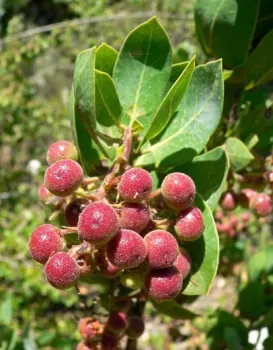
- Food for many animals and birds. Summer and fall manzanita berries feed bears, deer, coyotes, foxes, quail, and many other birds.
- Low water. These tough plants thrive on little water once established. This is due in part to their leaves, which have tiny pore-like stomates on both leaf sides instead of one side as in most plants. The result? The leaves are held perpendicular to the ground instead of parallel to minimize sun exposure and water loss.
- Erosion control. Thanks to their extensive roots, manzanitas are an excellent choice to help keep steep slopes intact.
- Long-lived. Manzanitas can live 100 years or more and disperse seeds that survive underground for hundreds of years.. Their elixir for long life? Co-mingling root fungi (mycorrhiza) with others in their own plant community, dramatically increasing the ability to absorb water and minerals, even in poor soil.
How to grow and care for manzanitas
Manzanitas are easy and satisfying to grow. Here’s how:
- Grow in full sun.
- Plant in well-draining soil. In general, manzanitas do not like water to linger on their roots, leaves, or at the crown of the plant (where the roots meet the stem).
- Do not amend soil with compost or other rich organic matter.
- Avoid fertilizer.
- Water deeply until established, then cut back. Manzanitas are vulnerable to fungal diseases that thrive in warm, moist conditions, so avoid summer watering as much as possible.
- Prune judiciously. Manzanitas bloom on old wood. If necessary, only prune in August through October before flower buds emerge. Use thinning and re-leadering cuts sparingly to unveil the plant’s natural structure. Make as few cuts as possible and do not force an unnatural shape. Never use heading cuts, which can lead to fungal issues and suckering.
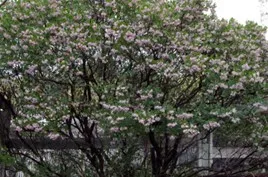
Many manzanitas to choose from
Manzanitas grow on dry slopes of chaparral and coastal range mountains, which is why we get to witness their quiet beauty on numerous Marin trails – from dry rocky slopes and ridges to the borders of pine and redwood forests to the exposed ocean-facing slopes of Point Reyes. Some even grow in serpentine soil where few other plants survive. Take a walk in China Camp, on the Shoreline Trail, or on King Mountain to spot these austere treasures.
There are more than forty species of manzanita in California, not to mention all the cultivars, subspecies, and hybrids.[1] They are a promiscuous bunch, interbreeding freely to the point where it’s even hard for botanists to tell one species from another. They range from 2-inch ground huggers to 20-foot trees – and everything in between.
If you’d like to add a manzanita to your landscape, here are a few to consider:
- Groundcovers: Arctostaphylos uva ursi, ‘Emerald Carpet,’ ‘Pacific Mist’
- Taller specimens: ‘Dr. Hurd,’ ‘Austin Griffiths,’ ‘Howard McMinn’
- Here are more common manzanitas for northern California gardens
A long, venerable family line and history
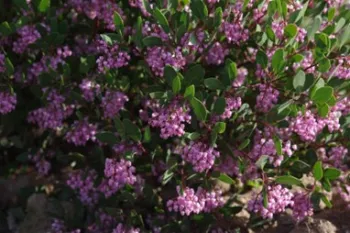
All manzanitas are cousins to madrone, rhododendron, azalea, and a host of edible berry-producing plants including huckleberry, blueberry, and cranberry. The berries are indeed edible. Just ask the native Americans, who ate manzanita berries raw, dried, fresh, and crushed for cider. (Manzanita means “little apple” in Spanish.) They chewed the leaves to curb nausea and settle upset stomachs and made poultices from soaked leaves to combat poison oak rashes. One tribe dried and smoked manzanita leaves for good luck.
Today many coastal manzanitas are endangered or rare, due in part to development. Among the rarest species is the Franciscan manzanita, which had not been seen since 1947 but was discovered thriving amid the litter and car exhaust fumes during the Doyle Drive expansion just south of the Golden Gate Bridge. That plant was moved to an undisclosed location for further research and propagation. The good news? It is now available in nurseries.
Regardless of which manzanita you choose, you can look forward to years of a carefree plant with a long and proud history.
Focus on Crocus
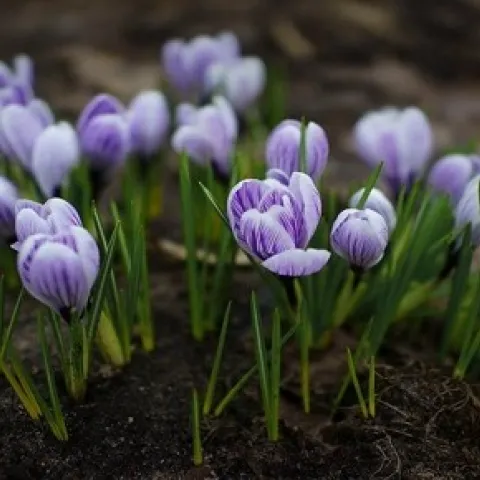
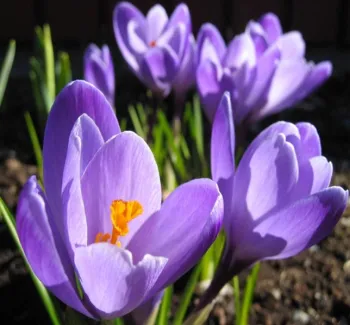
Blooming in shades of purple, white, yellow, pale pink, and anywhere in between, crocus are cheerful additions to any garden. While many species bloom in early spring, some, such as saffron crocus (Crocus sativus), bloom in autumn. These different species need different care, but there’s sure to be at least one (or two or three) that would be a wonderful addition to your garden.
Crocus are perennials in the iris family, Iridaceae. They are native to Europe and Asia and typically grow a petite 3 to 6 inches tall and bloom for two to five weeks. Crocus grow from corms, which are similar to bulbs in that they store food for the flowers when dormant. Although some species of crocus resemble tulips, there are differences. Crocus are shorter than tulips – often just a few inches tall –-- and they have open cup-shaped flowers and thin, grass-like leaves.
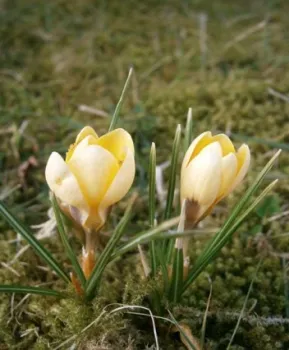
Spring-blooming crocus: harbingers of spring, symbols of hope
The most common ornamental crocuses bloom in early spring and are considered symbols of hope and new beginnings. These crocus are native to the Mediterranean region and are a favorite of pollinators, providing them with an early source of nectar in late winter or early spring. In our climate, spring crocus bloom in February and March, making them a welcome respite from gloomy winter days!
Here’s how to grow spring-blooming crocus for years of delightful flowers:
- Pre-chill the corms. Spring-blooming crocus can grow in Marin’s USDA zones 9 and 10. However, due to our mild winters, it's a good idea to pre-chill the corms before planting for one to three months in the refrigerator at 35 to 45° F. Note that some bulb companies offer pre-chilled corms so you can plant them as soon as they arrive.
- Plant in fall. Plant corms in October or November to ensure best spring bloom.
- Grow in sun or part shade.
- Plant in well-drained, healthy soil. Crocus loathe becoming waterlogged, so provide well-draining, compost-rich soil. As a bonus, soil rich in compost blocks nematodes and mites that can infect corms.
- Place pointy side up. Plant the corms several inches deep, a few inches apart, pointy side up.
- Choose from a variety of planting locations. Grow corms in pots, raised beds, or in the ground. You can even plant crocus in a lawn for a stunning spring display: just make sure to wait to mow until the leaves have turned yellow and have died back, as the bulb is still photosynthesizing to make next year’s blooms when the leaves are green.
- Prevent pests. Squirrels, mice, and other rodents love to munch on crocus corms. To avoid disappointment, consider planting crocus under a layer of wire mesh.
- Add fertilizer. When planting, fertilize crocus with a small amount of an organic balanced fertilizer.
- Don’t worry about irrigation. Because they are naturally adapted to our Mediterranean climate, crocus rely on our winter rains for growth and are tolerant of our long, dry summers.
Here are some spring crocus to consider:
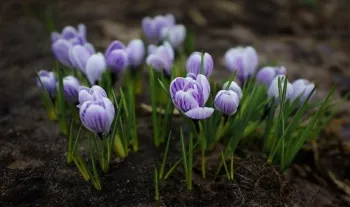
- Crocus tommasianus grows 3-4 inches tall and comes in shades of lilac and lavender. They are sometimes called “tommies.”
- Crocus vernus is a larger-flowered species that has been hybridized into a range of varieties. These include the amethyst ‘Flower Record,’ the pale ‘Jeanne d’Arc,’ and the delightfully striped ‘Pickwick.’
- Crocus chrysanthus has a mild honey-like scent and is often called golden crocus for its coloring, although some varieties are white or have maroon markings on the outside of the petals.
- See more spring-blooming crocus.
Autumn blooming crocus: one edible, one poisonous
There are two main groups of autumn-blooming crocus: saffron crocus and colchicum. Both are often called autumn crocus, but it’s very important not to confuse the two. Why? Because saffron crocus is a prized culinary ingredient while colchicum is poisonous to humans!

Saffron crocus (Crocus sativus) was first cultivated for dye, perfume, and medicine in ancient Greece, Egypt, and Minoan Crete as early as 4,100 years ago. It was spread by human cultivation across Eurasia and beyond. Because of our Mediterranean climate, saffron crocus is well-suited to our climate and growing conditions. Here’s how to grow saffron crocus:
- Plant in August or September.
- No need to pre-chill the corms.
- Plant corms under wire mesh to prevent rodents from invading.
- Choose from a variety of growing locations. Like spring crocus, saffron crocus can be grown in pots, raised beds, or in the ground.
- Plant in well-drained soil at least 4 inches apart to maximize saffron production.
- Harvest in October or November. Harvest the bright red stigmas when they are fully open and usually in mid-morning when the dew has evaporated. Use tweezers and dry them in a 200° oven for 7 to10 minutes. Although it takes 4,000 stigmas to make an ounce of saffron, a little goes a long way – it only takes a few stigmas to flavor a dish.
- Wait till leaves die back before removing them. Like spring crocus, waiting to remove leaves ensures the bulb has enough energy to flower the following year.
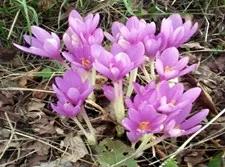
Colchicum spp. resembles the goblet-shaped blooms of true crocus, but it is actually like a distant cousin, falling under the lily family. It flowers in colors ranging from white to pink to purple. Colchicum may struggle in warmer parts of Marin, but if you want to try growing this plant, here are some tips:
- IMPORTANT: wear gloves when planting, as all parts, including the corms, are poisonous.
- Plant in August for September and October bloom.
- Plant in part shade in a deep pot or in the ground.
- Don’t remove brown leaves until they’ve died fully back.
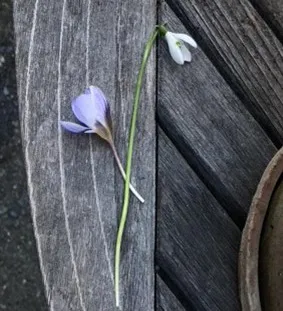
See more fall-blooming crocus.
With the wide variety of crocus available, there’s a crocus to suit every type of garden – and gardener. It’s never too early to look forward to spring, and now’s the best time to plant spring-blooming crocus for a stunning display come March!
Gardener's checklist for fall
SEPTEMBER
Maintenance and prevention
- Reduce irrigation times as day length shortens and plant growth slows.
- Add garden waste, grass clippings, pruning material, and leaves to your compost so long as they are not diseased. Turn compost and keep it as moist as a wrung-out sponge.
- Refresh the spring application of mulch to bring it to two to four inches.
Planting and propagating
- Divide overgrown perennials as they finish blooming. Before replanting them, weed and amend garden beds.
- Renovate lawn by seeding bare spots, dethatching, and fertilizing. Consider replacing or reducing lawn area. Learn more about lawn care.
- Plant ornamental grasses, shrubs, perennials, evergreens, and groundcovers.
Cutting and pruning
- Cut strawflowers, statice, yarrow, and other flowers that preserve well. Hang them to dry for use in arrangements.
- Prune evergreen, summer-flowering shrubs.
Pests and weeds
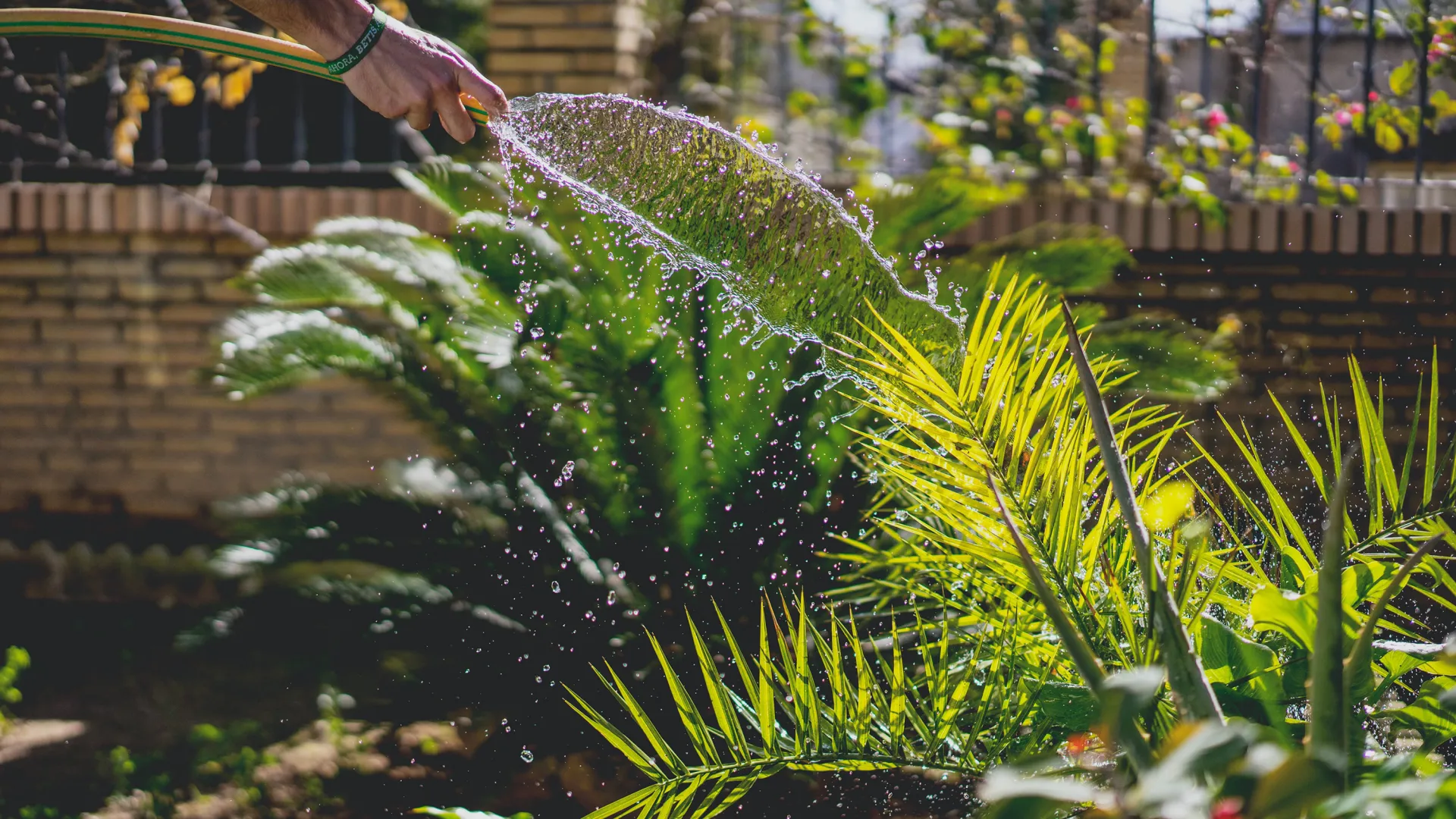
- Reduce spider mites, scale, and other insect pests by taking houseplants outside and spraying them down with the hose in a part shade area. Keep the foliage dust free to discourage indoor pests.
- Use caulk to seal entries that ants may use to enter your home.
- Manage aphids and scale on outdoor and indoor plants to discourage ants.
Feed and fertilize
- Fertilize houseplants if needed.
- Feed azaleas, camellias, and rhododendrons with an organic fertilizer with no nitrogen.
- Feed citrus for the last time of the year, if needed.
Edibles
- Plant cover crops to improve soil structure and fertility.
- Plant artichokes, arugula, cauliflower, celery, chard, collard greens, kale, lettuce, bunching onions, and peas.
- Learn more about crops to plant in September and other activities in the edible garden.
Fire-smart Landscaping
- Clear leaf and needle litter from gutters, roof, eaves, and vents.
- Clear branches 10 feet from the roof and chimney.
- Learn more about Fire-smart Landscaping.
OCTOBER
Maintenance and prevention
- Reduce irrigation times significantly as day length shortens and plant growth slows or stops.
- Clean up diseased and damaged plant materials so pathogens don’t overwinter.
- Add garden waste, grass clippings, pruning material, and leaves to compost so long as they are not diseased. Turn compost and keep it as moist as a wrung-out sponge. Cover before rains start to retain moisture; cover during rainy weather to avoid the pile becoming waterlogged.
- Add compost and organic soil amendments but don’t disturb shallow-rooted plants.
- Refresh the spring application of mulch to bring it to two to four inches. (Avoid thicker layer of bark mulch as it may hide smoldering embers in the event of a nearby fire.)
- Clean garden tools. Disease microorganisms may also overwinter on the surface of stakes, tomato cages, trellises, and other garden equipment. Remove all soil from the tools and clean them with a 10% bleach solution or other disinfectant to protect your tools from spreading diseases. Apply a light layer of oil to prevent rusting if you will not be using them for a while. Wash garden gloves.
- Visit nurseries to see trees and shrubs with outstanding fall color; determine if there’s a place in your garden that would benefit from one of these selections.
Planting and propagating
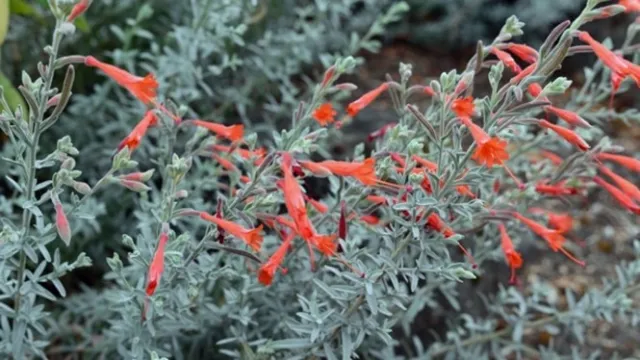
- Plant California natives. This is the perfect time.
- Reseed bare spots in your lawn or install sod. Consider reducing or replacing your lawn to conserve water.
- Plant ornamental grasses, shrubs, perennials, evergreens and groundcovers. Winter rains will help establish sturdy root systems.
Cutting and pruning
- Lightly prune Japanese maples while still in leaf. Select and plant maples; now is the time to see fall color.
- Prune deciduous trees and shrubs that need pruning such as crape myrtle, rose, and Spirea
Pests and weeds
- Visit your garden after dark with a flashlight and handpick snails and slugs. Control measures in fall help reduce populations in spring.
Feed and fertilize
- Feed azaleas, camellias and rhododendrons with an organic fertilizer with no nitrogen.
- Change feeding program for cymbidium. During the fall and winter, use a formula with low nitrogen and higher potassium and phosphorus monthly to promote more and bigger blooms.
Edibles
- Continue with last of summer harvest.
- Plant artichokes, arugula, kale, garlic, shallots, and lettuce.
- Learn more about crops to plant in October and other activities in the edible garden.
Fire-smart Landscaping
- Learn more about Fire-smart Landscaping.
NOVEMBER
Maintenance and prevention
- Mulch bare soil to hold in moisture, keep out weeds, and prevent compaction by hard rains.
- Clean up the garden before the rains begin. Remove leaves and debris from under and around plants.
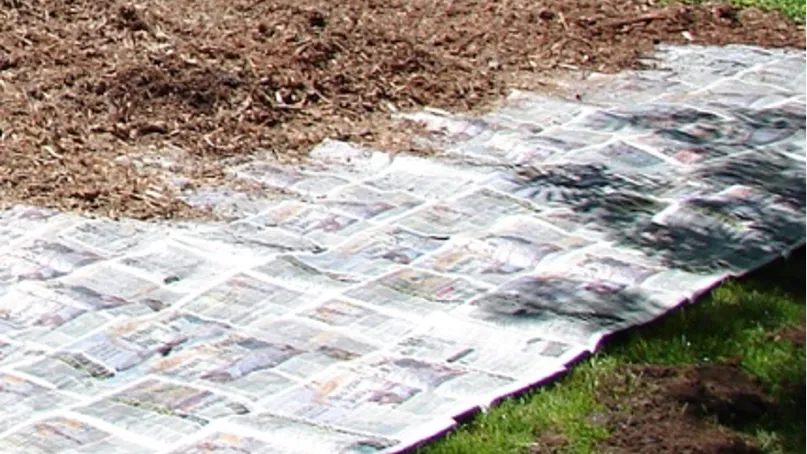
- Create new planting areas by sheet mulching over weed patches or unwanted lawn.
- Turn off irrigation system for the season; continue to water plants under overhangs.
- Protect sensitive plants from cold injury when frost is predicted. Water the garden if it hasn’t rained recently. (Do not water succulents if frost is in the forecast.)
- Clean and store any unused pots and containers that can be used as hiding places by overwintering insects, slugs, and spiders.
- Clean garden tools. Disease microorganisms also overwinter on the surface of stakes, tomato cages, trellises, and other garden equipment. Remove all soil from the tools, and clean them with a 10% bleach solution or other disinfectant to protect tools from spreading diseases. Apply a light layer of oil to prevent rusting if you will not be using them for a while. Wash garden gloves.
Planting and propagating
- Plant shrubs, perennials, and trees. Fall is for planting! Winter rains will help develop a strong root system.
- Plant spring blooming bulbs.
- Plant California natives. Late fall, just as the rains start, is the best time for planting natives and scattering seeds of annual wildflowers.
- Dig, divide, and replant overgrown perennials for more profuse blooms next spring.
- Plant bulbs for spring color, including daffodils, crocus, freesia and hyacinths.
- Remove all but one fat bud from each camellia stem for larger blooms.
Cutting and pruning
- Lightly prune Japanese maples while still in leaf. Select and plant maples for fall color.
- Remove dead, broken, or diseased limbs from trees and shrubs.
Pests and weeds
- Do not compost debris from fuchsias, roses, and the camellia/rhododendron/azalea family, as they can spread a variety of fungi and molds and allow undesirable insects to overwinter.
- Manage rainy season weeds before they flower using non-chemical methods such as cultivation, hand weeding, or mowing. Use toxic chemicals only as a last resort.
Edibles
- Plant garlic, shallots, and peas.
- Learn more about crops to plant in November and other activities in the edible garden.
Fire-smart Landscaping
- Create adequate spacing of trees and shrubs in your garden to minimize the transmission of fire from one plant to another and ultimately to your house.
- Learn more about Fire-smart Landscaping.