
Vegetable Gardening - Handbook for Beginners
Chapter 1.1.
Image
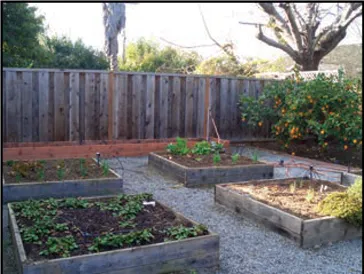
Growing vegetables in your home or garden is good for you, your neighborhood, and for helping to reduce your carbon footprint. Growing vegetables at home can be done in a single pot on your patio or on a larger scale depending upon the space and time you have available. Choose the best site for your garden, preferably in a location that is easily accessible from your home.
- The size of your garden will be dependent upon available space, the time you have to garden and the food needs of your family and neighborhood.
- Make a map of the proposed area using grid paper and drawing it to scale.
- Make sure the site receives 6 to 8 hours of direct sun per day.
- Full sun is ideal for all vegetables.
- Root and leafy crops (carrots, turnips, beets, leaf lettuce, spinach, etc.) can tolerate some shade.
- Insufficient sunlight can increase disease problems when growing many plants.
- Put tall and trellised plants on the north side so that they don’t cast shade on the shorter plants.\Make sure there is an adequate and handy water source near your garden.
- Select a level area with well-drained soil.
- Soil can be amended with compost or other organic matter to improve quality for greater yields.
- Determine plant spacing by the size of the mature plant - their leaves should just be touching.
- Most vegetables can be planted over a long range of dates.
- Plant new crops once you’ve harvested the first ones.
If there isn’t enough room at home for a vegetable garden, consider joining a community garden to grow your vegetables. Community gardens can be found easily throughout the county. Find a garden in your community here.
Previous ← Chapters → Next or Return to the Table of Contents of this Handbook.