
Selecting and Planting Landscape Trees
A landscape tree is a long-term investment. That investment begins with selecting quality nursery stock and continues with thoughtful placement, proper planting and careful establishment. Tahoe's short
EXTERNAL IMAGE
growing season, cold winters, intense summer sun, low humidity and commonly sandy, rapidly draining soils can make the first few years particularly challenging. A landscape tree is a long-term investment. That investment begins with selecting quality nursery stock and continues with thoughtful placement, proper planting and careful establishment. Tahoe's short
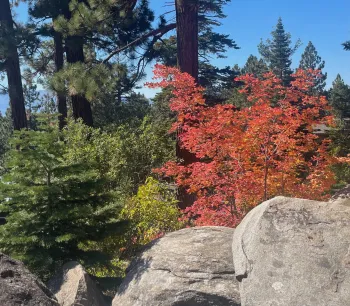
growing season, cold winters, intense summer sun, low humidity and commonly sandy, rapidly draining soils can make the first few years particularly challenging.
Start with a Quality Nursery Tree
Choose a tree based on its mature size, form, site conditions and water needs, rather than simply selecting the largest or most attractive tree at the nursery. Consider mature canopy width and height in relation to buildings, driveways, sidewalks, utilities, snow storage and views.
The International Society of Arboriculture (ISA), through TreesAreGood.org, recommends looking for healthy, well-structured trees and paying particular attention to the root system when purchasing nursery stock. Ask if the nursery staff can expose the roots for you to evaluate if possible. Avoid trees with significant circling or girdling roots, trunk wounds, poor branch structure or signs of pests and disease. The trunk flare should be identifiable rather than buried in the container.
For Tahoe, also select trees appropriate for the site's elevation, exposure and soil moisture. There is a useful list of native and adapted trees, including aspen, birch, Chokecherry, blue elderberry, mountain ash and oak, along with their sunlight and moisture requirements.
Put the Right Tree in the Right Place
Picture the tree at maturity before planting. Allow room for its mature canopy and root system, and consider buildings, overhead utilities, underground water and sewer pipes, driveways, snow storage, access to water, shade and views.
To keep your investment, tree placement is an important part of wildfire preparedness. The University of Nevada, Reno Extension's defensible-space guidance divides the landscape around a home into zones, with vegetation management becoming increasingly important as you move toward the structure.
The 0–5-foot area immediately around the home should be treated as a noncombustible zone. Remove flammable vegetation, dead material and combustible mulches from this area.
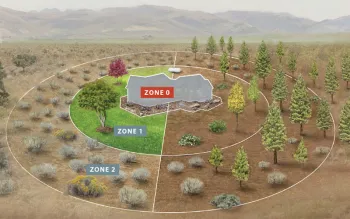
Within the 5–30-foot Lean, Clean and Green area, vegetation should be maintained and arranged to avoid continuous fuel connections to the home. Dense stands of trees and shrubs should be thinned, and individual plants or small groups should be separated.
Beyond 30 feet, vegetation management continues through the larger defensible-space area by reducing dead material, ladder fuels and dense vegetation.
Fall is an Excellent Time for Deciduous Trees
For deciduous trees, fall planting is especially beneficial in the Lake Tahoe Basin. Plant near or after leaf drop and while the soil remains workable, allowing the tree to begin root establishment during cool conditions and reduced evaporative demand.
This gives the tree an important head start before the following summer. A fall-planted deciduous tree can establish roots before facing intense sunlight, heat and low humidity. Instead of entering its first summer with an entirely new root system, the tree has already had additional time to establish roots and become better prepared for summer stress. Plant early enough to allow establishment before the ground freezes, but avoid planting into frozen or saturated soil, at least 6-8 weeks before the first hard frost.
Dig Wide, Not Deep
ISA's Planting a Tree guidance emphasizes proper planting depth and exposing the tree's root flare. The planting hole should be wide and shallow rather than deep, with the root flare visible at or slightly above finished soil grade.
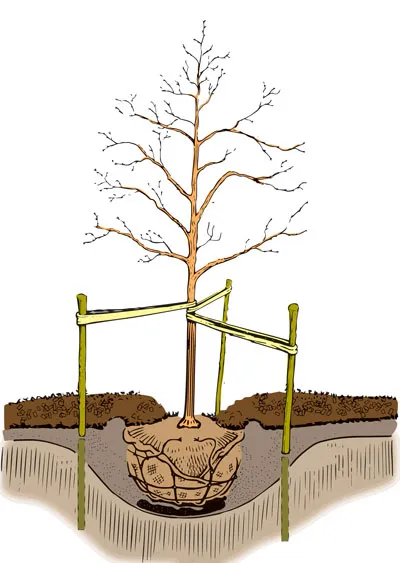
Remove the container, wires and ties before planting. Inspect circling roots and correct them as appropriate. Set the root ball on firm soil so the tree cannot settle too after watering.
Water thoroughly after planting and continuing follow-up irrigation as needed through establishment. Newly planted trees may require more frequent watering during hot, windy conditions. Also ensure that the planting hole is thoroughly saturated and drained before planting.
Always call 811 before you dig to avoid digging where there are utility lines.
Should You Amend Sandy Tahoe Soil?
Tahoe's soil conditions deserve special consideration. UC Master Gardeners note that sandy soils are common throughout the Basin, often consisting largely of decomposed granite. Sandy soil drains quickly and holds less available water than loamy soil.
This raises an important distinction between planting-hole amendments and broader soil improvement.
ISA recommends against adding fertilizer at planting, and tree-planting guidance generally cautions against creating a highly amended planting hole that differs dramatically from the surrounding soil so the tree roots can easily transition from the planting hole to the surrounding native soil.
However, where a Tahoe landscape has exceptionally sandy soil with very low water-holding capacity, incorporating finished compost or other suitable organic matter into a broader planting area can improve moisture retention and soil structure. UC Master Gardeners specifically identify organic matter as a tool for improving water retention in Tahoe's young, decomposed-granite soils.
The goal is to improve the soil environment available to expanding roots—not to create a small compost-filled pocket surrounding the root ball. A soil test or site assessment can help determine whether amendment is actually warranted.
Mulch and Water Carefully
ISA recommends a 2–3-inch layer of mulch around newly planted trees to moderate soil temperatures and reduce evaporation, while keeping mulch away from direct contact with the trunk.
In Tahoe, however, wildfire considerations must take precedence near structures. The updated Tahoe landscaping guide recommends no combustible organic mulch in the first 5 feet and discourages widespread use of combustible mulches within 30 feet.
Water newly planted trees thoroughly and monitor the root zone. Sandy soils may require shorter intervals between irrigation cycles because water moves through them quickly. At the same time, avoid excessive irrigation that can contribute to runoff, erosion and water-quality problems.
Stake Only When Necessary
A newly planted tree does not automatically need staking. Normal movement in the wind helps develop a strong, flexible trunk.
Stake when a tree cannot remain upright because of wind exposure, a weak trunk, an unstable root ball or other site conditions. Place stakes outside the root ball and use flexible ties that allow some trunk movement. Inspect ties regularly and remove the support once the tree can stand independently, typically after one-two years.
The ISA's TreesAreGood resources provide practical guidance on planting and establishing trees, while the illustrated materials are useful for demonstrating proper root-ball placement, trunk flare exposure and staking technique. (Trees Are Good)
Think Beyond the First Summer
The best Tahoe landscape tree is not simply the largest tree available. It is a healthy, appropriately sized tree planted in the right location, at the correct depth, with adequate rooting space and a management plan suited to Tahoe's soils, water limitations and wildfire environment.
Fall planting gives deciduous trees an especially valuable advantage by allowing root establishment before the heat and dryness of the following summer.
Good Tahoe landscaping should accomplish several goals at once: healthy trees, wildfire resilience, efficient water use, erosion control and protection of Lake Tahoe's water quality.
Recommended Resources
- ISA / TreesAreGood — Planting a Tree — Primary reference for proper planting, root flare, mulching and establishment. (Trees Are Good)
- ISA / TreesAreGood — Tree Owner Resources — Links to New Tree Planting, Tree Selection and Buying High Quality Trees. (Trees Are Good)
- UC Master Gardeners of the Lake Tahoe Basin — Tahoe Friendly Gardens — Native and adapted trees with Tahoe-specific moisture and exposure information. (UC Agriculture and Natural Resources)
- UNR Extension — Defensible Space and Best Management Practices — Integrates wildfire protection, erosion control and Lake Tahoe water-quality protection.
- Home Landscaping Guide for Lake Tahoe and Vicinity — Updated Wildfire Recommendations — Includes the current Tahoe addendum covering defensible-space zones, tree thinning and mulch recommendations. (Tahoe BMP)