
As our gardens finish providing us colorful flowers and tasty food, it's time to decide what to do with the other valuable commodity they're providing us: seeds for future years!
Let's start with the easiest way to save and re-sow seeds: let nature take control!
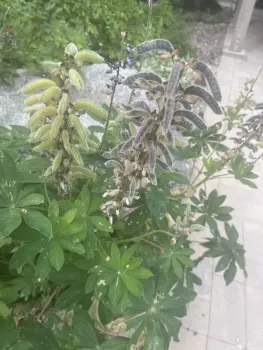
By leaving flowers to fully dry and stay on their stems, gravity and winter winds will disperse seeds, 'plant' them with rain and melted snow, and cold stratify (i.e. expose seeds to cold temperatures) for optimal germination. Note that the seeds of many hybrid plants, including common garden varieties of Columbine (Aquilegia ssp), Yarrow (Achillea ssp), and other Tahoe favorites may cross-pollinate and yield different colored flowers or plant characteristics. Don't be surprised to see a variety of Columbine colors in that patch of your garden.
Which Seeds Do I Save?
The next easiest step in a seed-saving journey would be to identify and save seeds that are likely to provide quality, similar-to-original-plant seeds.
Seeds least likely to provide plants similar to the original are vegetables labeled "F1" or "Hybrid", as they are bred to be solid garden performers for one year, but in future years could revert to something very different.
Self-pollinated seeds are the most likely to yield a plant like the original, as they don't require a second plant to fertilize and grow seeds. Especially common in fruits & vegetables, lettuce, beans, peas and peppers often fall into this category and, if not labeled as "F1" or "hybrid" can be excellent seeds to gather and save for future year gardens. Sunflowers (Helianthus sp.) and Zinnias (Zinnia ssp.) are common self-pollinating flowers, though cross-pollination can happen, which can lead to some variation in flower size and color.
Open-pollinated seeds, like self-pollinated seeds that also cross-pollinate, will generally yield a genetically diverse but not sharply different fruit than an original plant. Broccoli, Cucumber, Kale, Squash and Tomatoes (often labeled "Heirloom") generally fall into this category.
How Do I Harvest Seeds?
The first step in harvesting seeds involves patience! For fruits and vegetables, if they are good to eat chances are the seeds are not yet fully developed. Wait until the end of a vegetable's season, and let a few high quality fruit mature beyond
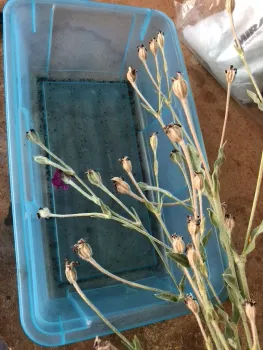
when you would eat them (think brown/dry pea shells or a shriveled-up tomato.) For flowers, wait until the petals fall off and the seed heads are dry. At this point, you can pick a sample, extract seeds, and examine them. Dry-seeds are un-bendable (oblong seeds) and often dark in color. For a healthy genetic start, you'll want to select from your healthiest specimens. Don't rely on the runt of your pepper crop to provide seeds for future years.
Some seeds are easy-peasy to extract - peas, beans, and our native Lupine are examples of crops which produce clearly visible seeds.
Other seeds can be small, and will involve threshing: rubbing a dried flower between your (dry clean) hands, in a paper bag, perhaps even the assistance of a hammer to separate the seeds form the flower. You'll want to save only the seed portion, separating out chaff, or former plant-portion.
Seeds that are wet: cucumber, squash, tomatoes: you'll need to dry out before saving by scooping the extra-mature contents out of the fruiting body, and drying out on a substrate they won't stick to (ceramic, glass, metal.) Our dry Tahoe air usually lends itself to simply drying out in a home environment. Cucumbers and tomatoes optionally should be put through a short fermentation process to get rid of the sticky tissue on the outside of the seed.
Storing Seeds
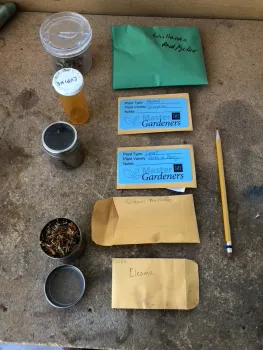
Once fully dry, place seeds in an airtight glass container or envelopes. Label them with plant name, variety, any specific cultivar, and date and location of harvest. This will make it easier for you to remember and share with others. Ideal setting is a dry, cool-cold temperature range (32-45F) until ready to use or cold stratify. Refrigerator is ideal, though storage rooms, basements, or garages can work in our climate.
Sharing Seeds
While you will probably want to plant the seeds you've saved, there are many opportunities to share with friends, neighbors, or through seed libraries that crop up in various spots: closest to us are Slow Food Lake Tahoe Little Seed Libraries in Truckee, Douglas County Library in Minden, NV and various one-off seed swaps.