
Article by Michele Rugo, UC Master Gardener ofNevada County
From The Curious Gardener, Summer 2026
Gardening can become increasingly difficult as we age. Our bodies grow less limber and more prone to injury. Our minds, too, can find it challenging to recall the routine tasks that once came easily. Yet for many of us the idea of giving up the passion and pleasure of working in the garden is unimaginable. Fortunately, we can make smart choices in garden design, plant selection, tools, and exercise now, to maintain good physical and mental health well into our senior years.
First, the Science…
Many studies support the health benefits of senior gardening. Daily gardening has been linked to a reduction in dementia risk - improving memory, attention, and cognitive function, even for those diagnosed with early dementia. It lowers the risk of cardiovascular disease, diabetes, some cancers, and improves balance, strength, and flexibility. Exposure to sunshine in moderation supplies needed Vitamin D. Growing our own food can provide better nutrition with a diet that includes more fruit and vegetables. Gardening may also contribute to our mental and emotional well-being by reducing stress, anxiety, and depression. Being involved in a community garden or an organization such as the UC Master Gardeners, too, keeps us from becoming isolated. And likely no surprise to the reader, gardening has been shown to foster a sense of accomplishment, belonging, and a deeper connection to nature.
Adapting Your Garden to Your Now and Future Needs
Make your garden work for you by considering the following questions along with handling a few small tasks. By doing these now, you are better positioned to adapt and not become overwhelmed in the future.
- Ask yourself what are your current physical limitations?
- What are your realistic time and financial resources? (Adjust expectations accordingly.)
- Is help available if needed?
- Determine/evaluate your garden’s current size, water sources and plant choices.
- Inventory your garden tools and whether they can be considered “ergonomic.”
- Use a garden journal to document plant names and locations, what is working and what is not.
- Make daily, weekly, and monthly “to do” lists; these help you both work more efficiently and enlist help more easily.
- Envision your garden as it is currently and be mindful of future goals such as “rightsizing” plant areas and selecting more appropriate plants, along with the possibilities of adding irrigation, adaptive structures, accessible pathways and/or shaded areas.
- Explore resources for inspiration and support such as your fellow UC Master Gardeners, trusted local nurseries, adaptive gardening experts, and online sites, books, and catalogs.
Creating Your Senior Friendly Garden
- Determine what you value most from your garden.
- Join the raised bed revolution!
- Install wide pathways that are flat, level, and free of obstacles.
- Use trellises, and elevated or portable raised beds along with containers to add colorful blooms and herbs.
- Consider accommodations for visual impairments by adding a wind chime, bells, or plants with unique fragrances to help navigate.
- Add plants with unique textures for therapeutic, sensory touch.
- Rethink perennial borders (could some amount of shrubbery reduce your workload?).
- Consider grasses and dwarf shrubs (especially those with brightly colored winter berries providing food for overwintering or migrating birds).
- Grow native plants.
- Just say NO to high-maintenance plants!
Soil Heath Promotes Your Health & More Efficient Gardening
Remember that healthy soil is the basis of a sustainable, life-long garden. Healthy soil produces more nutritious food and keeps plants happy. Have a soil test done to determine your garden’s pH. Most veggies and ornamentals thrive in slightly acidic to neutral soil. Soil testing will also help identify any deficiencies in essential nutrients. Do invest your time in building healthy soil by adding organic matter like aged manure and compost which will help retain moisture, drain well, and support beneficial microorganisms. Planting cover crops over the winter months, too, will naturally add nutrients.
Recognize that YOU are the most important tool in the garden!
Taking care of yourself physically by adding regular routines and mindful practices to help ensure your physical health and continued enjoyment in the garden.
- Warm up. Take a few moments to stretch and loosen your joints. Investigate other simple stretches or gentle yoga to incorporate into a “before and after” gardening routine.
- Choose the best time of day to garden. Keep in mind that older adults are more susceptible to sunburn and dehydration.
- Stay hydrated. Carry water in a thermos in your apron or cart so it’s always available.It’s better for your body and overall health to sip often than all at once later.
- Take sun protection seriously. Our skin gets thinner as we age and allows UV light to penetrate more easily. Wear sunscreen, long sleeves, and a broad-brimmed hat.
- Wear sturdy, enclosed footwear to prevent falls. Wear appropriate gloves without holes.
- Kneel carefully. Place one knee on a kneepad and the other bent in front of you for optimal support. Be mindful of the position of your spine.
- Spread out and vary your tasks. Practice the 20-20-20 rule of no more than 20 minutes at a time in the same position or at the same task over the course of an hour.
- For your safety, always carry a cell phone or emergency alert device.
Work Smarter, not Harder, by Using the Right Tools
You’ve likely often heard the phrase “the right tool for the right job.” This is especially true as we get older so as to not overly stress our bodies and accomplish tasks in the least amount of time. Invest in ergonomic tools to reduce body strain. For those with grip issues, foam-handled, lighter weight pruners and loppers with rotating handles can ease hand fatigue. A wide range of “adaptive” tools with modified handles to reduce bending are also available. A pole saw with an extension will keep you on solid ground and off of ladders. Trade in your trusty, vintage wheelbarrow that’s heavy to push for a lightweight garden cart. Replace older, kinked hoses with solid, durable ones. (Do buy the shortest hose you need to reach where you will use it. Longer hoses are awkward to recoil and heavier to drag. Water pressure decreases as they are stretched as well.) Also consider placing a low, moveable lounge chair to work in the soil and avoid bending, along with taking that occasional break to admire all you have accomplished!
My grandmother once shared that the secret to making the most of our later years is to keep doing what you love. No two gardeners are alike; each must assess their abilities as they are today and what the future might bring. By re-thinking how you currently garden and what modifications can be made to work more effectively and easily, may you continue to find joy in your garden for many years to come.
References
Cassidy, Patty. The Age-Proof Garden. Anness Publishing Ltd. 2012.
Cunning, D. & Kluk, M. A Gardener for Life. October 20, 2025. ucanr.edu. https://ucanr.edu/node/1629858/
Eddison, Sydney. Gardening for a Lifetime, How to Garden Wiser as You Grow Older.
Timber Press. 2010.
Gattone, Toni. The Lifelong Gardener, Garden With Ease & Joy At Any Age. Timber Press. 2019.
Grow, Jenna, MS, OTR/L, BCG, LSVT Certified. Why Gardening is Therapeutic for Older Adults (and How to Do It Safely). foxrehab.org. April 6, 2022.
https://foxrehab.org/gardening-tips-safety-older-adults/
Pancoast, Duane. Adaptive Gardening Is Cool At Any Age. ngb.org. May 3, 2023. https://ngb.org/adaptive-gardening-at-any-age/
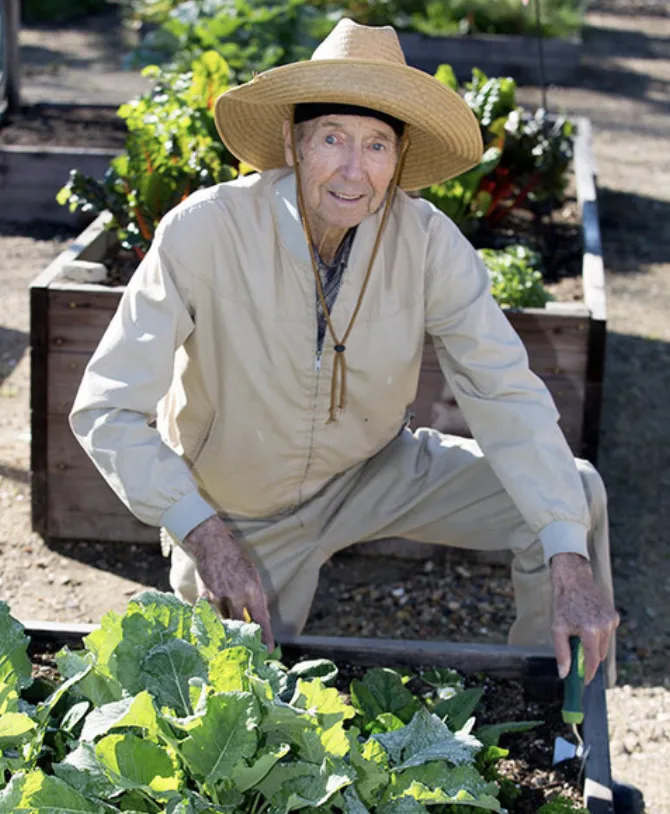
Senior at Lodi Community Garden.
Photo Credit: Courtesy of UC Master Gardeners of San Joaquin
County and Lodi Community Garden.
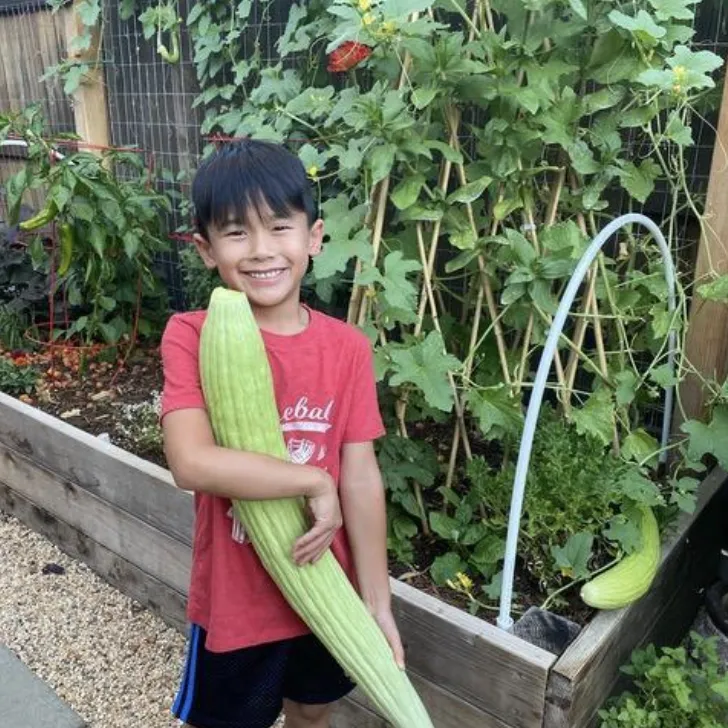
Gardening for a Lifetime Raised Bed Harvest
Photo Credit: Truong Gulia
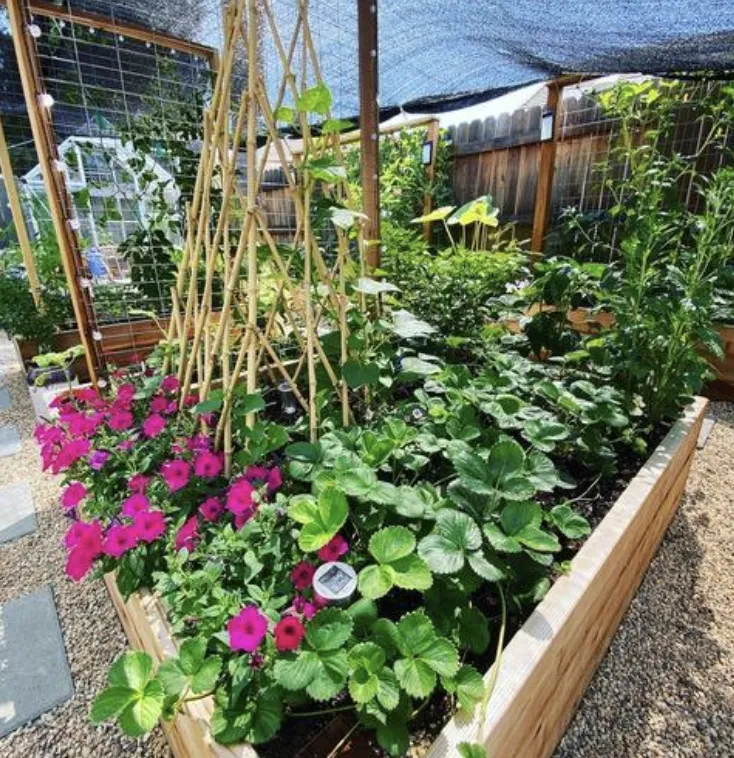
Gardening for a Lifetime Raised Beds
Photo Credit: Truong Gulia